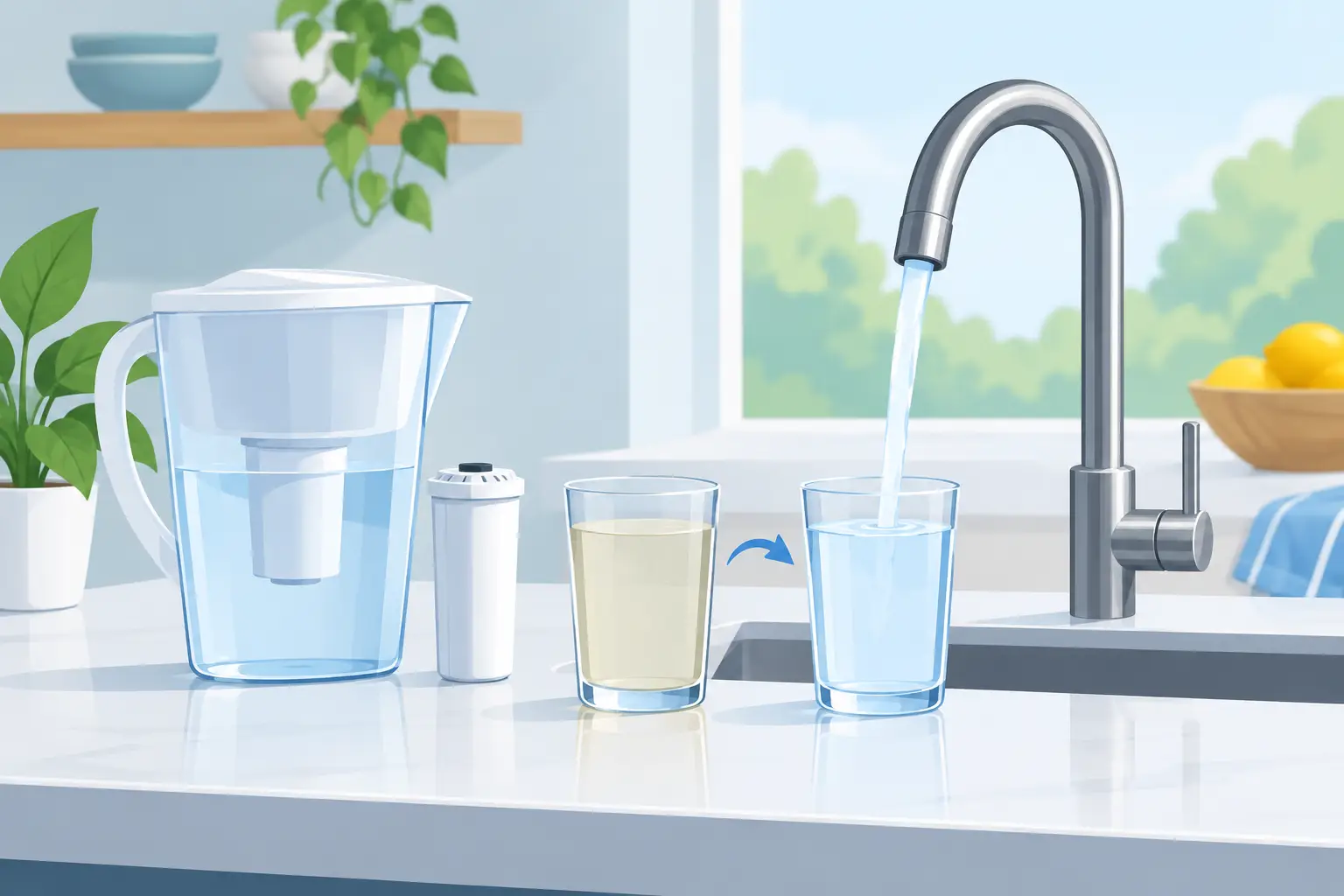
That swimming-pool smell when the shower starts, a chemical taste in a glass of water, or tea that never tastes quite right can make mains water less pleasant than it should be. If you want to improve chlorinated tap water, the right approach depends on whether you are mainly concerned with drinking water, every tap in the home, or both.
Chlorine is added to most town water supplies for a good reason: it helps control microbes as water travels through the network. The aim is not to remove disinfection from the water before it reaches your property, but to reduce the residual chlorine and related taste and odour at the point where you use it. A properly selected filtration system can do this reliably while fitting the size of your household, plumbing and water-use habits.
Why chlorinated water can be unpleasant
Chlorine is effective and widely used, but even relatively low levels can be noticeable. Some households first notice it in drinking water. Others notice dry-feeling skin after showering, a chlorine smell in the bathroom or stronger odours when using hot water.
Water quality can vary by suburb, season, local supply source and maintenance work on the network. Water may also pick up sediment from pipes, particularly after interruptions or plumbing changes. For that reason, a system designed only around taste may not be the best fit for every home. A sediment stage ahead of carbon filtration often helps protect the carbon cartridge and maintain more consistent flow.
It is also worth checking whether your water authority uses chlorine, chloramine, or a combination. Chloramine is a longer-lasting disinfectant made from chlorine and ammonia. It can be more difficult to reduce than free chlorine, so the filter media and cartridge capacity matter.
How to improve chlorinated tap water with filtration
Activated carbon is the usual starting point for reducing chlorine taste and odour. Carbon has a highly porous surface that adsorbs many compounds that affect the smell and flavour of mains water. In a properly sized system, water has enough contact time with the media for effective treatment.
For a kitchen tap, a compact under-sink carbon filter may be enough if your main concern is drinking and cooking water. It is a practical, lower-cost option for renters or households that do not need filtered water in bathrooms, laundry or outdoor taps. The trade-off is simple: showers, baths and other fixtures will still receive untreated town water.
For families wanting a more complete result, a whole house town water filtration system is generally the better long-term choice. Installed where the mains supply enters the home, it treats water before it reaches internal plumbing. This can improve the water used for drinking, cooking, showering, washing and general household use.
A common arrangement uses a sediment cartridge followed by an activated carbon cartridge. The sediment filter captures particles such as fine grit, rust and pipe debris. The carbon filter then focuses on chlorine taste, odour and other organic compounds. This sequence helps the carbon work efficiently and can extend the life of the system.
Choosing carbon for chlorine or chloramine
Not all carbon filters perform the same way. Standard granular activated carbon and carbon block cartridges can be very effective for chlorine reduction when correctly sized and changed on schedule. Carbon block cartridges can also provide fine particle filtration, although they may have a greater effect on flow if undersized.
If chloramine reduction is the priority, catalytic carbon is often the more suitable media. It is designed to better handle chloramine, but it still needs adequate contact time. A small cartridge may offer limited results at the flow rate needed for an entire home, especially in a larger household with several bathrooms.
This is where system sizing matters more than a broad claim on a packet. Consider the number of people in the home, bathrooms, appliances that draw water and your desired flow rate. A correctly sized twin housing or larger whole house unit is usually better equipped to keep pressure practical while providing meaningful filtration.
Whole house filtration or reverse osmosis?
These options do different jobs, and many households benefit from using them together rather than choosing one over the other.
Whole house carbon filtration is designed for high-flow use across the home. It is the practical option for reducing chlorine taste and smell at showers, bathrooms, laundry and kitchen taps. It can make everyday water more pleasant without restricting treatment to one small outlet.
Reverse osmosis is a point-of-use drinking water system, normally fitted under the kitchen sink. In addition to carbon prefiltration, it uses a membrane to reduce a broader range of dissolved substances. It suits households seeking highly treated water for drinking, cooking, tea, coffee, ice and baby formula preparation.
Reverse osmosis systems have a slower production rate than whole house systems and produce a separate filtered supply at a dedicated tap. They also require periodic filter and membrane replacement. A whole house carbon system plus reverse osmosis at the kitchen is often a sensible arrangement for families that want better water throughout the house and an extra level of treatment for drinking water.
Do not overlook filter maintenance
A filter is only as effective as its condition. Sediment cartridges gradually load up with particles, which can reduce pressure and leave less flow available for the household. Carbon has a finite adsorption capacity. Once it is exhausted, chlorine taste and odour may return even if the cartridge still looks clean.
Replacement timing depends on cartridge size, water quality and household water use. A couple in a small home may use a cartridge very differently from a busy family with teenagers, frequent washing and multiple bathrooms. Follow the system manufacturer’s service guidance, but treat it as a starting point rather than a reason to ignore changes in taste, smell or pressure.
Keep a simple service record with installation and replacement dates. If your system uses standard housings, having replacement sediment and carbon cartridges ready before service day makes maintenance straightforward. For units with UV disinfection, remember that a UV lamp has its own replacement schedule. UV does not remove chlorine, but it can be an appropriate addition where untreated rainwater or microbiological risk is part of the water supply plan.
Check the practical details before buying
The best filtration system is one that fits the property and is easy to maintain. Before choosing, confirm the incoming pipe size, available installation space, preferred cartridge format and whether the system will be installed indoors or outdoors. Outdoor systems need housings and components suited to Australian conditions, with protection from direct sun where required.
Also consider flow rate. A small cartridge system can be suitable for an apartment or modest household, but may struggle when two showers, a washing machine and a kitchen tap are running at once. Larger housings and purpose-sized systems generally offer more cartridge capacity and better flow, but they require more space and a higher upfront investment.
If you are on town water and want to improve chlorinated tap water, avoid adding complexity that does not solve your concern. UV treatment is not normally needed simply to reduce chlorine from a disinfected mains supply. Conversely, carbon filtration alone is not a substitute for UV disinfection when treating rainwater intended for household use. The source water determines the treatment plan.
A plumber can confirm installation requirements, isolation valves and pressure considerations. If you are unsure whether chlorine or chloramine is used in your area, check with the local water authority before selecting carbon media. This small step can prevent buying a system that is undersized or poorly matched to your supply.
Better-tasting water should not be hard to achieve. Start with the water you have, choose filtration that matches how your family uses it, and keep replacement cartridges on schedule so the improvement lasts well beyond the first glass.