

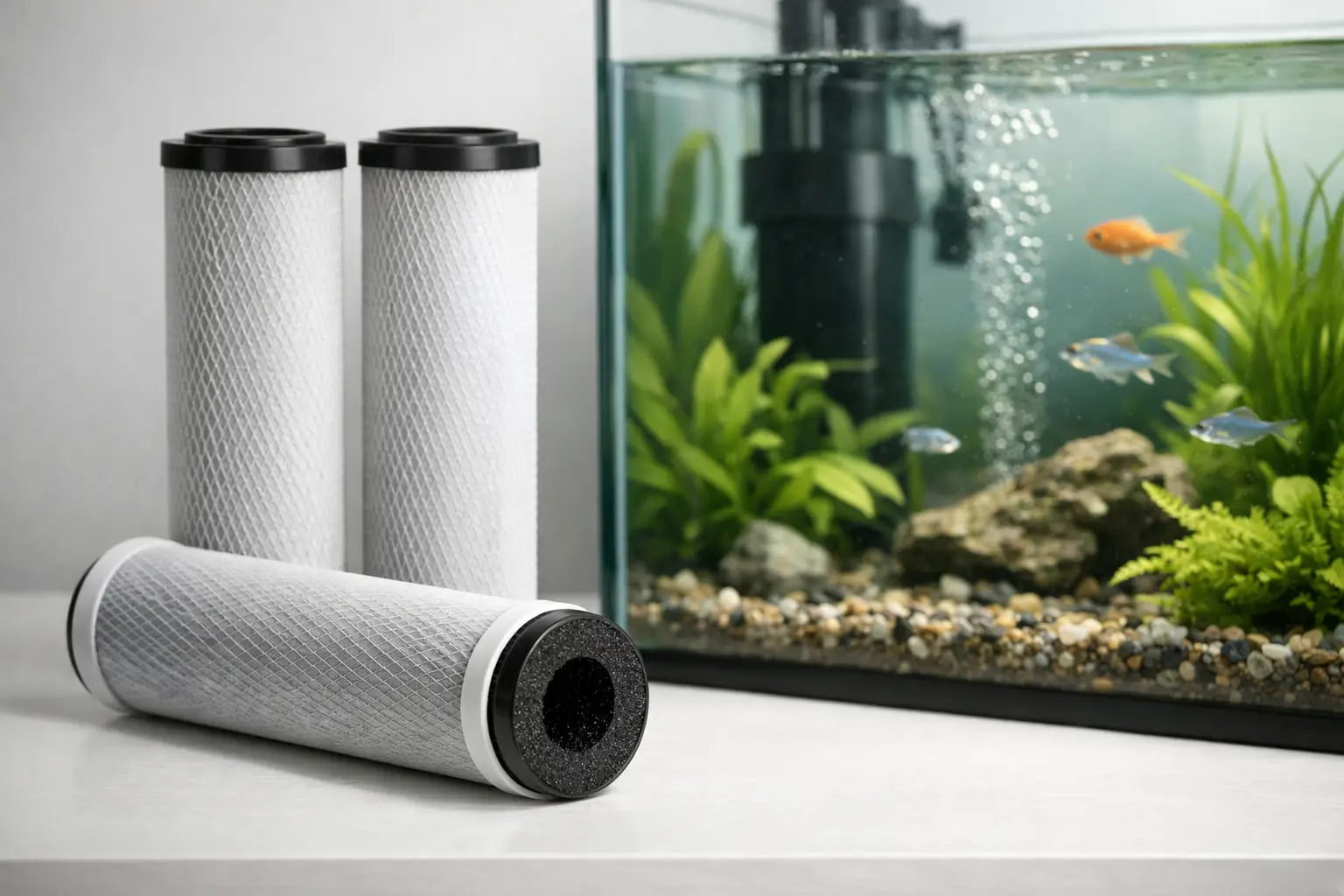
A rainwater tank can deliver excellent water, but the water at the kitchen tap is only as good as the treatment equipment between the tank and your glass. Carbon filter cartridges are commonly used to improve taste and odour, reduce certain dissolved contaminants and provide a more pleasant water supply for household use. They are not, however, a one-cartridge answer to every water-quality concern.
For homes, acreage properties and rural buildings using tank water, choosing the right cartridge starts with understanding what is actually in the water, how much water the household uses and where the filter sits in the system. A well-matched setup helps protect pumps, taps and appliances while making day-to-day water use more enjoyable.
What carbon filter cartridges actually do
Most cartridges use activated carbon, a highly porous material with a large internal surface area. As water passes through, compounds can attach to that surface through a process called adsorption. This is why carbon is particularly effective at reducing unpleasant tastes and smells.
In a rainwater system, carbon filtration can help with earthy, musty or organic tastes that may develop after runoff passes over roofs, gutters and leaf debris. It can also reduce chlorine taste in properties supplied by mains water, or homes that use mains water as a backup supply. Depending on the cartridge and water conditions, activated carbon may reduce some pesticides, herbicides, volatile organic compounds and other chemical contaminants.
The important distinction is that carbon improves water quality in specific ways. It does not reliably remove sediment, and it is not a substitute for disinfection. If bacteria, viruses or parasites are a concern, a properly sized UV treatment system or another suitable disinfection method is needed. For drinking water from a rainwater tank, good roof and gutter maintenance, first-flush management and a sensible filtration sequence all matter.
Carbon block or granular carbon?
The two common styles are granular activated carbon cartridges and carbon block cartridges. Both can be useful, but they suit different priorities.
Granular activated carbon contains loose carbon granules. Water moves through the media relatively freely, which can support good flow rates and make it a practical option where pressure and volume are important. It is often chosen for general taste and odour improvement.
Carbon block cartridges are made from finely powdered carbon compressed into a dense block. Their structure can provide longer contact time between water and carbon, helping with adsorption performance. Many carbon block cartridges also provide fine particulate filtration, although the stated micron rating varies by model. The trade-off is higher resistance to flow, particularly as the cartridge collects sediment.
For a household point-of-use filter under the kitchen sink, a carbon block cartridge is often a sensible choice. For a whole-house rainwater system, the best option depends on the pump flow, number of bathrooms, cartridge housing size and whether sediment filtration is installed ahead of the carbon stage. A cartridge that is too restrictive can leave showers weak and pumps working harder than necessary.
Where carbon filtration belongs in a tank water system
Carbon performs best when it is fed relatively clean water. Tank water often carries fine roof dust, grit, organic matter and sediment that can quickly clog a carbon cartridge. This is why a sediment pre-filter is generally placed before the carbon stage.
A practical whole-house sequence may include a pump protection filter or washable screen, followed by a sediment cartridge, then a carbon cartridge. If UV disinfection is part of the system, it is usually installed after sediment and carbon filtration. Clearer water allows UV light to pass through more effectively, improving the treatment process.
For properties using rain-to-mains changeover equipment, the arrangement needs extra thought. Carbon can reduce chlorine, which is desirable for taste but may remove chlorine residual from mains water. That does not automatically make the system unsuitable, but it reinforces the need to match the treatment design to the water source, intended use and household maintenance routine.
Point-of-use versus whole-house filters
A point-of-use carbon filter treats water at a single outlet, most commonly the kitchen tap. It is a cost-effective way to improve drinking and cooking water without adding flow restriction to every tap in the home. This option suits households that are happy with untreated water for showers, toilets, laundry and garden use.
A whole-house carbon filter treats water after the pump and before it reaches internal plumbing. It can improve the quality of water at every outlet, which is appealing for homes relying solely on tank water. It also requires a correctly sized housing and cartridge capacity. Larger housings generally hold more filter media and offer better flow performance, making them a stronger choice for larger families, multiple bathrooms or high-demand properties.
Choosing the right carbon filter cartridge
There is no single best cartridge for every tank. Start with the housing you already have, as cartridge length and diameter must match the filter housing. Common sizes include standard and larger-format housings in 10-inch and 20-inch lengths, but measurements and seals should always be checked before ordering a replacement.
Then consider water demand. A small cartridge may be adequate for a kitchen drinking-water filter, while a busy household on tank water will usually benefit from a larger-capacity whole-house cartridge. Flow rate matters as much as cartridge size. A filter that works well at a modest flow may struggle when two showers, a washing machine and a kitchen tap are running at once.
Water appearance provides another useful clue. If water is visibly cloudy, brown or gritty, address sediment first. Carbon is not designed to carry a heavy dirt load. If the water is clear but has an objectionable taste or smell, carbon is more likely to provide a noticeable benefit. If the concern is microbiological safety, carbon should be one part of a broader treatment setup rather than the main safeguard.
For households using town water, check the cartridge specifications for chlorine reduction. For rainwater, look at the whole system: tank hygiene, inlet screens, overflow protection, filtration stages and any UV unit. Expert advice can save money here, especially when upgrading an older filtration system with an existing pump and plumbing layout.
When to replace a carbon cartridge
Carbon does not usually give a clear visual warning when it is exhausted. A sediment cartridge turns dirty as it traps particles, but an older carbon cartridge may still look fairly normal even after its adsorption capacity has reduced. That makes scheduled replacement important.
Replacement intervals vary with cartridge capacity, household water use and water quality. A cartridge used only for drinking water may last considerably longer than one treating all household water. Follow the manufacturer’s recommended service interval, but replace earlier if water taste or odour returns, pressure drops noticeably, or the cartridge has been exposed to unusually dirty water after storms or tank cleaning.
Cartridges should not be left in service indefinitely. Once carbon is spent, it stops delivering the intended treatment. In poorly maintained systems, old media can also become a hygiene concern. Keep a simple note of installation dates near the filter housing or in a mobile calendar so servicing does not become guesswork.
When changing cartridges, turn off the water supply, release pressure according to the housing instructions and inspect the O-ring for wear or damage. Clean the housing carefully before fitting the new cartridge, lubricate the O-ring only with a suitable food-grade lubricant where recommended, then check for leaks once pressure is restored. Flush the new cartridge until the water runs clear, as carbon fines can initially create grey or black water.
Common mistakes that reduce filter performance
The most frequent issue is fitting carbon before sediment filtration. This can shorten cartridge life dramatically and restrict water flow. Another is selecting a fine carbon block for a high-flow whole-house application without allowing enough filter capacity. The result can be disappointing pressure at taps and unnecessary pump cycling.
It is also easy to assume a micron rating means protection from all contaminants. A fine rating may help reduce particles, but it does not confirm the cartridge will remove microorganisms or dissolved chemicals. Always read the product specifications for the actual contaminants and performance claims.
Finally, do not overlook the tank itself. A quality filter cannot fully compensate for leaves in gutters, damaged mosquito screens, sludge buildup or poor inlet management. Clean collection surfaces and regular tank checks reduce the load on every component downstream.
For reliable rainwater, carbon filtration works best as part of a considered system rather than a last-minute add-on. Choose a cartridge that suits your housing, flow demand and water source, keep sediment under control and replace consumables on time. That small amount of routine care can make every litre from your tank more enjoyable to use.

One thought on “Carbon Filter Cartridges for Cleaner Tank Water”