Water is something we use every day without giving it much thought. We drink it, cook with it, wash food in it and use it to make tea and coffee.
Whether your drinking water comes from a rainwater tank, mains supply or another water source, filtration can help improve its quality, taste and overall drinking experience.
So, why should we filter our drinking water?
The simple answer is that water can contain unwanted particles, sediment, tastes, odours and other contaminants. Depending on the water source, additional treatment may also be appropriate to manage microorganisms.
A properly selected drinking water filtration system gives you greater control over the water you and your family use every day.
What’s Really in Our Drinking Water?
Water doesn’t have to look dirty to contain unwanted material.
In fact, perfectly clear water can still contain substances that you cannot see, taste or smell.
Depending on the source and the plumbing supplying your home, drinking water may contain varying levels of:
- Sediment
- Dirt and fine particles
- Rust
- Organic material
- Unpleasant tastes and odours
- Naturally occurring minerals
- Treatment-related tastes or odours
- Contaminants introduced through plumbing or storage
- Bacteria and other microorganisms in some water supplies
Rainwater can also collect dust, leaves, pollen, insects, bird and animal droppings as it travels across a roof and through gutters before entering a tank.
This is why the appearance of water alone doesn’t tell the complete story.
Clear Water Doesn’t Always Tell You Everything
A glass of water can look crystal clear and still contain extremely small particles or other substances.
Likewise, cloudy or discoloured water is an obvious indication that something isn’t right, but not every water-quality issue can be seen with the naked eye.
Filtration adds another barrier between your water source and the water you eventually drink.
However, it’s important to choose the right type of water filter, because different filtration methods perform different jobs.
How Does Drinking Water Filtration Work?
Water filtration isn’t simply about putting one cartridge on a pipe and expecting it to remove everything.
A good system can use several stages, with each stage performing a specific job.
For example:
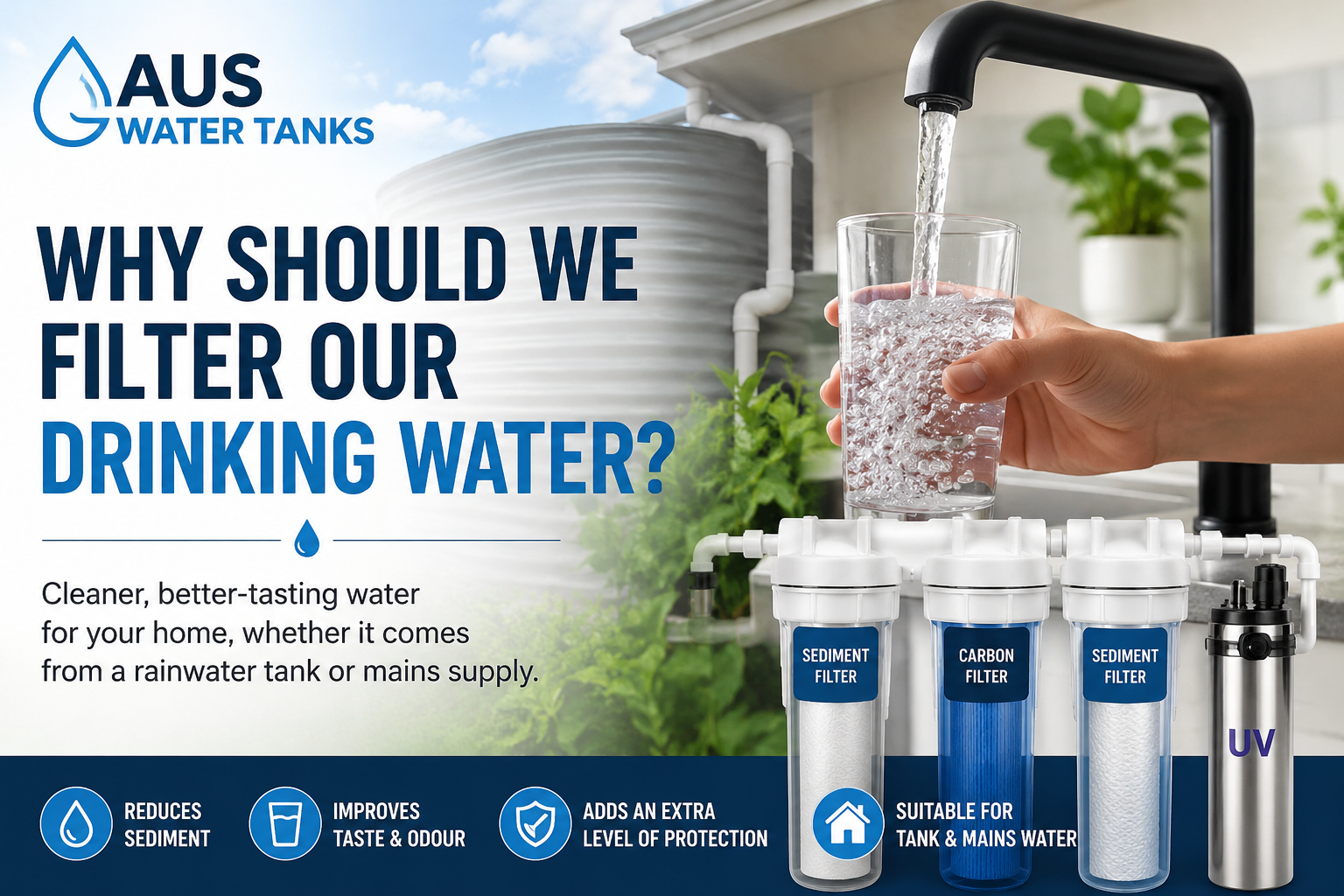
Water Supply → Sediment Filtration → Carbon Filtration → Additional Treatment Where Required → Drinking Water
The exact setup depends on your water source, water quality and how the water will be used.
Sediment Filtration – Removing the Visible Material
A sediment water filter is often the first stage of a filtration system.
Its job is to capture physical particles before they travel further through the system.
These may include:
- Dirt
- Sand
- Rust particles
- Fine sediment
- Suspended material
- Other physical debris
Sediment filtration can improve water clarity. In addition, it helps protect carbon filters and other treatment equipment installed further down the line.
However, sediment filtration alone isn’t designed to solve every drinking water issue.
Carbon Filtration – Improving Taste and Odour
Activated carbon is one of the most common forms of drinking water filtration.
A quality carbon filter can help improve the taste and smell of drinking water. Depending on the cartridge and its specifications, it may also reduce certain substances present in the water.
For many households, taste is one of the most noticeable benefits of installing a home water filter.
Water that tastes better can also encourage people to drink more tap water rather than relying on bottled water.
UV Water Treatment – Another Level of Protection
Where microbiological treatment is appropriate, UV water treatment can provide an additional barrier.
UV systems expose water to ultraviolet light as it passes through a treatment chamber. A correctly specified and maintained UV system is designed to inactivate susceptible microorganisms.
UV treatment works differently from a conventional filter because it doesn’t physically capture dirt or sediment.
Therefore, proper pre-filtration is important.
A system may combine:
Sediment Filter → Carbon Filter → UV Treatment
This type of multi-stage approach can be particularly useful for suitable private water supplies, including rainwater used for drinking.
Whole House Water Filtration
A whole house water filtration system treats water at a central point before it travels throughout the home.
Depending on the installation, this can provide filtered water for:
- Drinking
- Cooking
- Kitchen taps
- Bathroom taps
- Showers
- Laundry
- Household appliances
A whole house water filter can be installed for different water sources, including mains and rainwater systems.
For households wanting more than a single filtered drinking water tap, whole-house filtration can be a convenient solution.
Under-Sink Drinking Water Filters
If your main concern is the water you drink and cook with, an under-sink water filter may be all you need.
These systems generally treat the water supplied to the kitchen or a dedicated drinking water tap.
They can be compact, affordable and relatively easy to maintain.
However, they only filter water at that particular outlet.
Therefore, homeowners wanting filtered water throughout the property may prefer a whole-house system.
What About Dirty Rainwater Tank Water?
If your drinking water comes from a rainwater tank, filtration is only one part of maintaining water quality.
Water collects material as it travels across the roof and through gutters. Over time, sediment and organic matter can also accumulate inside the tank.
A good rainwater system should consider the complete journey:
Roof → Gutters → First Flush → Tank → Pump → Filtration → Treatment → Tap
Keeping gutters, screens, strainers and tanks properly maintained can reduce the amount of contamination entering the water supply in the first place.
A filtration system then has a much better starting point.
The Benefits of Filtering Your Drinking Water
There are several reasons households choose to filter their drinking water.
Better Taste
Removing or reducing substances responsible for unpleasant tastes can make drinking water more enjoyable.
Better Smell
Carbon filtration can help reduce certain unwanted odours.
Reduced Sediment
Sediment filtration captures physical particles before they reach your drinking water.
Cleaner-Looking Water
Removing suspended particles can improve water clarity.
Additional Treatment Options
Where required, filtration can be combined with technologies such as UV treatment to provide additional barriers.
Protection for Other Equipment
Removing sediment can also help protect downstream filters, plumbing components and treatment equipment.
Less Reliance on Bottled Water
Having good-quality filtered water available at home can reduce the need to continually purchase bottled drinking water.
Greater Control
Perhaps one of the biggest advantages is knowing what filtration equipment is installed and maintaining it according to your own requirements.
Are There Any Disadvantages to Filtering Drinking Water?
There are a few.
A filtration system needs maintenance.
Filter cartridges eventually become dirty and need replacing. UV lamps and associated components also require servicing according to the manufacturer’s recommendations.
There is also an upfront cost to installing a quality system.
In addition, choosing the wrong filter can produce disappointing results. A sediment cartridge, for example, performs a completely different job from a carbon filter or UV system.
A poorly sized or badly maintained filtration system can also restrict water flow.
Therefore, the goal isn’t simply to install a filter. It’s to install the right water filtration system for your water supply and household requirements.
How Often Should Drinking Water Filters Be Changed?
This depends on the filter, water quality and how much water your household uses.
Dirty or sediment-heavy water can block cartridges faster. Meanwhile, cleaner water may allow cartridges to operate for longer.
Signs that a filter may require attention can include:
- Reduced water flow
- Reduced pressure
- Visible cartridge contamination
- Changes in taste
- Changes in odour
- Changes in water appearance
Most importantly, follow the manufacturer’s recommended replacement and maintenance schedule for your particular filtration system.
Should Drinking Water Be Tested?
If you have concerns about your water quality, particularly when using a private water supply, testing can provide useful information.
Rather than guessing what may be present, water testing can help identify particular water-quality issues.
You can then choose filtration or treatment equipment suited to those requirements.
Which Drinking Water Filter Is Best?
There isn’t one filter that’s best for every home.
The right choice depends on:
- Your water source
- Water quality
- Household size
- Water usage
- Required flow rate
- Available space
- What you want the system to remove or treat
- Whether you want drinking-water-only or whole-house filtration
Some homes may only need a simple under-sink drinking water filter.
Others may benefit from a whole house water filter with sediment and carbon filtration.
For suitable applications where additional microbiological treatment is required, filtration may also be combined with a UV water treatment system.
Cleaner Drinking Water Starts With the Right Filtration
We use water every single day. Therefore, taking control of the quality of the water we drink makes sense.
Whether your water originates from a mains supply, rainwater tank or another source, the right filtration system can help remove sediment, improve taste and odour, and provide treatment tailored to your water quality.
At Central Coast Water Tanks, we supply a range of drinking water filters, whole house water filtration systems, under-sink water filters, sediment filters, carbon cartridges and UV water treatment systems.
With over 30 years of experience in the water industry, we can help you select filtration equipment to suit your home, water source and requirements.
Shop online and save with Central Coast Water Tanks, or contact us for advice on choosing the right drinking water filtration system for your home.