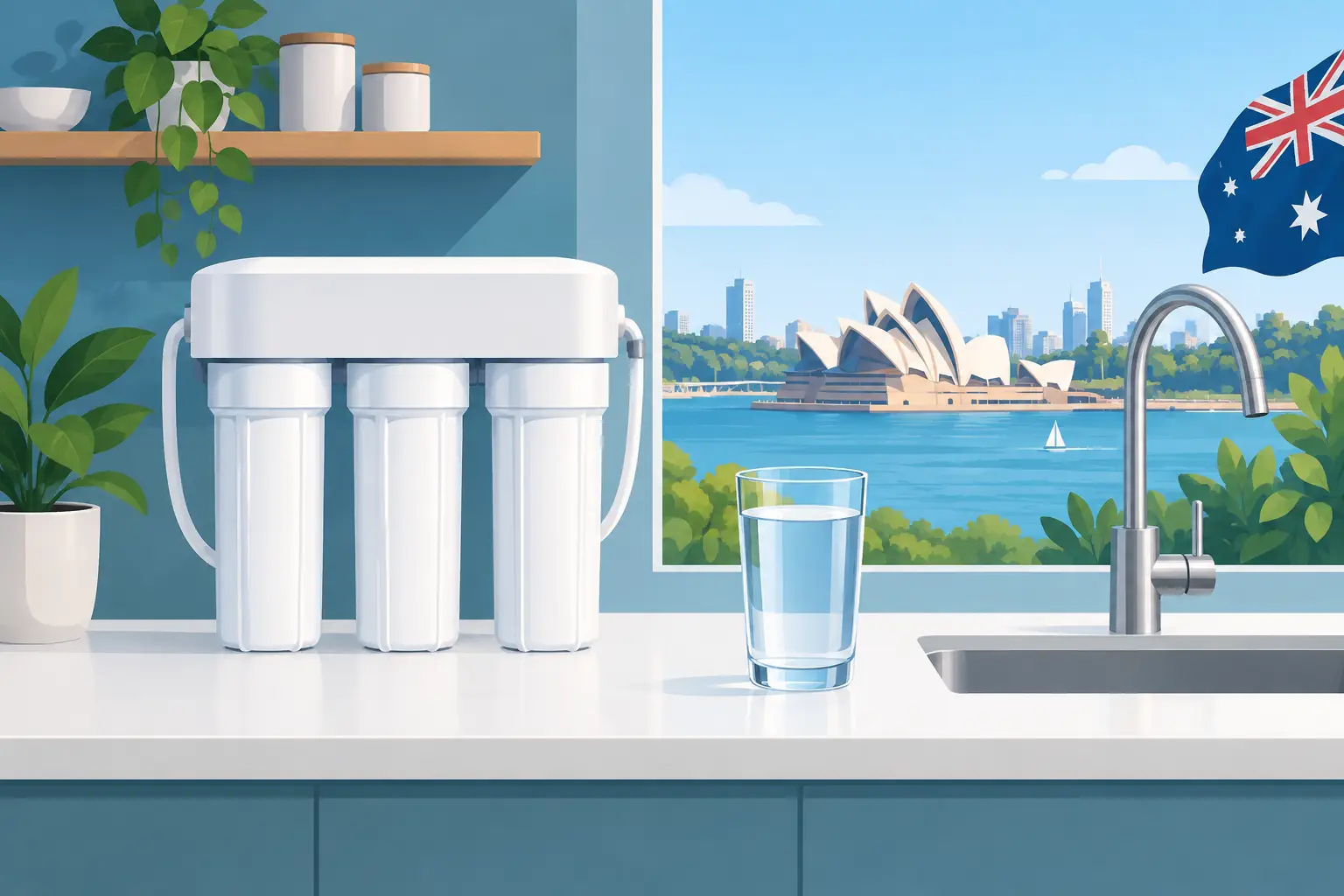
A glass of water can look perfectly clear while still carrying the taste of chlorine, fine sediment, dissolved minerals or microorganisms. The right answer is not always the biggest filter system. This drinking water filtration guide helps Australian households match their water source and concerns to a practical setup that will perform reliably over time.
For most homes, the starting point is simple: identify where the water comes from, what you want to improve, and whether you need filtered water at one tap or throughout the house. Rainwater and town water present different challenges, and a filtration system should be designed around those differences.
Start with your water source
Rainwater can be an excellent household supply, but its quality depends on the roof, gutters, tank condition and the way water is stored. Leaves, dust, bird droppings, insects and sediment can enter before water reaches the tank. Fine particles may continue through to the household supply, while organic material can affect taste and odour. Where rainwater is used for drinking, cooking, bathing and washing, filtration is usually best handled at the point where water leaves the tank and enters the home.
Town water has already been treated, but many households still prefer to improve its taste, smell and feel. Chlorine is commonly used to maintain disinfection through the mains network. Some supplies also use chloramines. These treatments are useful for water safety, yet can leave an odour or flavour that families notice in drinking water, tea and cooking. Sediment may also be present, particularly after local works or in older pipe networks.
If you are unsure what is in your supply, a water test can provide useful direction. It is particularly worthwhile for rainwater with an unusual smell, visible staining, persistent cloudiness or a recent change in taste. Testing does not replace sensible system design, but it can prevent spending money on the wrong treatment method.
What each filtration stage does
A whole house system often uses more than one treatment stage because no single cartridge is suited to every problem. The order matters as well. Protecting finer filters and UV equipment from sediment helps them work as intended.
Sediment filtration
A sediment filter captures physical particles such as sand, grit, rust, roof debris and fine dirt. Filter ratings are measured in microns: the lower the micron rating, the finer the particles it can retain. A coarser pre-filter may be suitable where tank water carries heavy sediment, followed by a finer cartridge for clearer household water.
The trade-off is flow. Very fine cartridges can restrict water pressure sooner, especially if the incoming water is dirty or the home has several bathrooms. A correctly sized housing and a sensible micron sequence are often more useful than choosing the finest cartridge available.
Activated carbon filtration
Activated carbon is widely used to improve taste and odour. On town water, it can reduce chlorine and many compounds that cause the familiar treated-water smell. On rainwater, carbon can help with earthy or organic tastes once sediment has been removed.
Carbon is not a catch-all solution. It does not replace disinfection where microorganisms are a concern, and it needs timely replacement. Once a cartridge is exhausted, its performance drops. Carbon systems should also be protected by sediment filtration, as dirty water can shorten cartridge life.
UV water disinfection
UV disinfection uses ultraviolet light to treat water as it passes through a chamber. It is a strong choice for rainwater systems where bacteria and other microorganisms are a concern. Unlike chemical dosing, UV does not add a taste or smell to the water.
For UV to work properly, the water needs to be clear enough for the light to reach microorganisms. That is why a sediment pre-filter is essential and why heavily coloured or cloudy water needs attention before the UV stage. The lamp also requires replacement on schedule, commonly every 12 months, even if it still appears to be glowing. The lamp’s disinfection output reduces with operating time. The quartz sleeve needs periodic cleaning or replacement too, as mineral or film build-up can block UV light.
Reverse osmosis for a dedicated drinking tap
Reverse osmosis, often called RO, is usually installed under the kitchen sink rather than as a whole house solution. It uses a membrane to reduce a broad range of dissolved substances, making it useful where households want highly treated water for drinking, ice, coffee and cooking.
RO systems generally need pre-filtration and produce a separate supply at a dedicated tap. They also create some reject water during treatment, so they are not automatically the best fit for every water-conscious household. Many families pair whole house filtration for better water across the home with an RO unit for the kitchen, rather than using RO for every shower, toilet and washing machine.
Choosing between whole house and point-of-use filtration
A whole house filter is installed on the main supply line. It treats water before it reaches taps, showers, appliances and hot water systems. This is often the practical choice for tank water used throughout the home, or for town water customers who want to reduce chlorine taste and odour in every bathroom and kitchen.
Point-of-use filtration treats water at one location, usually the kitchen. It suits households focused mainly on drinking and cooking water, renters who cannot alter the main plumbing, or homes where a complete system is not yet required.
There is no one-size-fits-all answer. A family using rainwater for all household purposes may benefit from a staged whole house sediment, carbon and UV system. A household on clean town water may only need carbon filtration at the kitchen, or a whole house carbon system if chlorine odour is noticeable throughout the home. The right choice depends on the water source, household demand, plumbing layout and budget.
Size the system for real household demand
A filter that is too small can become a daily frustration. Pressure drop is more noticeable when someone is showering, the washing machine is filling and another tap is running. For whole house filtration, consider the number of bathrooms, people in the home, likely simultaneous water use and the pump or mains pressure available.
Larger filter housings generally hold more media or a longer cartridge, which can support better flow and longer service intervals. They may cost more at the start, but can be better value for busy households or properties that rely on tank water. Installation position matters too. Filters should be accessible for servicing, protected from weather where required, and fitted with isolation valves so cartridges can be changed without unnecessary disruption.
For rainwater systems, do not overlook the equipment before the filters. Gutter guards, leaf diverters, first-flush devices, a sealed tank inlet and a clean tank reduce the load on cartridges. Filtration works best as part of the whole water collection system, not as the only line of defence.
Plan for maintenance before you buy
Every system needs servicing. The ongoing cost and effort should be clear before installation, not discovered when water flow slows on a weekend. Sediment cartridges may need replacement more often after wind, rain events or a dirty tank supply. Carbon cartridge intervals depend on water quality and usage. UV lamps and service kits should be replaced according to the manufacturer’s schedule.
Keep a simple record of cartridge changes, UV lamp replacement dates and any changes in water taste, smell or pressure. A sudden pressure drop often points to a loaded sediment filter. A return of chlorine taste can indicate that carbon media is due for replacement. If rainwater becomes cloudy or develops an unusual odour, inspect the roof catchment and tank as well as the filtration equipment.
Use replacement cartridges and components that suit the housing and system specifications. A cartridge that physically fits is not always the correct micron rating, carbon type or flow capacity for the job. If you are upgrading an older setup, check the housing size, connections, pressure rating and UV unit model before ordering service parts.
A practical path to cleaner household water
Start with the concern you can see, smell or taste, but design for the concern you cannot. Sediment filtration protects your plumbing and downstream equipment. Carbon improves taste and odour. UV provides an added disinfection barrier for suitable rainwater applications. RO offers highly treated water at a dedicated drinking point.
For households comparing options, Aus Water Tanks can help make sense of whole house filtration, rainwater treatment, UV disinfection and replacement service requirements. A well-matched system is easier to maintain, kinder to household plumbing and gives your family more confidence each time they turn on the tap.