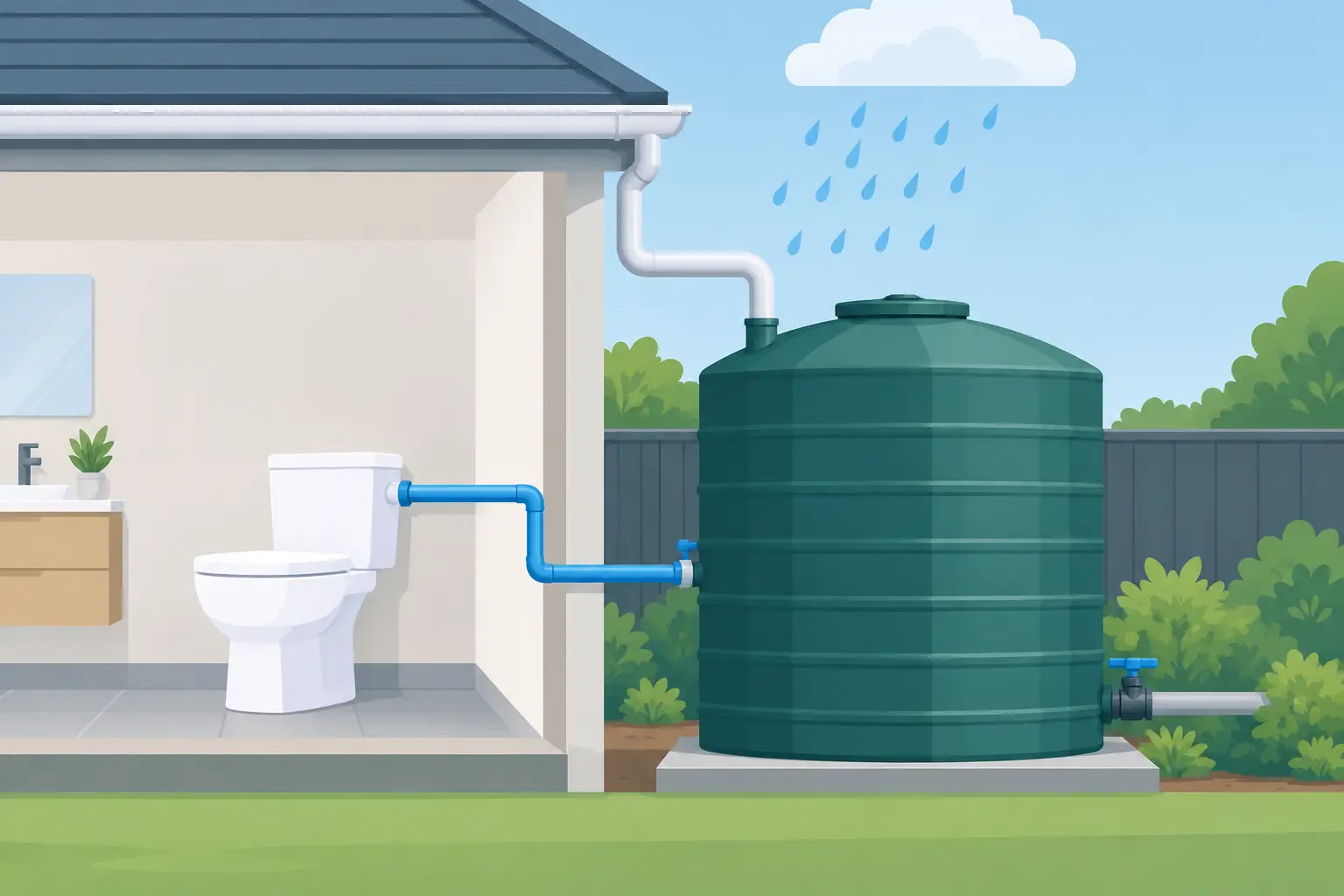
A rainwater tank can do more than water the garden. Connecting it to toilet flushing can reduce demand on mains water every day, especially in busy family homes, rural properties and acreage households. If you are researching how to connect tank toilets to a rainwater supply, the key is not simply running a pipe from the tank to the cistern. A reliable installation needs the right pump, filtration, pipework, controls and protection against any cross-connection with drinking water.
Toilets are a practical use for harvested rainwater because the water does not need to be treated to drinking-water standard. It still needs to be clean enough for the plumbing system, however, and the installation must meet the applicable Australian plumbing rules. In most cases, a licensed plumber should complete the final connection and any mains backup arrangement.
Start with the water demand and tank supply
Before choosing equipment, work out whether the tank can support the toilets you intend to connect. A modern dual-flush toilet may use roughly 3 to 4.5 litres for a half flush and 4.5 to 6 litres for a full flush. In a household of four, toilet flushing can account for a meaningful portion of daily water use.
Your actual savings depend on rainfall, roof catchment area, tank size and household habits. A small tank supplied by a modest roof may be very useful through wetter months but run low during a long dry spell. For rural properties, where a tank may already supply the home, toilet demand should be included in the overall water budget alongside showers, laundry and garden use.
Check the tank outlet position and available water level as well. A pump cannot draw water once the tank drops below its inlet level. A properly positioned outlet, floating intake or suitable low-level pickup helps make the most of stored water while avoiding sediment at the base of the tank.
Choose the right toilet supply arrangement
There are two common ways to supply toilets from rainwater. The first is a dedicated rainwater line from the tank and pump to selected toilet cisterns. The second uses a rainwater-to-mains changeover system that gives priority to rainwater, then changes to mains water when the tank is empty or the pump cannot supply enough pressure.
A dedicated tank-only system is simpler in principle, but toilets will not flush if the tank runs dry or the pump loses power. It can work well for properties where owners are comfortable monitoring water levels or where a separate backup plan is already in place.
For most occupied homes, an automatic mains backup offers greater convenience. The important detail is that the changeover must protect the drinking-water supply. Rainwater must never be able to flow back into mains plumbing. Your plumber can specify an approved switching device or break-tank arrangement that provides the required backflow protection for your location.
Do not install a basic tee fitting between rainwater and mains lines. Even if it appears to work, it can create a serious cross-connection risk and may not comply with plumbing requirements.
How to connect tank toilets safely
A typical rainwater toilet system follows a straightforward path: water is collected from the roof, screened before entering the tank, drawn through the tank outlet by a pump, filtered as needed, then sent through a dedicated line to the toilet cisterns. The system should also include isolation valves so components can be serviced without shutting down the entire home.
1. Keep debris out before it reaches the pump
Good water quality begins at the roofline. Gutters should be clean, and downpipes should have suitable leaf screening. A first-flush diverter is often worthwhile because it sends the initial roof runoff, which may contain dust, leaves and bird droppings, away from the tank.
At the tank, fit a secure mosquito-proof inlet screen and keep the lid sealed. These details protect water quality and prevent insects, vermin and larger debris entering the stored supply.
2. Install a pump matched to the job
The pump needs enough pressure and flow to operate toilet inlet valves reliably, particularly where toilets are spread across a large single-storey home or installed upstairs. Pressure pumps with an automatic controller are commonly used for toilet and laundry supply, as they start when a cistern calls for water and stop when demand ends.
Pump selection is not only about the biggest pressure figure. Consider the distance from the tank to the house, vertical lift, pipe diameter, number of fixtures and whether other rainwater uses will operate at the same time. An oversized pump can cycle unnecessarily, while an undersized unit may deliver poor flushing performance.
Place the pump on a firm base, protect it from weather where practical and ensure there is access for servicing. A dry-running protection feature is valuable where tanks may run low.
3. Filter water to protect valves and pipework
For toilet flushing, a sediment filter is generally the priority. Fine particles can clog toilet inlet valves, affect pump controls and shorten the life of fixtures. The best cartridge rating depends on the quality of the collected water and the system design, but a coarse pre-filter followed by finer sediment filtration is often a sensible approach for tank water used around the home.
If the same tank supply also serves laundry taps or other household uses, the filtration requirements may change. UV disinfection and finer filtration can be appropriate for broader rainwater applications, but they are not automatically required for a toilet-only line. The right setup depends on where the water is going and whether it may be used for personal washing or drinking.
Allow room around filter housings for cartridge changes. A system that is difficult to service is more likely to be neglected.
4. Run clearly identified non-drinking-water pipework
The pipe from the pump to the toilets should be installed as a separate supply line. Your plumber will select suitable pipe material, fittings and pipe sizing for the property. In many applications, non-drinking-water lines need identification or labelling so that future owners, trades and maintenance workers can recognise them.
Keep rainwater plumbing separate from potable water plumbing except at an approved backup changeover point. This protects household water quality and makes future repairs much safer. It also avoids confusion if you later add filtration, a new pump or extra fixtures.
5. Connect to the cisterns and test each fixture
At each toilet, the rainwater line connects to the cistern inlet through the appropriate valve arrangement. Once the system is pressurised, test every toilet individually. Watch for a slow fill, noisy inlet valve, leaks at fittings or a pump that runs after the cistern has finished filling.
A pump that repeatedly starts when nobody is using water can indicate a leak, a faulty non-return valve or a toilet inlet valve that is not sealing properly. Address these issues early. Aside from wasting water and power, constant cycling can damage a pump over time.
Australian compliance matters
Rainwater use for toilet flushing is common in Australia, but requirements vary between states, territories, councils and local water authorities. New homes may have particular rules, and some areas set requirements for rainwater connections, signage, backflow prevention or mains changeover systems.
The installation should comply with the Plumbing Code of Australia and relevant local requirements. Work involving drinking-water connections, backflow prevention and sanitary plumbing is not a DIY job. A licensed plumber can confirm the approved method, obtain any required approvals and provide compliance documentation where applicable.
If you are building or renovating, involve the plumber early. It is usually easier and more cost-effective to run a dedicated toilet line before walls, paths and landscaping are finished than to retrofit it later.
Plan for maintenance, not just installation
A rainwater toilet system remains dependable when the tank, pump and filters are maintained. Check gutter screens and tank inlets after storms, particularly if your property is surrounded by trees. Inspect the pump for unusual noise or vibration, and replace sediment cartridges when flow drops, the cartridge becomes heavily discoloured or the manufacturer’s service interval is reached.
Tank water quality can also be affected by roof materials, nearby dust, bushfire ash and long periods without rain. After major contamination events, inspect the tank and filtration system before returning it to normal household use. If the water has an unusual smell, colour or visible sediment, investigate the cause rather than relying on the toilet system to simply keep operating.
It is also worth keeping a simple record of filter changes, pump servicing and any repairs. This helps with fault-finding and gives the next owner of the property a clear picture of how the system has been maintained.
When a tank-to-toilet connection makes sense
Connecting rainwater to toilets is often a strong investment where a property has adequate roof catchment, a suitably sized tank and regular household occupancy. It may offer less value for a rarely used holiday home with very low flushing demand, or for a tiny tank that is already needed for garden watering.
For households planning a complete water setup, the best result comes from designing the tank, pump, filtration and backup arrangement as one system. A well-planned connection lets your rainwater tank do useful work every day while keeping toilet operation simple, reliable and safe for the people who use the home.