When a trough runs low, a header tank needs filling or irrigation water has to move before the weather turns, farm water transfer pumps need to do one job well: shift the required volume of water reliably. The right pump saves time, fuel and frustration. The wrong one can struggle to prime, deliver a disappointing flow rate or wear out early from running beyond its intended duty.
For Australian farms, acreages and rural properties, pump selection starts with the water task rather than the pump itself. A unit that is ideal for transferring clean rainwater between tanks may not suit dam water carrying sand, organic matter or debris. Likewise, a high-flow transfer pump may move plenty of water across level ground but fall short when it must lift water to an elevated tank or push through a long pipeline.
Start with the water transfer job
Before comparing pump sizes, define where the water starts, where it needs to go and how quickly it needs to arrive. This gives you a practical duty point – the combination of flow and pressure the pump must achieve in real conditions.
A trough-filling application might need a modest, steady flow over a long distance. Filling a 22,500-litre tank from a dam may call for higher flow, particularly if water is only available during certain hours. Irrigation transfer can demand both significant flow and pressure, depending on the pipe layout and the irrigation equipment downstream.
Write down the source type, such as a dam, creek, tank or bore; the destination; the vertical lift; the pipe length and diameter; and the preferred transfer time. These details matter far more than simply choosing a pump based on its advertised maximum litres per minute.
For example, a pump rated at 300 litres per minute will not necessarily deliver 300 litres per minute at your tank. That figure is often measured with little or no lift and minimal pipe resistance. Add a steep rise, 150 metres of poly pipe, elbows and valves, and the available flow will reduce.
Flow, head and pressure explained simply
Flow rate is the amount of water a pump moves, commonly measured in litres per minute or litres per hour. It tells you how quickly a tank can be filled or a volume can be shifted.
Head is the total resistance the pump works against, usually expressed in metres. It includes the vertical height from the water source to the delivery point, known as static lift, plus friction losses through pipework, fittings, filters and valves. Pressure is closely related: roughly 10 metres of head equals one bar of pressure.
A practical way to estimate your requirement is to work backwards from the volume and time available. If you need to move 10,000 litres in two hours, the system needs to provide at least 83 litres per minute at the actual total head. Allow a sensible margin so the pump is not operating at its limit every day.
Pump performance curves are valuable here. They show how a specific model’s flow changes as head increases. The best selection sits comfortably within the curve, rather than at the very top flow figure or the maximum head figure. This approach helps provide dependable performance and gives some allowance for seasonal water levels, ageing pipework and minor system changes.
Suction lift has limits
Surface-mounted pumps pull water through a suction line, but they cannot lift water indefinitely. In ideal conditions, practical suction lift is generally limited to around 7 to 8 metres, and less may be achievable with long suction lines, warm conditions, air leaks or poor foot-valve performance.
If the water level in a dam or creek sits well below the pump location, placing the pump closer to the source may be necessary. A submersible pump can also be the better option because it pushes water from within the source rather than relying on suction. This can simplify difficult lift applications, though the pump still needs protection from silt and should remain accessible for servicing.
Choose the right type of farm water transfer pump
A clean-water transfer pump is often a good fit for moving rainwater or relatively clean dam water between tanks, troughs and irrigation storage. These pumps are commonly portable, making them useful where the pump needs to travel between water points on a ute or be stored away after use.
For fixed installations, an electric surface pump can be a practical choice where dependable mains power is available. It suits regular tank-to-tank transfer, stock water and property water supply duties. Automatic controls, float switches or tank level systems can reduce manual checking, but they need to be installed correctly to avoid dry running or pump cycling.
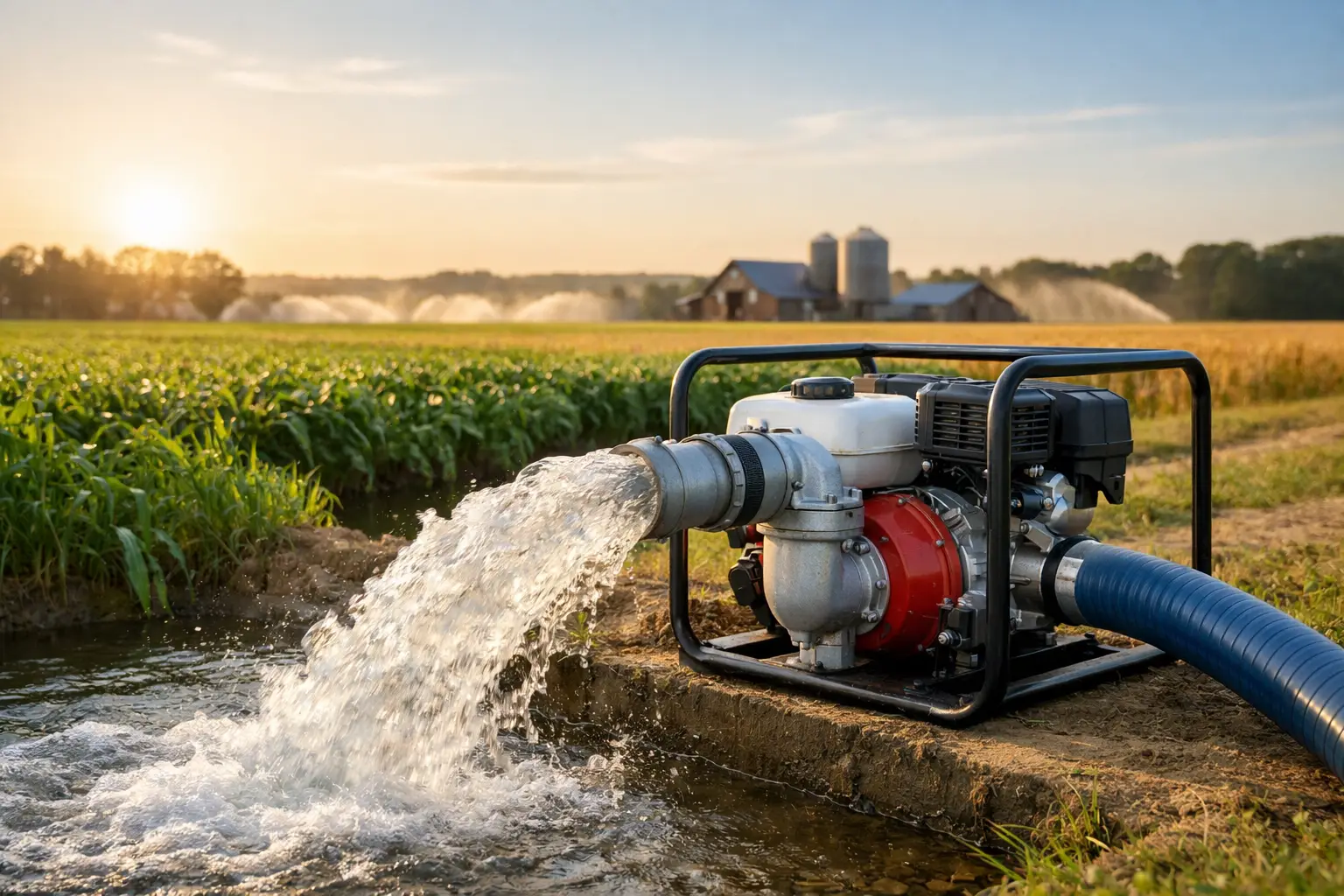
Petrol-powered pumps suit remote paddocks and locations without power. They offer flexibility and can provide strong transfer rates, but factor in fuel use, engine maintenance, noise and safe storage. They should always operate in a well-ventilated outdoor area, on stable ground and away from dry grass or fuel spills.
Submersible pumps are particularly useful for dams, tanks, pits and water sources where priming a surface pump would be difficult. Some models are designed for clean water, while others tolerate dirty water and solids. Match the pump to the water quality. A clean-water pump may be damaged or blocked if it is expected to handle leaves, gravel or heavy sediment.
If the pump supports livestock watering or a household supply, it may be worth separating transfer and pressure duties. A transfer pump moves water to a storage tank efficiently, while a pressure pump supplies taps, trough valves or irrigation outlets. One pump can sometimes do both, but a two-stage setup often gives better control and makes maintenance easier on a working property.
Pipe size can make or break pump performance
Undersized pipe is one of the most common causes of poor transfer results. Narrow pipe creates friction, especially over long runs and at higher flow rates. The pump then spends more of its energy overcoming resistance instead of moving water.
For a short transfer line, the effect may be small. Across several hundred metres, pipe diameter becomes a major design decision. Increasing the main delivery line from 25 mm to 40 mm or 50 mm can substantially reduce friction losses, depending on the flow required. The higher upfront cost may be repaid through better delivery rates and lower operating costs.
Keep the suction line as short and straight as possible. Use reinforced suction hose that will not collapse under vacuum, and make every connection airtight. Even a small air leak on the suction side can prevent priming or cause erratic performance. A correctly sized foot valve and strainer help keep the line primed while stopping sticks, leaves and other debris from reaching the pump.
On the delivery side, use fittings, valves and filters that suit the pipe diameter and expected flow. Avoid reducing the line size immediately after the pump unless the system has been designed for it. A pressure gauge near the pump can also make fault-finding much easier when flow drops.
Plan for water quality and dry-run protection
Dam and creek water changes through the year. After rain, sediment levels can rise quickly. During dry periods, a falling water level can draw the suction point closer to mud and organic material. Position the intake above the bottom and use a float arrangement where appropriate, so it follows the water level without dragging through silt.
A strainer protects the pump, but it is not a substitute for sensible intake placement. Clean it regularly, particularly during heavy use. If water will be used for household supply, stock drinking water or irrigation components with fine nozzles, filtration should be selected for the application downstream. Transfer filtration protects equipment; drinking-water treatment requires a more specific system design.
Dry running is another avoidable cause of pump failure. Fit low-water cut-out protection, a float switch or suitable controller where the source may run low. For portable pumps, make checking the water level and priming condition part of every start-up routine.
Allow for power, maintenance and future expansion
The most economical pump is not always the lowest-priced unit. Consider the cost of power or fuel, the likely operating hours, availability of spare parts and how easily the pump can be serviced. A pump running occasionally to fill a small header tank has different priorities from one transferring water every day across a large property.
Also consider what may change over the next few years. A bigger tank, another trough line, expanded irrigation or a new shed can all increase demand. Selecting a pump with some useful capacity in reserve is sensible, provided it still operates efficiently at the current duty point.
For properties that need a complete water setup, Aus Water Tanks can help match storage, transfer pumping, pressure equipment and filtration so the components work together. Providing your water source, pipe run, elevation and required flow gives an adviser the information needed to recommend a suitable system with confidence.
A well-chosen transfer pump should become one of the quiet workhorses on the property: ready when water needs moving, sized for the job and straightforward to maintain. Start with the real distance, lift and volume involved, then choose equipment that gives your farm room to keep working when conditions are less than ideal.