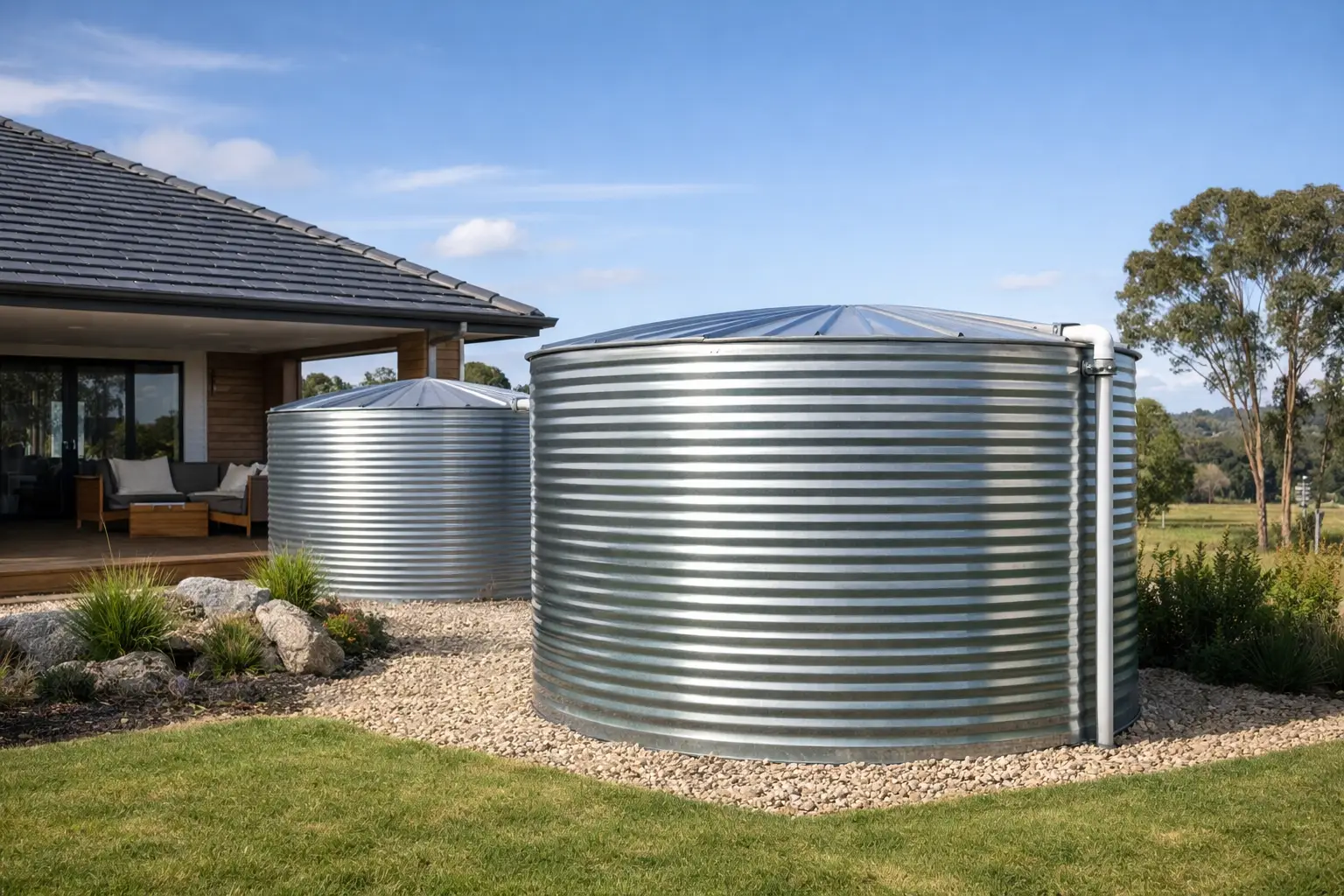
A tank that is too small can leave a household watching the weather forecast. A tank that is too large for the prepared site can create unnecessary cost and installation headaches. Round steel rainwater tanks sit in the practical middle ground for many Australian properties, offering substantial storage in a footprint that works well beside homes, sheds, farms and commercial buildings.
For households relying on rainwater for toilets, laundry, gardens or full-time drinking water supply, storage is not simply a purchase decision. It is part of a working system that includes roof catchment, gutters, screens, pumps, filtration and safe overflow management. Choosing the tank properly at the start makes every other component easier to size and manage.
Why choose round steel rainwater tanks?
Round tanks make efficient use of material and distribute the pressure of stored water evenly around the wall. That circular shape is especially suited to larger capacities, where a slimline design would need to be very long or where available space is open rather than narrow.
Steel tanks are a popular choice for rural homes, acreage blocks, farms and larger suburban sites because they provide serious capacity without taking over the property. They can be manufactured in a wide range of diameters and heights, giving buyers more options when matching a tank to a site, access route and expected water demand.
Aquaplate steel tanks use a steel substrate with a protective coating designed for water storage. BlueScope Aquaplate tanks are backed by 20-year anti-corrosion coverage and a 10-year tank construction warranty, subject to the manufacturer’s terms and correct installation. For buyers making a long-term investment in water security, that warranty support can be as valuable as the litre capacity printed on the quote.
There is a trade-off. Steel tanks generally need more careful site preparation and assembly planning than smaller poly tanks. Access, base construction, local wind conditions and installation method should all be considered before delivery day. For the right site, however, the capacity and durability can make steel the better-value choice over the life of the system.
Start with demand, not just available space
The first question is not, “What tank will fit?” It is, “How much water does the property need between useful rainfall events?” Your answer changes depending on whether the tank will water a garden, supplement mains water, supply a weekend cabin or support a full-time family home.
A household using tank water for laundry, toilets and garden irrigation may manage with a smaller storage volume than a home using rainwater for every tap. Rural properties also need to allow for livestock, wash-down areas, machinery cleaning or a reserve for fire protection. These uses can add up quickly during a dry spell.
Roof area matters just as much as water use. A large metal roof in a high-rainfall coastal area can fill a tank regularly, while the same tank on a modest roof in a drier inland location may take much longer to recharge. Local rainfall patterns are useful, but the dry months matter more than the yearly average. A good system is designed to carry the property through the periods when rain is least reliable.
It is often sensible to choose the largest practical capacity that the site and budget allow, especially where delivery costs, earthworks and plumbing are already being organised. Adding storage later can be more expensive than allowing for it in the original design. That said, there is little benefit in oversized storage if the roof catchment cannot fill it or if water turns over too slowly for the intended use.
Think about future water use
A tank chosen for two people may be asked to support a growing family, a granny flat, a new shed roof or expanded gardens within a few years. Builders and developers should also consider whether future plumbing connections or additional tanks may be required.
Planning for expansion does not always mean buying the biggest single tank. In some situations, two connected tanks provide flexibility, allow staged installation and make it easier to work around site access. A qualified installer can advise on the most suitable layout for the block.
A sound base protects the tank and your investment
A full rainwater tank is extremely heavy. One thousand litres of water weighs approximately one tonne, so a 20,000-litre tank can place around 20 tonnes on its base before allowing for the tank itself. The base must be level, properly compacted and able to support the full load evenly.
Many round steel rainwater tanks are installed on a prepared sand pad, while other sites may require an engineered base or concrete slab. The preferred option depends on tank size, soil conditions, slope, drainage and the manufacturer’s requirements. Never assume a roughly level patch of ground is enough.
The tank should also be positioned where water can safely overflow away from buildings, retaining walls and neighbouring land. Poor overflow planning can turn a useful rain event into erosion around the base or flooding near the house. Consider where the water will go before the tank is full, not after.
Access is another practical detail that is easy to overlook. Check the route for delivery vehicles, the room needed for assembly, overhead powerlines, gates and tight corners. On remote or sloping properties, an early site check can prevent costly changes later.
Match the pump to the job
Stored water only becomes convenient household water when the pump can deliver it at the pressure and flow your fixtures need. A garden hose may work well with a modest pressure pump, while a house with multiple bathrooms, a washing machine and irrigation zones needs a more carefully matched unit.
Pump selection depends on the distance from tank to house, elevation changes, pipe diameter, the number of outlets likely to run at once and whether rainwater is the primary supply. A pump that is undersized may cycle excessively or deliver weak flow at the furthest tap. One that is oversized can add unnecessary upfront cost and may not suit the plumbing arrangement.
For homes connected to town water, a rain-to-mains system can automatically switch supply when the tank level is low. This can be a practical option where rainwater is used for selected household fixtures but continuous service is essential. Rural and off-grid properties may instead require a pressure pump, storage arrangement and filtration setup designed around complete self-sufficiency.
Protect water quality from the roof to the tap
A tank is only one part of good rainwater quality. Leaves, dust, insects and roof debris should be managed before they reach the water. Gutter guards, rain heads, inlet strainers and first-flush devices each have a role, depending on the roof type and local conditions.
A sealed tank with a suitable lid, screened openings and protected overflow helps keep pests and light out. This reduces the chance of algae growth and contamination. Regularly inspect screens, gutters and inlet components, particularly after storms, nearby building work or long dry periods.
Where rainwater is used for drinking, kitchen taps or whole-house supply, filtration should be selected for the intended water use rather than added as an afterthought. Sediment cartridges can protect equipment and improve clarity, while carbon filtration may help with taste and odour. UV treatment is often used as an added barrier for microbiological protection when the system has been correctly designed and maintained.
Replacement cartridges, UV lamps and service kits are ongoing parts of a drinking-water system. Factor those maintenance costs into the decision from the beginning. A premium tank and pump cannot compensate for neglected filters or damaged screens.
Installation details that make a difference
Tank accessories should be chosen as a system, not as isolated add-ons. Inlet locations, outlets, valves, overflow size, pump connections and pipework need to work together. A low-level outlet may suit gravity-fed garden use, while a higher connection can preserve a small sediment zone at the bottom of the tank.
If fire preparedness is a requirement, discuss this early with your installer, builder or relevant authority. A dedicated fire reserve, accessible connection point and suitable pump arrangement may be needed. Requirements vary by location, building approval and insurer, so it pays to confirm them before the tank is ordered.
Also check local council requirements, plumbing rules and any development conditions. These can affect tank placement, stormwater overflow, connections to internal plumbing and backflow prevention. A licensed plumber should complete plumbing work where required.
Choosing with confidence
The best round steel tank is the one sized for your roof, household demand, site conditions and long-term plans. Capacity matters, but so do the base, pump, filtration, fittings and the quality of advice behind the purchase.
Aus Water Tanks can help customers compare tank capacities and build a compatible rainwater system around the way they actually live or work. A clear plan before ordering means your tank can do what it was bought to do: hold dependable water when the property needs it most.