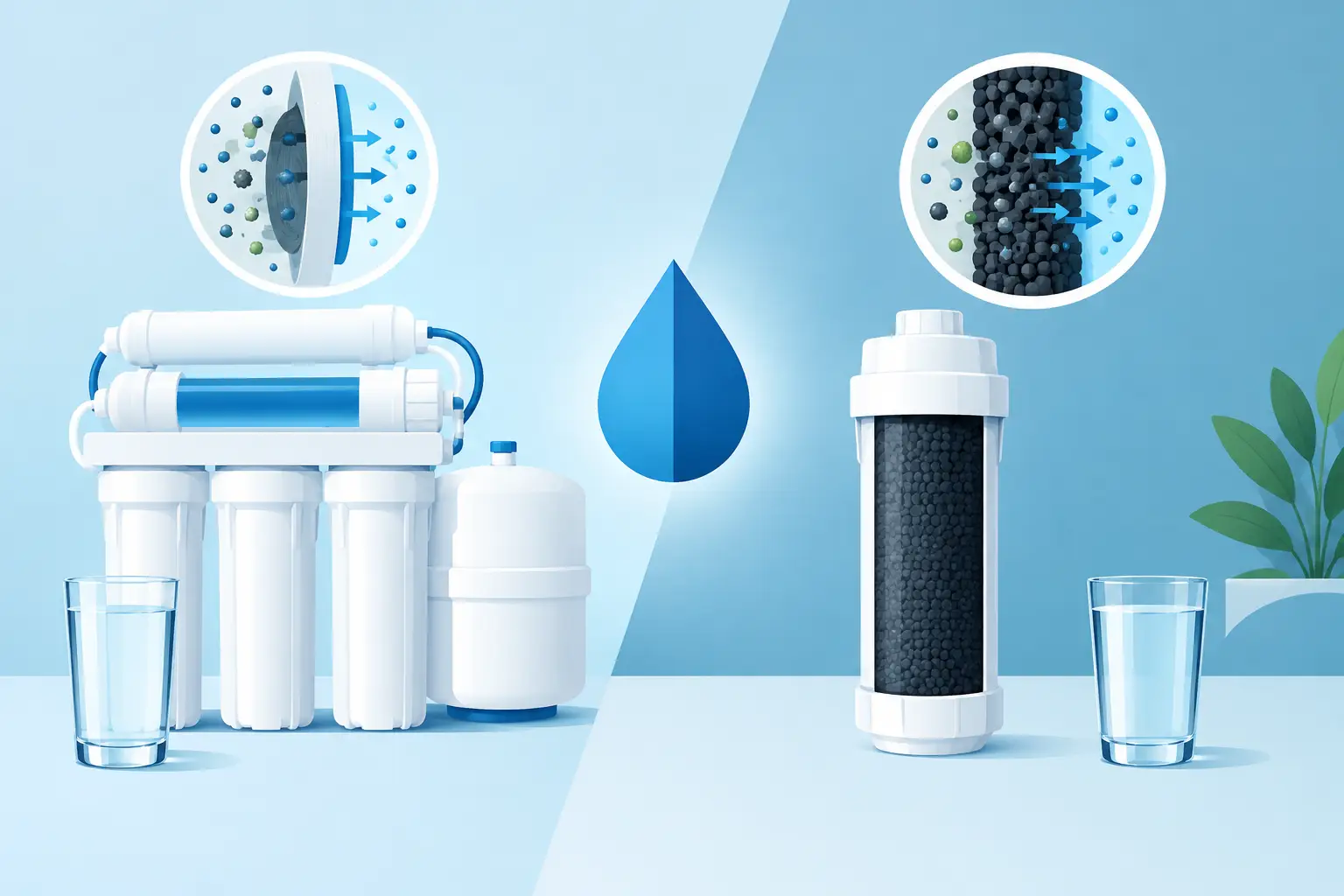
A glass of water can taste clean while still carrying the chlorine smell from town supply, fine sediment from ageing pipework or dissolved substances that affect its quality. That is why reverse osmosis versus carbon filtration is not simply a choice between two filters. These technologies do different jobs, suit different water sources and are often most effective when used together in the right places.
For many Australian households, activated carbon is the practical starting point for improving water throughout the home. Reverse osmosis is usually a more targeted solution for drinking and cooking water at a single tap. Understanding that distinction can save money, reduce maintenance hassles and lead to a system that genuinely suits your household.
Reverse osmosis versus carbon filtration: the key difference
Activated carbon filtration works by adsorption. Water passes through porous carbon media, and many unwanted compounds cling to its extensive internal surface area. It is particularly useful for reducing chlorine, unpleasant tastes and odours, and a range of organic compounds. A suitable carbon cartridge can make mains water far more pleasant to drink, shower in and use around the house.
Reverse osmosis, commonly called RO, uses pressure to push water through a very fine semi-permeable membrane. The membrane separates a large proportion of dissolved salts, minerals and other dissolved contaminants from the treated water. It is a much finer form of filtration, but it needs more stages, more pressure and more careful installation than a standard carbon cartridge.
Put simply, carbon improves the taste and smell of water and treats selected chemical contaminants. Reverse osmosis is designed to reduce a much wider range of dissolved material. Neither is automatically “better” – the right choice depends on what is in your water and where you need treatment.
What activated carbon filtration does well
Carbon filtration is commonly used in whole house systems because it can treat every tap without the complexity or water use of a whole-house RO system. For town water, a carbon stage after sediment filtration is an effective way to reduce chlorine and the associated taste and odour. It can also protect householders who find chlorinated shower water unpleasant and help improve the water used in washing and cooking.
Not all carbon media performs identically. Standard activated carbon is widely used for chlorine reduction. Where a water supply is disinfected with chloramines, catalytic carbon may be the better option because chloramines are more difficult to reduce. Cartridge size, carbon type, water flow and contact time all affect performance. A small cartridge may be suitable beneath a sink, while a larger whole-house housing offers better flow and longer service life for a family home.
Carbon does have limits. It is not intended to reliably remove high levels of dissolved salts, hardness, fluoride, nitrates or all heavy metals. It is also not a substitute for disinfection. On rainwater supplies, carbon can reduce odours and improve taste, but it does not provide dependable protection against bacteria, viruses or other microorganisms. Where microbiological safety is a concern, a correctly sized UV disinfection system following good sediment filtration is usually the more appropriate approach.
Where reverse osmosis makes sense
An RO system is generally installed under the kitchen sink with its own dedicated drinking-water tap. This gives a household highly treated water for drinking, tea and coffee, cooking and filling water bottles, without trying to process every litre used for showers, toilets or the washing machine.
RO can be a sensible choice where a water test, local supply characteristics or household preference points to dissolved contaminants. It is often considered for water with noticeable mineral content, elevated total dissolved solids, particular dissolved metals, fluoride or nitrate concerns. Performance varies by membrane, incoming water quality, pressure and maintenance, so check the manufacturer’s reduction claims rather than assuming every RO unit addresses every contaminant to the same level.
Most RO systems use several stages. Sediment pre-filtration protects the membrane from dirt and fine particles. Carbon pre-filtration helps protect the membrane from chlorine, which can damage many RO membranes. The membrane then performs the fine separation, and a final carbon filter is often used to polish taste before water reaches the tap. This is one reason the comparison is not strictly either-or: carbon is usually part of a reverse osmosis system.
The trade-offs with RO
Reverse osmosis produces a separate reject water stream as the membrane flushes away concentrated dissolved material. Modern systems can be efficient, but they still use more water than carbon-only filtration. This matters for households on rainwater tanks, particularly during dry periods, and for anyone keen to minimise water use.
RO systems also need suitable incoming pressure to operate effectively. Some installations benefit from a pressure pump, while others may need a pump-equipped RO unit where supply pressure is low. The storage tank, tap, tubing and filter changes need room beneath the sink, so it is worth checking the available cupboard space before ordering.
Because RO reduces minerals along with other dissolved solids, the water may taste lighter or flatter than untreated water. Some households prefer this; others choose a remineralisation stage after the membrane. This is a preference rather than a requirement, but it is worth discussing when selecting a system.
Choosing for town water
For most town-water homes, a whole-house sediment and carbon filtration system is the sensible first investment. It addresses the concerns people notice daily: chlorine smell, chlorine taste, sediment and water that feels less pleasant for bathing. It also provides filtered water at every tap, not only in the kitchen.
If your goal extends to reducing dissolved substances in drinking water, add a point-of-use RO system at the kitchen sink. This combination keeps whole-house treatment practical while reserving the more intensive filtration process for the water your family drinks and cooks with.
A household concerned specifically about chloramines should confirm the disinfectant used by its local water supplier and choose carbon media accordingly. A water test can also help where concerns relate to lead from internal plumbing, bore water blending or unusually high dissolved solids.
Choosing for rainwater tanks
Rainwater needs a different starting point. The priority is usually managing sediment, organic material and microbiological risk rather than removing chlorine. A well-designed whole-house rainwater system commonly includes a sediment filter to protect downstream equipment and UV disinfection to manage microorganisms. A carbon stage may be added when taste, odour or organic compounds are an issue.
RO can still be used on rainwater for a dedicated drinking tap, but it should not replace sound tank and filtration management. Keep gutters and screens maintained, use a first-flush diverter where appropriate, clean the tank when required and make sure sediment filters are changed before they become heavily loaded. UV systems depend on clear water, so poor pre-filtration can reduce their effectiveness.
For homes relying entirely on tank water, consider RO water use carefully. The reject water may be collected for suitable non-drinking uses where plumbing arrangements allow, but it should never be connected in a way that risks backflow or contamination. A licensed plumber can advise on a compliant installation.
Maintenance is part of the decision
A filter works properly only while it is maintained. Carbon cartridges eventually become exhausted and should be replaced according to their rated capacity, water usage and the manufacturer’s schedule. A sudden return of chlorine taste or odour can be a sign that a carbon filter is due for replacement, but scheduled servicing is more reliable than waiting for the problem to become obvious.
RO pre-filters are commonly changed more often than the membrane because they protect the system’s most important component. Membrane life varies widely with feed-water quality, usage, pressure and pre-filter changes. Follow the specified service intervals, sanitise the unit when recommended and replace post-carbon filters to maintain good taste.
For whole-house systems, choose filter housings and cartridges sized for your household’s peak flow. An undersized system can cause an annoying pressure drop when someone is showering while the washing machine is filling. Larger cartridges can cost more upfront but often deliver better flow and fewer changeovers for busy families.
A practical way to decide
Start with the water source and the result you want. If you use mains water and want better taste, less chlorine and filtered water throughout the home, sediment and carbon filtration is usually the right foundation. If you use rainwater, begin with sediment filtration and UV disinfection, then add carbon if taste and odour warrant it.
Choose reverse osmosis when you want an extra level of treatment for drinking and cooking water, especially where dissolved contaminants or mineral content are a concern. If you are unsure, arrange a water test or seek expert advice before buying. The best system is not the one with the most stages – it is the one that matches your water source, household demand and service commitment.
Aus Water Tanks can help homeowners compare whole-house filtration, UV and reverse osmosis options so each stage has a clear purpose. A well-matched system gives your family confidence at the tap without adding equipment you do not need.