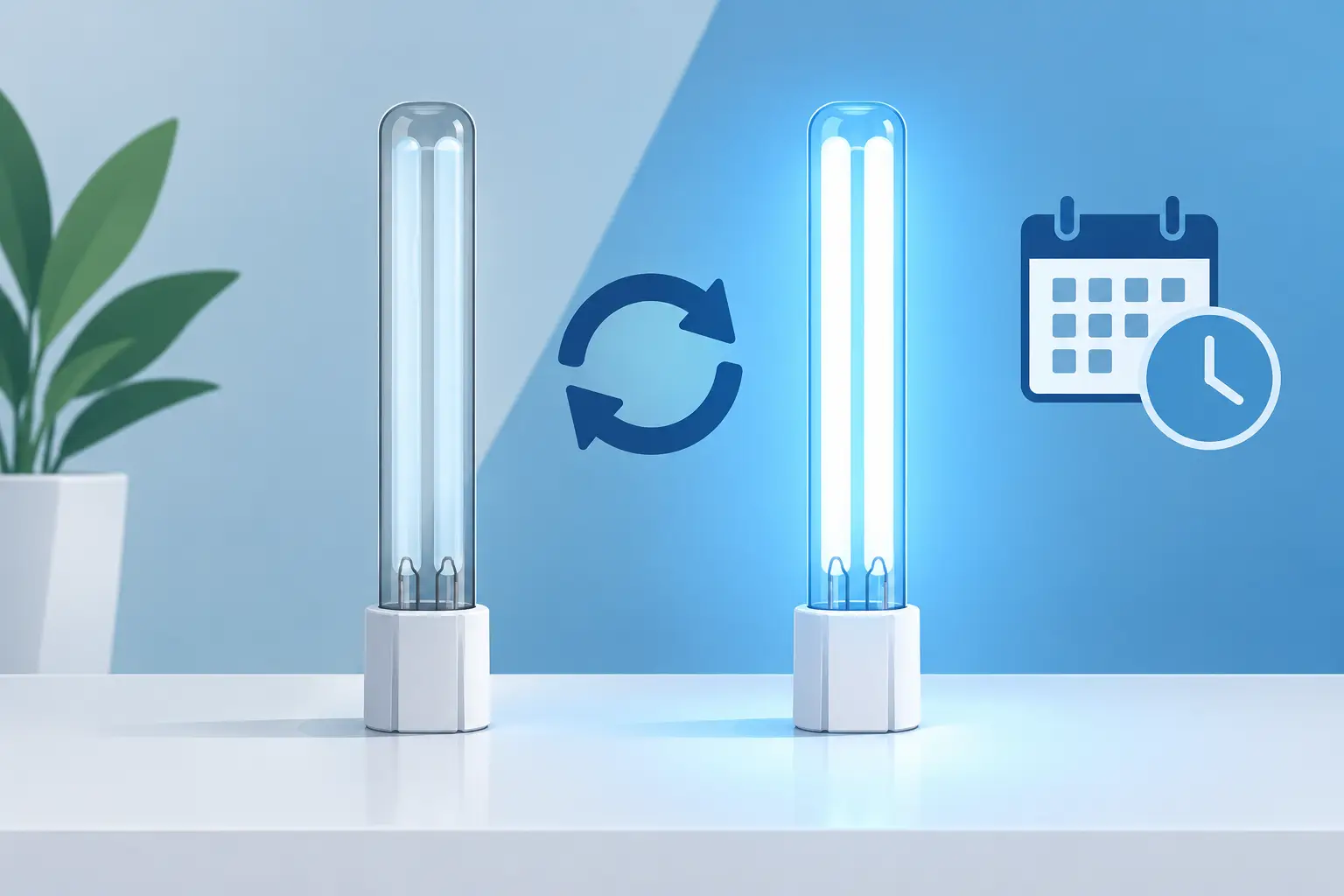
A UV lamp can still appear to be working long after it has stopped delivering the germicidal performance your water treatment system relies on. That is why UV lamp lifespan is measured by useful UV output, not simply whether the lamp still glows. For households using tank water, bore water or filtered mains water, replacing the lamp on schedule is a small maintenance job that helps protect the whole system’s performance.
How long does a UV lamp last?
Most UV disinfection lamps used in domestic whole-house systems are designed for around 9,000 hours of continuous operation. In a system left on all day, every day, this is roughly 12 months. Some lamps have a different rated life, commonly between 6,000 and 12,000 hours, so the manufacturer’s specification for your particular UV unit should always take priority.
The lamp does not usually fail suddenly at the 9,000-hour mark. Instead, its UV-C output gradually declines. It may still emit visible blue light, but the dose of germicidal ultraviolet energy passing through the water can be too low to provide the intended level of treatment. This is the key reason a glowing lamp is not proof that your UV system is doing its job.
For most homes, marking the installation date on the UV controller, service record or calendar is the easiest approach. If your system has a countdown controller or lamp-change alarm, use it as a prompt, then fit the correct replacement lamp rather than delaying the service.
Why UV lamp lifespan matters for rainwater systems
Rainwater is an excellent household water source when the collection and treatment system is properly maintained. However, it can pick up bacteria and other microorganisms from roofs, gutters, bird droppings, insects and debris. A UV system provides a final disinfection barrier after the water has passed through suitable pre-filtration.
That final barrier only works as intended when the lamp has enough output and the water is clear enough for UV light to pass through. If an ageing lamp is left in service because it still looks operational, the household may have less protection than expected.
This matters particularly for families drinking tank water, rural homes with variable water quality and properties that have guests, children, older residents or anyone with a reduced immune system. It also matters for holiday homes and rentals, where service dates can be easy to miss.
UV disinfection is not a replacement for sound tank hygiene, roof and gutter maintenance, first-flush diversion or sediment filtration. It works best as one part of a well-planned water treatment setup.
What can shorten a UV lamp’s useful life?
The rated lifespan is based on normal operating conditions. Actual performance can be affected by the lamp, the controller and the condition of the whole UV chamber.
Frequent on-off switching can be hard on some lamp types. Most domestic UV systems are designed to remain powered continuously, which allows the lamp to warm up and provides consistent disinfection whenever water flows. Switching the unit off overnight or only running it when water is needed can also leave untreated water in the plumbing and may shorten lamp life. Follow the instructions for your specific system, as some newer units are designed differently.
Electrical faults, poor-quality replacement lamps and an incompatible controller can also affect operation. A lamp may physically fit a chamber but still be unsuitable for the ballast or controller. Matching the lamp by model number, wattage, pin configuration and length is safer than ordering by appearance alone.
Water quality has an equally important role. UV light needs clear water. Sediment, dirt, organic matter, iron staining and cloudiness can block or scatter UV light before it reaches microorganisms. A dirty quartz sleeve creates the same problem by placing a film between the lamp and the water.
In practical terms, a new lamp cannot make up for poor pre-filtration. For rainwater systems, sediment filtration ahead of the UV chamber is generally essential. Depending on the water supply and the treatment goals, carbon filtration may also be used to improve taste, odour and reduce other contaminants.
Signs your UV lamp needs attention
A scheduled annual replacement is more reliable than waiting for a warning sign. Still, the following issues are worth checking promptly:
- A lamp-change, audible alarm or fault message appears on the controller.
- The lamp has reached its rated service hours, even if it is still illuminated.
- The quartz sleeve is cloudy, stained or coated with mineral scale.
- The system has been switched off for an extended period, damaged by a power surge or is showing intermittent operation.
- You are unsure when the previous owner, installer or tenant last serviced the unit.
If a UV controller alarm sounds, do not simply silence it and carry on. Check whether it is a lamp-life reminder, lamp failure warning or a controller fault. The response may be as simple as replacing the lamp and resetting the timer, but a persistent alarm should be investigated before relying on the system.
Replacing a UV lamp the right way
UV lamp replacement is straightforward for many household systems, but care matters. Turn off the power and isolate the water supply as required by the manufacturer’s instructions. Allow the lamp to cool before handling it, as UV lamps can become hot during use.
Avoid touching the glass with bare fingers. Oils from skin can create hot spots on the lamp and reduce performance. If you do touch the glass, clean it carefully using a soft, lint-free cloth and an appropriate cleaner recommended by the lamp manufacturer. Handle the lamp by its ceramic ends where possible.
A yearly lamp change is also a sensible time to inspect the quartz sleeve and O-rings. The sleeve is the clear protective tube around the lamp, separating the electrical components from the water. If it is dirty, it should be cleaned carefully. If it is cracked, badly etched or heavily stained, replace it. Damaged O-rings should also be replaced to help prevent leaks.
Once the system is reassembled, check for leaks before restoring normal use. Confirm the controller recognises the new lamp and reset the service timer if your unit has one. Keep a note of the date, lamp model and any sleeve or filter changes. This makes the next service far easier and is useful for property managers or future owners.
Never look directly at an operating UV lamp outside its chamber. UV-C light can damage eyes and skin, even when exposure is brief. If you are not confident working with the electrical connections, glass sleeve or seals, arrange help from a qualified technician.
Choosing the correct replacement lamp
Replacement UV lamps are not one-size-fits-all. The safest option is to identify the exact UV system model, then match the replacement lamp to the manufacturer’s part number. Check the lamp length, wattage, connector type and number of pins before ordering.
It is tempting to choose a lower-priced lamp that appears similar. The trade-off is that the wrong lamp may not start correctly, may operate outside the controller’s intended range or may not deliver the specified UV output. In a disinfection system, compatibility and verified performance are worth more than a small upfront saving.
For customers maintaining a whole-house filtration setup, it can make sense to service related components together. Replacing sediment cartridges on schedule helps keep water clear for the UV chamber, while an annual UV lamp and sleeve inspection helps maintain the final treatment stage. Aus Water Tanks can help identify suitable replacement lamps and service items when you have the system model or existing part number available.
Do you need to replace the quartz sleeve every year?
Not always. A quartz sleeve can often last for several lamp cycles if it remains clear, undamaged and properly maintained. Its condition depends on the quality of the incoming water. Hard water, iron, manganese and mineral deposits can cause scaling or staining that is difficult to remove.
Inspecting and cleaning the sleeve whenever the lamp is changed is good practice. Replace it if it is cracked, chipped, permanently cloudy or no longer clean enough to allow clear transmission of UV light. Reusing a sound sleeve offers good value, but keeping a worn sleeve to save money can reduce the effectiveness of a brand-new lamp.
Keep the UV system part of your regular water maintenance
A UV unit is easy to forget because it operates quietly in the background. Treat its lamp change like changing a smoke alarm battery or servicing a pump: set the date, use the correct part and check the supporting equipment at the same time. A fresh lamp, clean sleeve and well-maintained pre-filters give your household the best chance of receiving the reliable water treatment your system was designed to provide.