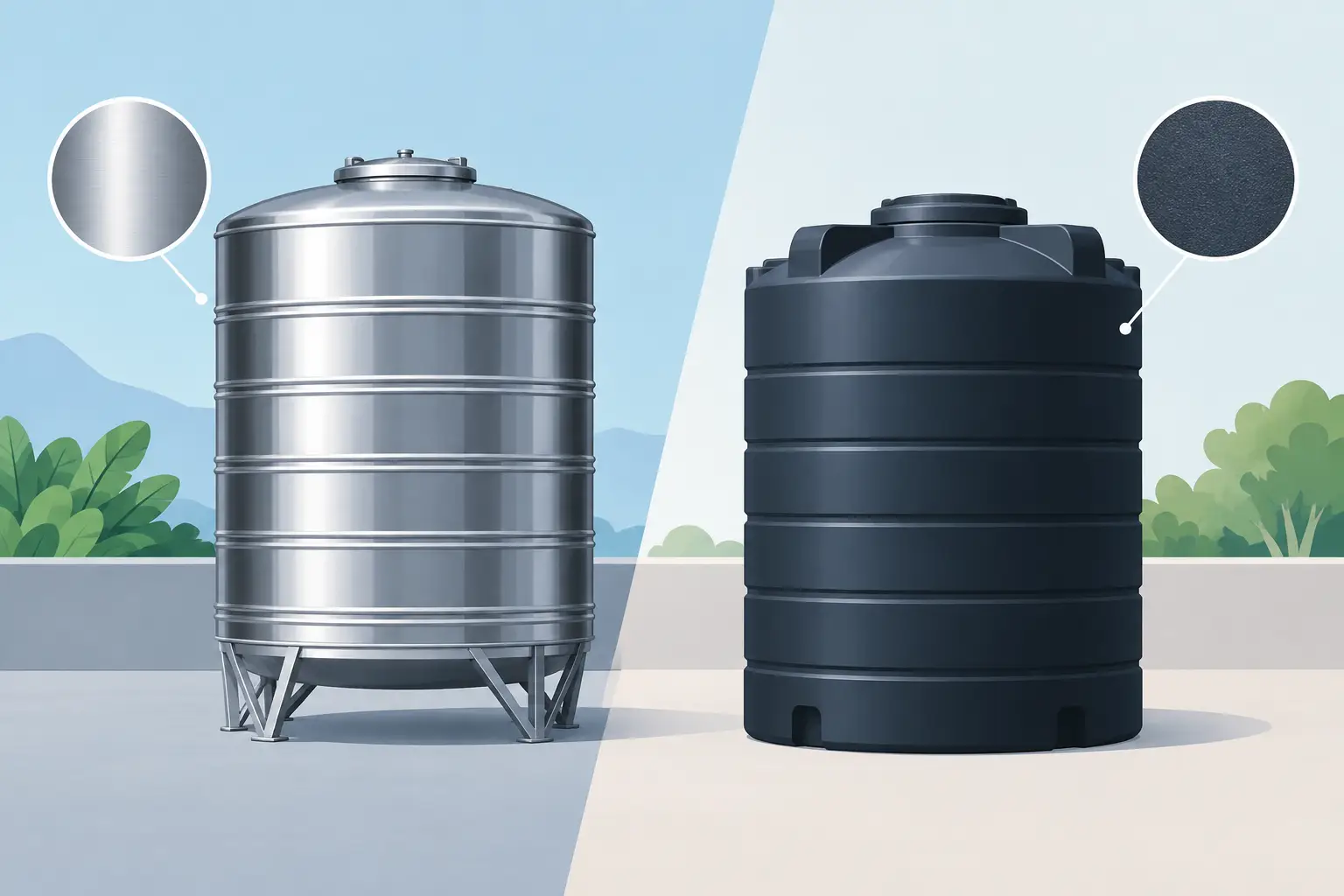
A tank is not something most households want to replace in a few years. Once the pad is poured, plumbing is connected and gutters are feeding the system, the right choice comes down to how the tank will live on your property for the long haul. In the steel versus poly decision, there is no single winner. The best option depends on capacity, access, site conditions, budget and how you plan to use the water.
For a suburban home wanting garden supply and toilet flushing, a slimline poly tank may be the practical answer. For an acreage property storing serious volumes of rainwater for household use, a large round steel tank can offer excellent value per litre. Understanding the differences before ordering helps avoid costly compromises later.
Steel versus poly water tanks at a glance
Steel and poly tanks both collect and store rainwater effectively when they are properly installed and maintained. The key difference is their construction. Steel tanks are generally made from corrugated galvanised steel, often with a protective coated finish and an internal liner. Poly tanks are rotationally moulded from food-grade polyethylene, creating a one-piece tank with no separate liner.
Steel tanks are commonly chosen where large storage capacity is the priority. They are available in substantial round formats and suit rural homes, farms, sheds and larger developments where there is enough room for installation. Poly tanks are lighter, easier to handle and available in round, squat and slimline designs. That flexibility makes them especially useful beside a house, down a narrow side passage or in a courtyard-style space.
Neither material automatically means better water. A well-designed tank system needs clean roof catchment, gutter protection, a first-flush device, mosquito-proof screens and suitable filtration for the intended use. If rainwater supplies drinking taps, whole-house filtration and UV disinfection can provide added confidence where treatment is required.
When a steel tank makes sense
A steel water tank is often the sensible choice when you need high-capacity storage without paying a premium for every litre. Large round tanks can store tens of thousands of litres, making them well suited to families on rainwater, rural properties, livestock supply and bush blocks where water security matters.
The larger diameter and engineered structure of a steel tank allow significant storage volumes on a level, prepared base. Corrugated steel construction is also familiar to many Australian property owners and can suit the look of sheds, farm buildings and rural homes. A quality tank should have appropriate steel thickness, a durable protective coating, sound roof construction and a liner designed for potable water storage where drinking water is the goal.
Steel tanks do require attention to the details that protect the tank from the inside out. Most rely on an internal liner, so liner quality, fitting and protection from sharp edges are important. The roof, inlet screen, overflow and access point should also be correctly installed to keep out insects, leaf matter and sunlight. A damaged liner is repairable in many cases, but it should be dealt with promptly to prevent leaks and protect the tank structure.
Site access is another consideration. Large steel tanks are commonly delivered in kit form and assembled on site, which can be a major advantage where a fully moulded tank could not be moved into place. However, assembly needs enough clear working room and a properly prepared pad. It is not a job to rush.
Where poly tanks have the advantage
Poly tanks are popular because they are straightforward to deliver, position and connect. Their one-piece construction means there is no internal liner to install, and the tank body is designed to resist corrosion. For many homes, that simplicity is a genuine benefit.
A slimline poly tank can fit along a fence line or external wall where a round steel tank would take up too much usable space. Shorter, wider squat tanks can work well under decks or in areas with height restrictions. If access is tight, the lighter weight of a poly tank may also make installation easier, although larger tanks still require careful handling and suitable equipment.
Good-quality poly tanks for outdoor use are UV-stabilised to cope with Australian conditions. Colour options can help a tank blend into its surroundings, while opaque walls help limit light entering the stored water. Keeping light out matters because sunlight can encourage algae growth.
Poly is not maintenance-free, though. The tank needs a firm, level base that fully supports its footprint. An uneven or undersized base can cause distortion, stress around fittings and long-term performance issues. Poly tanks should also be protected from impact damage, particularly in areas used by vehicles, machinery or active children.
Strength, weather and fire considerations
It is tempting to think of steel as always stronger and poly as always more vulnerable, but the practical picture is more specific. A correctly specified steel tank is very well suited to large-volume storage. A quality poly tank is also highly durable within its intended capacity and installation conditions. What matters most is choosing a tank from a reputable manufacturer and preparing the site properly.
In exposed locations, think about wind, falling branches and vehicle access. Steel tank roofs and walls need to be specified and installed to suit local conditions. Poly tanks should not be placed where they are likely to be struck by a ute, mower, trailer or farm equipment.
Bushfire-prone areas need particular care. Steel tanks may be preferred in some higher-risk settings, but tank selection is only one part of a broader bushfire plan. Plumbing materials, pumps, power supply, firefighting connections and property access all matter. Check local requirements and speak with an experienced installer or relevant authority before relying on any tank as part of your fire preparedness.
Cost is more than the tank price
A smaller poly tank can often have a lower upfront purchase and installation cost than a large steel tank. It arrives ready-made, and its lighter construction can reduce handling requirements. That said, poly is not always cheaper once capacity increases, especially if you need a large round tank.
Steel tanks can deliver strong value when you need high storage volumes. The price comparison should include the tank, freight, delivery access, base preparation, installation, pump, plumbing fittings, screens and any filtration equipment. A low tank price is not necessarily the lowest project cost.
Think about the water you may need during a dry spell, not just the water you collect in a wet month. A household relying on rainwater needs storage that matches roof area, rainfall patterns, household demand and backup options. For garden-only use, the calculation may be less demanding, but a larger tank can still reduce dependence on mains water through summer.
Water quality: the tank is part of the system
Whether you choose steel or poly, water quality starts on the roof. Leaves, bird droppings, dust and debris can all enter the system if gutter guards, rain heads and screens are neglected. A first-flush diverter can reduce the load entering the tank after dry weather, while a sealed lid and screened overflow help keep insects and vermin out.
For rainwater used throughout the home, filtration should match the water source and household needs. Sediment filtration can protect plumbing and pumps, carbon filtration may help improve taste and odour, and UV disinfection can provide an additional treatment barrier where microbiological safety is a concern. Filters and UV lamps need scheduled replacement to keep the system performing as intended.
Cleaning sediment from the bottom of a tank is occasionally necessary, particularly where roof catchment is heavily treed or gutters are not maintained. Steel tank owners should inspect liners and fittings as part of routine checks. Poly tank owners should inspect the base, walls, lid and connection points. In both cases, address small issues before they become a water supply problem.
Choosing the right tank for your property
Start with the available space and access route, then work back from the volume you need. A large steel tank may be the most cost-effective answer on an open block. A slimline poly tank may be the only practical fit for a suburban side yard. If you are balancing household water supply with a garden, consider whether two smaller tanks could make plumbing or placement easier than one very large unit.
Also consider what will sit alongside the tank. Pumps need weather protection and service access. Filters need room for cartridge changes. Tank outlets should be positioned so sediment can be managed and plumbing can be maintained without digging up the yard. Planning these details early makes the finished system easier to live with.
Aus Water Tanks can help customers compare tank styles, capacities, pumps and water treatment components for a complete setup. The aim is not to sell the biggest tank on the page, but to help you choose equipment that suits your site and provides dependable water when you need it.
A well-chosen tank should feel like quiet insurance: it collects water when the rain arrives, stores it safely through the dry weeks and supports your household without demanding constant attention. Choose the material that fits your property, then give equal care to the base, plumbing and water treatment around it.