

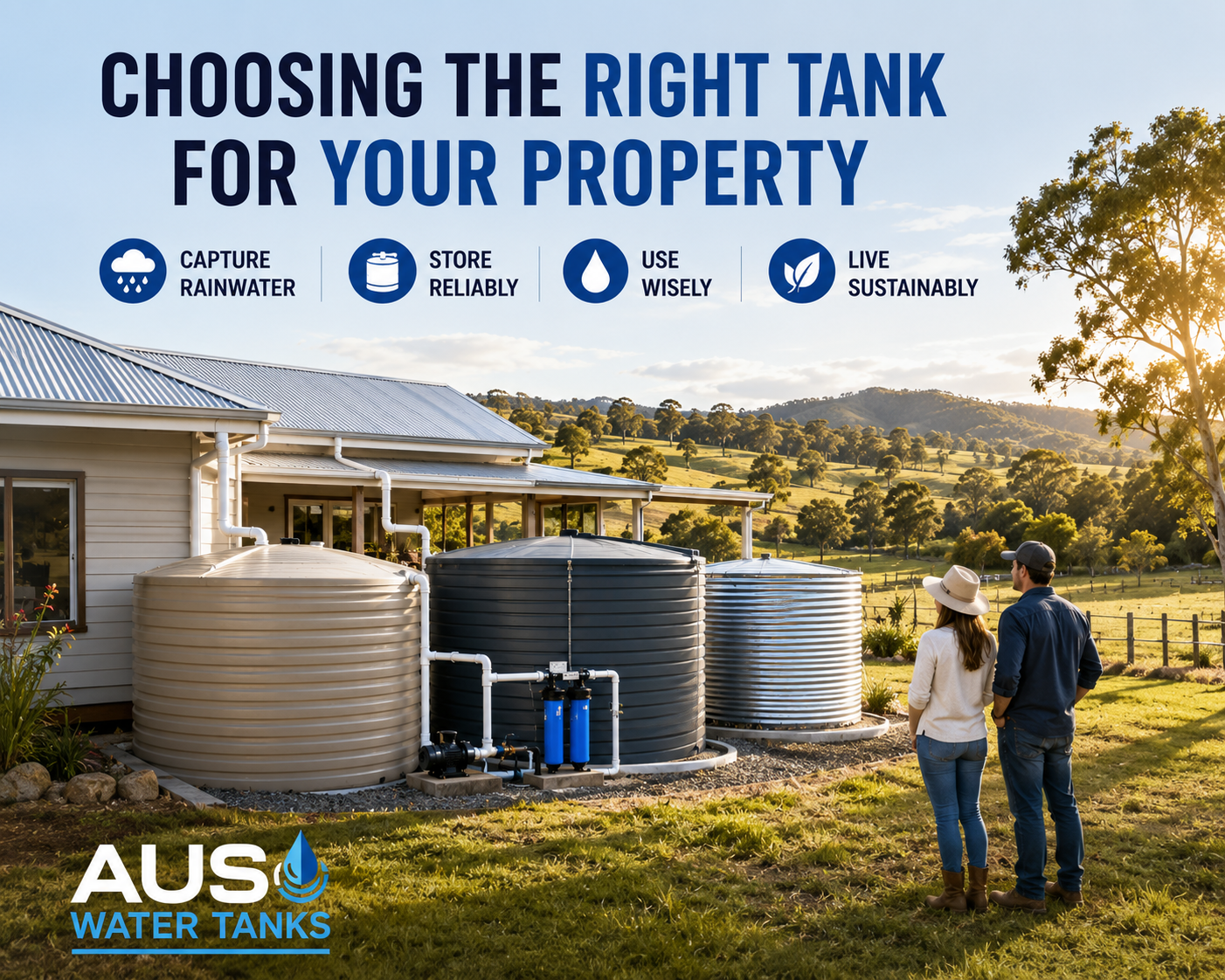
Owning an acreage property comes with greater freedom, but it also means taking responsibility for a dependable water supply. Whether you’re supplying a family home, livestock, gardens, workshops or irrigation systems, choosing the best water tanks for acreage is one of the most important investments you can make.
At Auswatertanks, we know that every property has different water demands. A small hobby farm has very different requirements from a working rural property, which is why selecting the right rainwater tank involves much more than simply choosing the biggest tank available. Storage capacity, roof catchment, pump performance, filtration and future water needs all play an important role in creating a reliable water system.
Start by Understanding Your Water Requirements
Before selecting a rainwater tank, take the time to calculate how much water your property uses throughout the year. Many acreage properties rely entirely on rainwater for drinking, cooking, washing and household use, while also supplying water to livestock, gardens, sheds and irrigation systems.
Daily household water consumption varies depending on the number of occupants, appliances and water-saving fixtures, but additional uses often place the greatest demand on stored water. Vegetable gardens, orchards, paddocks and stock troughs can quickly increase water usage, especially during Australia’s hotter months.
Planning for your total annual demand helps ensure your water supply remains reliable during extended dry periods.
Roof Catchment Plays a Big Role
The size of your roof directly affects how much rainwater you can harvest.
As a general guide, every millimetre of rainfall on one square metre of roof can collect approximately one litre of water before allowing for minor losses. Larger roof areas naturally capture more water, making them an important part of designing an efficient rainwater harvesting system.
It’s important to remember that first-flush systems, evaporation and overflow reduce the final amount collected, so allowing extra storage capacity is always worthwhile.
Choosing the Right Tank Capacity
One of the biggest mistakes acreage owners make is installing a tank that only meets today’s requirements.
As families grow, gardens expand, sheds are built and livestock numbers increase, water demand often rises significantly. Installing sufficient storage now can save the expense of upgrading your system later.
Many rural properties choose storage capacities between 22,500 litres and 45,000 litres for household use, while larger acreage properties commonly install 90,000 litres or more. Multiple tanks are often the most practical solution, providing greater flexibility while allowing individual tanks to be isolated for maintenance or reserved for fire protection.
Poly Water Tanks
Poly water tanks remain one of Australia’s most popular choices for acreage properties.
Manufactured from durable food-grade polyethylene, quality poly tanks resist corrosion, require very little maintenance and are available in an extensive range of sizes and colours. Their lighter weight also makes delivery and installation easier on many rural properties.
Dark coloured poly tanks help reduce sunlight entering the stored water, limiting algae growth and helping maintain better water quality.
Steel Water Tanks
Steel rainwater tanks are an excellent option when very large storage capacities are required or where site access makes on-site construction more practical.
Modern steel tanks use food-grade liners designed specifically for drinking water storage while providing exceptional structural strength. They are particularly popular on farms and larger rural properties where significant water reserves are needed.
When selecting a steel tank, it’s important to consider your local environment, especially coastal areas where salt exposure may influence material selection.
Existing Concrete Water Tanks
Many older acreage properties already have concrete water tanks that continue to provide valuable storage.
Before relying on an existing concrete tank, inspect it carefully for cracking, leaking joints or deterioration. In many cases, professional repairs or a quality food-grade liner can significantly extend the life of the tank, although extensive structural damage may make replacement the more economical long-term option.
Don’t Overlook the Tank Base
No matter which tank you choose, proper installation begins with a correctly prepared base.
A level, compacted foundation that fully supports the tank is essential for long-term performance. Uneven foundations can place unnecessary stress on the tank and reduce its lifespan.
Always follow the manufacturer’s installation requirements to ensure the tank performs exactly as designed.
Position Your Tank Carefully
Tank location affects far more than appearance.
Positioning your rainwater tank close to roof catchments reduces plumbing costs while making maintenance easier. Consider vehicle access before delivery and allow sufficient room for future servicing, cleaning and inspections.
Planning overflow drainage is equally important. Overflow should be directed safely away from buildings, driveways and foundations, while suitable properties may utilise overflow for dams, swales or landscape irrigation.
Selecting the Right Pump
A quality rainwater tank is only part of the system.
Your pump must be capable of supplying adequate pressure and flow throughout the property. Larger acreage homes often require pumps that can comfortably supply multiple bathrooms, irrigation points, livestock troughs and outdoor taps simultaneously.
Choosing the correct pump depends on factors including pipe length, elevation, property layout and the number of outlets operating at the same time.
Professional advice ensures your pump matches your property’s unique requirements.
Water Filtration for Safe Household Supply
If your rainwater is used for drinking, filtration should form part of the original installation.
A quality filtration system commonly includes sediment filtration to remove fine particles, followed by carbon filtration to improve taste and odour. Many homeowners also install UV sterilisation systems to provide an additional level of protection for household drinking water.
Every property is different, particularly where bore water or dam water supplements rainwater supplies, so filtration should always be matched to the intended use of the water.
Keep Your Rainwater Clean
Maintaining good water quality starts before rain even reaches the tank.
Installing leaf strainers, gutter guards, screened inlets and first-flush diverters helps reduce leaves, debris and contaminants entering your stored water. Regularly checking tank lids, mosquito screens and gutters will also help maintain cleaner water while reducing future maintenance.
Over time, sediment naturally builds inside rainwater tanks. Routine inspections and professional cleaning when required help maintain water quality and keep your entire system operating efficiently.
Plan for the Future
Water requirements rarely stay the same.
A new shed, additional family members, expanded gardens or increased livestock can all place greater demand on your water storage system. Planning ahead by allowing space for future tanks or additional plumbing can make future upgrades simple and cost-effective.
Many acreage owners also separate household water from irrigation or livestock supplies, providing greater security and helping ensure essential household water remains available during dry conditions.
Reliable Water Storage Starts with Good Planning
Choosing the best water tanks for acreage is about creating a complete water management system that will serve your property for many years. By considering your storage capacity, roof catchment, pumps, filtration and future water needs, you’ll enjoy greater water security in every season.
At Auswatertanks, we supply quality rainwater tanks, pumps, filtration systems and accessories for rural properties across Australia. Whether you’re building a new home, upgrading an existing system or expanding your water storage, our experienced team can help you select a solution designed to suit your property today and well into the future.
Best Water Tanks for Acreage Properties in Australia


One thought on “Best Water Tanks for Acreage Properties in Australia”