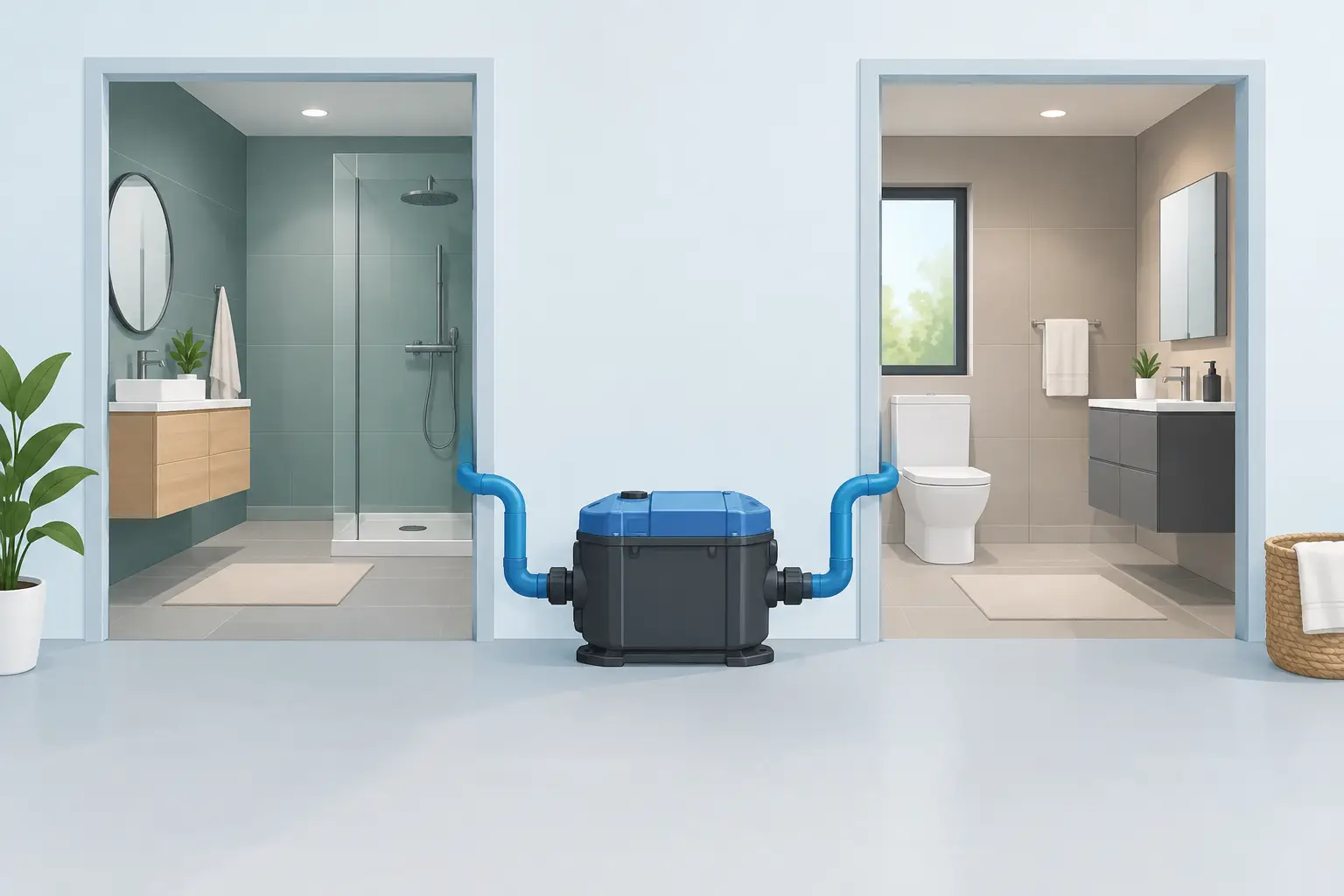
When customers ask, “what pump suits two bathrooms?”, the useful answer is not simply a pump size or motor rating. The right pump needs to provide enough water when two showers, a toilet, kitchen tap or washing machine are running at once, while maintaining comfortable pressure at the furthest outlet. For a rainwater tank system, it must also suit the tank location, pipework, filtration and the way your household actually uses water.
A pump that is too small can leave one bathroom with a weak shower whenever another tap opens. A pump that is oversized can cost more to buy and run, cycle too often, create noisy pipework and put unnecessary strain on fittings. Selecting for the required flow and pressure, rather than horsepower alone, is the dependable approach.
What pump suits two bathrooms in most homes?
For many Australian homes with two bathrooms, a quality automatic pressure pump or multistage centrifugal rainwater pump is a practical choice. As a starting point, look for a pump capable of delivering around 25 to 35 litres per minute at the pressure your system needs. This range will often cover two efficient showers running together, with some allowance for a toilet refill or a tap being used elsewhere.
That is a starting point, not a rule for every property. A compact home with WELS-rated showerheads and short pipe runs may perform well at the lower end of that range. A larger home, an older property with high-flow shower fittings, long pipe runs, an upstairs bathroom or a high-demand family may need more flow, more pressure, or both.
The pump curve is what matters. It shows how much water a pump can supply at different pressures. A pump may advertise an impressive maximum flow, but that figure is usually measured with little or no resistance. At the pressure needed for a real household system, the available flow will be lower. Always assess the pump at its operating duty point, not at its maximum figures.
Start with simultaneous water demand
A two-bathroom household does not necessarily need enough capacity to run every fixture at once. It should, however, comfortably handle the fixtures likely to run together during the morning rush or evening showers.
Modern showerheads commonly use about 7.5 to 9 litres per minute, although older fittings can use 12 to 15 litres per minute or more. Two showers may therefore require anywhere from 15 to 30 litres per minute before allowing for another outlet. A toilet cistern filling, a basin tap or a washing machine can add a further demand at exactly the moment it is least welcome.
A realistic target for many homes is 25 to 35 litres per minute at the required pressure. If your household regularly runs two showers while the washing machine, dishwasher or garden tap is also in use, consider a higher-demand design. Properties with a large bath can also benefit from greater flow, as a low-flow pump can make filling it frustratingly slow.
It is worth checking the actual flow from your existing showerheads before replacing a pump. Fill a 10-litre bucket for 30 seconds and measure the volume, then multiply by two to estimate litres per minute. This simple test can reveal whether your fixtures are modest or demanding.
Pressure is just as important as flow
Water pressure is normally expressed in kilopascals, or kPa. As a general guide, many households find around 250 to 350 kPa at the outlets comfortable for showers and everyday use. The required pressure at the pump may need to be higher because water loses pressure as it travels through pipework, filters, valves and elevation changes.
Every 10 metres of vertical lift costs roughly 100 kPa of pressure. If the pump sits at ground level and a bathroom is upstairs, that height must be included in the calculation. Long runs of undersized pipe, elbows, check valves and restrictive filters also add friction loss.
This is why two properties with the same number of bathrooms can need different pumps. A single-storey home with a tank near the house is much easier to supply than a two-storey acreage home where the tank is 80 metres away and the bathroom is at the far end of the building.
A properly sized pressure tank or pressure controller also affects performance. These components tell the pump when to start and stop, helping provide consistent pressure and reducing excessive cycling. The best option depends on the pump model and the system layout.
Account for tank position and suction conditions
Most domestic rainwater pumps are installed beside the tank and draw water from an outlet near its base. This arrangement is generally easier on the pump than asking it to lift water a long distance from a lower tank. Pumps can push water further and more effectively than they can pull it.
Keep the suction line short, appropriately sized and airtight. Even a small air leak can cause priming problems, uneven water delivery or pump damage. A foot valve or check valve may be required depending on the setup, but it must be installed correctly and kept accessible for servicing.
If the tank is below the pump, confirm the pump’s maximum suction lift and allow a safety margin. The theoretical lift figure is rarely the same as reliable day-to-day performance, particularly during hot weather or where the suction pipe is long. In these situations, relocating the pump closer to the tank outlet or using a submersible pump can be a better solution.
Do not overlook filtration and water treatment
For rainwater used inside the home, the pump works alongside your filtration system. Sediment filters, carbon filters, UV disinfection units and cartridge housings all create some pressure loss as water passes through them. That loss increases as cartridges collect sediment and approach their replacement interval.
A pump selected with no allowance for filtration may seem adequate when new, then deliver poor shower pressure several months later. The system should be sized with clean filters in mind and with enough headroom to keep performing as they load up. Correct filter sizing is equally important. A small cartridge housing on a high-demand two-bathroom home can become a restriction no matter how capable the pump is.
Where UV disinfection is installed, maintain the manufacturer’s recommended flow rate. Sending water through the UV chamber faster than it is designed to handle can reduce treatment performance. A complete rainwater system needs the pump, filtration and UV unit to work as one system rather than as separate purchases.
Choose a pump type for the job
A conventional automatic pressure pump remains a sound, cost-effective option for many homes. It is simple, proven and well suited to steady household demand when matched correctly to the pipework and tank.
Variable-speed pumps are worth considering where demand changes significantly through the day. They can adjust output as taps open and close, often providing steadier pressure and potentially reducing energy use and noise at lower demand. They usually cost more upfront and contain more electronic components, so the value depends on the property and usage pattern.
Multistage pumps are popular for domestic rainwater supply because they can produce useful pressure efficiently. Jet pumps may be suitable for certain applications but can be noisier and less efficient than newer multistage designs. Submersible pumps can be an excellent answer where sound reduction, limited space or challenging suction conditions are priorities.
No pump type will compensate for poor installation. Correct pipe size, weather protection where required, vibration isolation, dry-run protection and an accessible isolation valve all contribute to a long service life.
Check the details before ordering
Before choosing a pump, gather a few practical details: the number and type of outlets likely to operate together, whether bathrooms are upstairs, the distance from tank to house, pipe diameter, and any filters or UV equipment already installed. Also consider whether the pump supplies the whole home, only toilets and laundry, or outdoor taps as well.
If the property has mains water backup, the connection must comply with local plumbing requirements and protect the drinking-water supply from cross-connection. A licensed plumber can advise on the correct changeover arrangement and backflow protection for your state or territory. Electrical work should also be completed by a licensed electrician.
For straightforward two-bathroom rainwater systems, selecting a reliable pump around the 25 to 35 litres per minute range at the real required pressure is often the right direction. For long pipe runs, elevated bathrooms, larger filters or heavier family demand, it pays to have the duty point checked before ordering.
The best pump is the one that still gives the second shower a comfortable flow when someone turns on the kitchen tap. A few accurate measurements and the right advice at the start can turn a tank and filtration setup into dependable household water for years to come.