Choosing the right water tank for your property is a significant decision, especially considering that you’ll likely rely on it for 20 years or more. The choice between poly and steel tanks depends on various factors, including the tank’s location, the type of water it will store, available space, and your willingness to maintain it over time.
Understanding Poly vs Steel Water Tanks
Poly Tanks
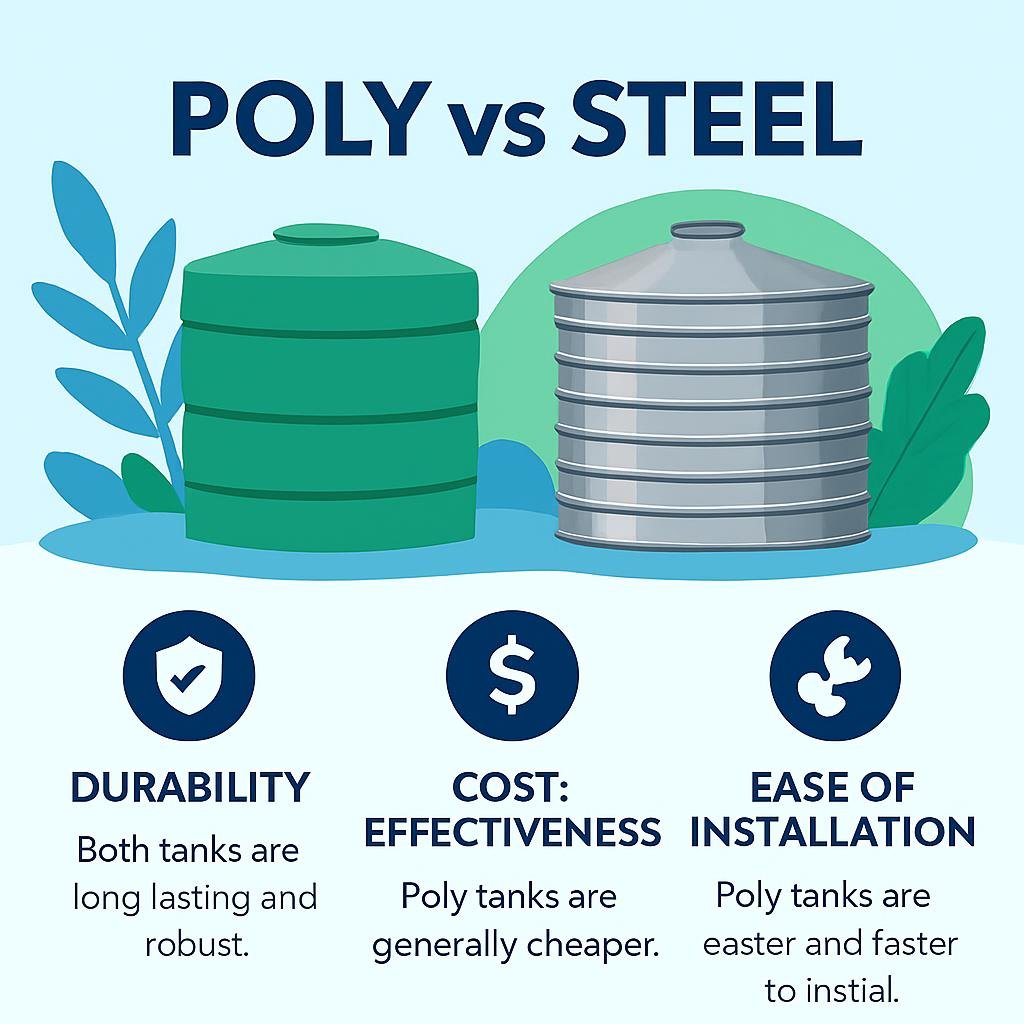
Poly tanks are popular for their cost-effectiveness, lightweight design, and ease of installation. Made from food-grade polyethylene, they are commonly used for rainwater storage in residential, agricultural, and small commercial settings. Their lightweight nature makes them particularly practical for tight spaces or quick installations.
Steel Tanks
Steel tanks, including Aquaplate designs, are recognized for their strength and larger storage capacities. They are ideal for a variety of applications, including domestic, agricultural, and commercial uses, where appearance and large-volume storage are priorities. Many customers appreciate the durability and established track record of steel systems.
Cost and Long-Term Value
If you’re primarily concerned about upfront costs, poly tanks are often the more affordable option. They generally have lower purchase prices and can incur reduced transport and installation costs due to their lighter weight.
Conversely, steel tanks may have a higher initial cost, especially for larger sizes or when additional site preparation is necessary. However, this investment can be worthwhile if the tank better suits your specific needs, helping you avoid future maintenance headaches.
It’s crucial to view the tank as part of a comprehensive water system, which may include pumps, filtration, first-flush devices, and installation support. The best value comes from selecting the right tank for your specific requirements from the outset.
Durability in Australian Conditions
Both poly and steel tanks are designed to withstand Australia’s harsh climate, but they do so in different ways.
- Poly tanks are corrosion-resistant, making them ideal for coastal areas or environments with salt exposure. They do not rust and are UV-stabilized to cope with strong sun exposure. However, the quality of the tank matters—ensure it meets Australian standards to avoid issues.
- Steel tanks offer excellent structural strength and are suitable for large-capacity storage. Modern steel tanks made with quality materials and compliant coatings can provide a long service life. However, they require proper maintenance to prevent corrosion, which can become problematic if damage or wear occurs.
The longevity of a tank ultimately depends on its quality, the environment it’s in, and how well it is maintained.
Water Quality and Hygiene
For drinking water and household rainwater use, tank hygiene is of utmost importance.
- Poly tanks are often preferred for potable water storage due to their food-grade material and lack of internal liners. When properly installed with sealed systems and adequate filtration, poly tanks can ensure clean rainwater storage.
- Steel tanks typically require a liner or specialized internal surface to keep the stored water separate from the outer shell. When designed and installed correctly, they can also provide excellent water quality. The condition of the liner is vital for ongoing performance, especially in older systems.
Regardless of the tank material, poor catchment conditions—like dirty gutters or neglected filtration—will affect water quality. The cleanest water comes from a well-designed system, not just the tank itself.
Installation and Access
The ease of installation is a significant factor in choosing between poly and steel tanks.
- Poly tanks are lighter and easier to position, making them suitable for sites with restricted access, such as narrow passages or backyards. This ease of installation can reduce both complexity and costs.
- In contrast, steel tanks may require more planning, particularly for larger sizes. Site access, slab preparation, and delivery logistics become increasingly important. Limited access can make poly the more practical option in some cases.
Both tank types require solid base preparation. A poor foundation can shorten the tank’s lifespan and lead to warranty issues, so ensure the ground is level and stable.
Capacity, Footprint, and Aesthetics
Storage capacity often determines the tank choice.
- For smaller to mid-sized applications, poly tanks offer flexible shapes and capacities. Slimline and round options are ideal for suburban homes and compact sites, and a variety of colors is available to help the tank blend into the surroundings.
- Steel tanks are preferred for larger capacities without taking up too much ground space, making them suitable for farms and commercial sites. Some customers also favor the traditional appearance of a steel tank, particularly in rural settings.
While aesthetics may seem secondary, many homeowners consider it important, as tanks are often a highly visible part of the property.
Maintenance and Repair Considerations
No tank is entirely maintenance-free, but some require less attention.
- Poly tanks are generally low maintenance since they don’t rust. Owners primarily need to check screens, clean gutters, manage sludge buildup, and inspect fittings. Repair options depend on the extent of any physical damage.
- Steel tanks may require more frequent inspections, particularly around the exterior, roof, fittings, and any internal liner system. Early attention to corrosion or liner damage is crucial. However, some components can be serviced or refurbished, extending the tank’s useful life.
If your property is in a coastal area or if maintenance often falls by the wayside, consider this carefully before making your choice.
Which Tank Suits Your Needs?
For most homes, poly tanks are the practical choice, especially for residential rainwater harvesting, easier access installations, modest budgets, and low ongoing maintenance.
Steel tanks may be a better fit where larger storage volumes are necessary, where the tank profile fits the site, or where a customer prefers the aesthetics of steel. They also work well in rural and commercial settings where capacity and footprint are critical.
The best decision usually involves considering the entire water system—roof catchment area, intended water use, available space, local conditions, pump requirements, and filtration needs. A tank should work harmoniously with the overall water system.
At Auswatertanks, we believe that understanding your specific needs can lead to better long-term solutions. Matching the right tank with the appropriate pump, filtration, and installation guidance can make a significant difference.
When weighing the pros and cons of poly versus steel tanks, consider how the tank will be used over the next decade. The right tank is the one that fits your site, reliably stores clean water, and continues to perform long after installation.
Poly vs Steel Water Tanks: Which Is Right for Your Needs?