A dry tank is not the time to discover how your water supply changes over. For Australian households, rainwater versus mains water backup is less about choosing one source forever and more about setting up a system that keeps taps running without compromising water quality, pressure or plumbing compliance.
For a suburban home with town water, rainwater can reduce reliance on the mains for toilets, laundry and gardens. On acreage or in rural areas, a rainwater tank may be the primary household supply, with mains water providing valuable protection during a long dry spell. The right arrangement depends on your roof catchment, tank capacity, household demand, local regulations and how much automation you want.
What does mains water backup actually mean?
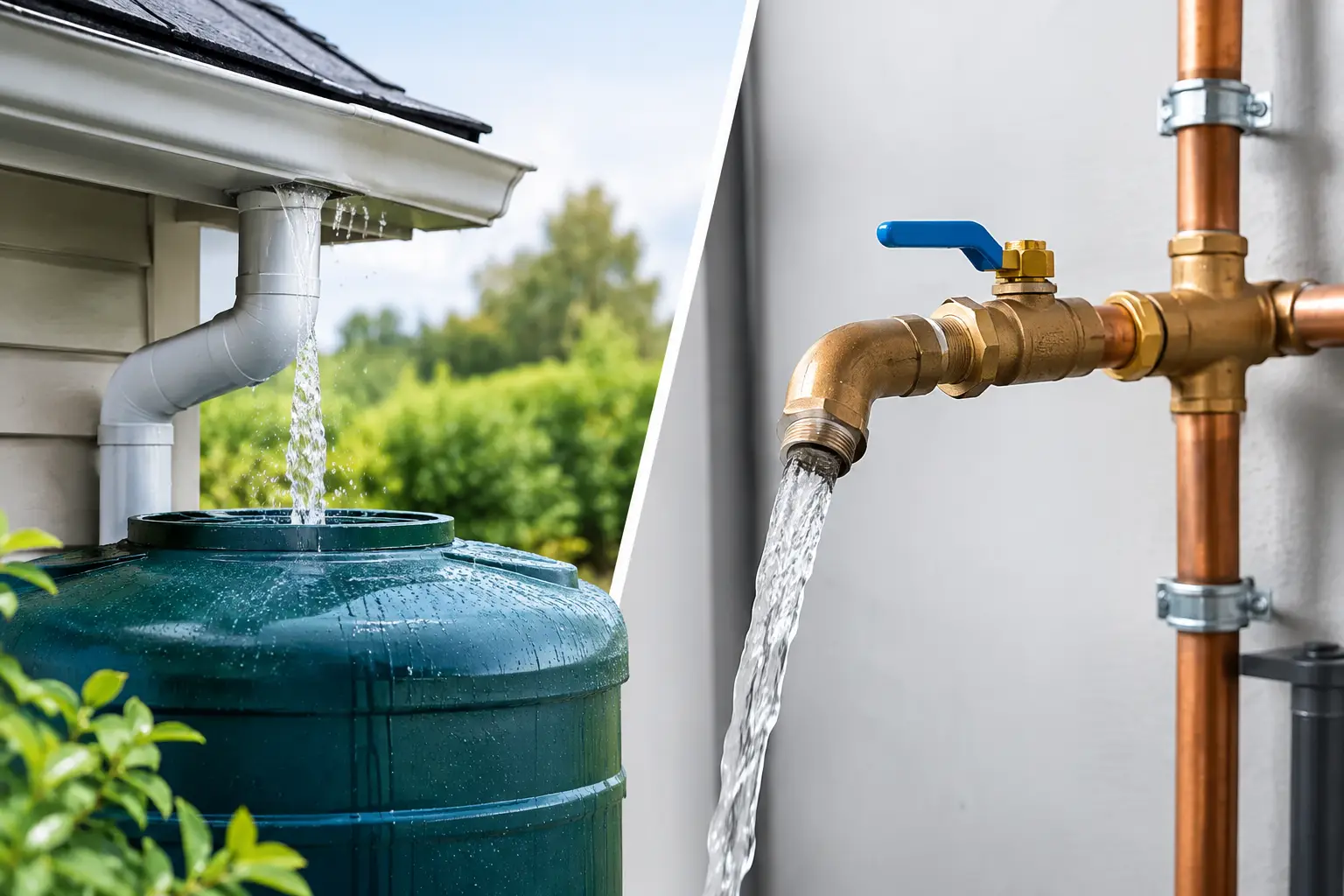
Mains water backup is a controlled arrangement that supplies town water when rainwater is unavailable or unsuitable. In most homes, rainwater remains the preferred source while the tank has enough water. When the level drops, a rain-to-mains pump or changeover system switches the property, or selected fixtures, to mains water.
This differs from simply having a tank connected beside a mains supply. A reliable backup system needs the right pump controls, correctly separated pipework and compliant backflow protection. Mains water must not be allowed to contaminate the rainwater system, and rainwater must not be able to flow back into the drinking water network.
A licensed plumber should confirm the installation meets the relevant plumbing code, water authority requirements and local council rules. These requirements vary between states, regions and water providers, particularly where rainwater is connected to internal fixtures.
Rainwater versus mains water backup: the practical difference
Rainwater gives you stored water on site. That makes it useful during water restrictions, high-use periods and interruptions to the town supply, provided the tank has been sized for the job. It can also lower water bills where you regularly use rainwater for appropriate household and outdoor applications.
Mains water backup provides consistency. It is treated, pressurised and available without depending on recent rainfall or tank levels. However, it comes with ongoing water and sewerage charges, and it does not offer the same level of self-sufficiency during a wider supply outage.
| Consideration | Rainwater as the main source | Mains water as backup | |—|—|—| | Day-to-day cost | Uses collected rainfall after installation | Charged through your water account | | Supply security | Depends on rainfall, storage and system maintenance | Available while the local network is operating | | Water pressure | Depends on pump selection and plumbing design | Usually supplied at network pressure | | Water quality | Requires good tank hygiene and suitable filtration | Treated by the water authority | | Best role | Reducing mains use and supporting self-reliance | Covering low tank levels and dry periods |
For many Australian households, the strongest answer is not rainwater or mains water. It is rainwater first, mains water second, with a properly designed automatic changeover arrangement.
Choosing the right backup layout
There are two common approaches. The first is a rainwater system serving selected fixtures, such as toilets, cold-water laundry taps and garden outlets. These fixtures are supplied by the tank and pump when water is available, then switch to mains water when the tank is low. This is a popular option for town properties because it can reduce mains consumption without changing every tap in the home.
The second is whole-house rainwater supply with mains backup. This is often suited to rural homes, acreage properties or new builds where rainwater is intended to supply kitchen, bathrooms, laundry and outdoor use. It needs more planning because drinking water quality, treatment equipment, storage capacity and backup arrangements all matter.
A rain-to-mains pump is often the simplest way to manage automatic changeover. It monitors tank water availability and allows rainwater to be pumped while there is sufficient supply. When the tank is empty or reaches the pump’s low-water protection point, the system changes to mains water. When rain returns and the tank recovers, it can return to rainwater operation.
Not every pump suits this role. A standard household pressure pump may provide excellent pressure from a tank, but it does not necessarily include compliant rain-to-mains changeover functions. Matching the pump to the intended plumbing layout avoids frustrating pressure issues and costly alterations later.
Tank size determines how useful your backup will be
A mains backup system cannot make a small tank last through months of low rainfall. It only prevents the home from running out of water altogether. If your aim is meaningful savings and strong water security, tank capacity needs to reflect your roof area, local rainfall pattern and water use.
A family using rainwater for toilets, laundry and garden irrigation may find a modest slimline tank useful where space is limited. A larger round poly or Aquaplate steel tank can provide far greater reserve for whole-house use, rural living, livestock or fire preparedness. On a larger property, multiple tanks can be connected to increase storage and spread collection across different roof sections.
Consider the dry period rather than just the latest storm. Coastal and northern areas may receive heavy rainfall but still experience uneven seasonal patterns. Inland properties can face longer dry stretches and higher evaporation. A tank that fills quickly in wet weather may still need a mains backup if household demand is high.
Roof catchment also matters. A large roof can harvest substantial water, but only if gutters, downpipes, leaf strainers and overflows are sized and maintained properly. First-flush diversion can help improve incoming water quality by directing the initial roof wash away from the tank.
Filtration depends on where the water goes
For garden use and toilet flushing, a clean tank, screened inlet and pump protection may be sufficient in many installations. For laundry, showers and kitchen use, the filtration plan should be more considered.
Sediment cartridges can reduce dirt and fine particles, while carbon filtration can improve taste and odour. UV treatment is commonly used where rainwater is intended for drinking, as it provides an additional barrier against microorganisms when the water is clear enough for effective treatment. A UV unit does not replace tank cleaning, cartridge changes or sensible roof and gutter maintenance.
The level of treatment should suit the household’s use, local advice and risk profile. A remote home relying on tank water every day usually needs a more complete treatment setup than a town property using rainwater only for flushing toilets. If young children, older residents or immunocompromised people are in the household, seek appropriate professional advice on drinking water treatment.
The details that make a backup system dependable
Automatic changeover is convenient, but a dependable installation is built from several small decisions. The pump needs dry-run protection so it is not damaged when the tank is low. The system should provide enough flow and pressure for the number of bathrooms, appliances and irrigation points likely to operate at once.
Tank placement affects performance too. Keep access clear for inspection, cleaning and servicing. Make sure the base is level and properly prepared, and allow for safe overflow management away from building foundations. In bushfire-prone areas, discuss dedicated fire water storage and compatible firefighting connections rather than assuming the household tank setup will meet fire protection needs.
Ongoing maintenance is straightforward but should not be ignored. Clean gutters and leaf strainers, inspect mosquito screens, check the pump’s operation and replace filter cartridges on schedule. If your system has a UV unit, replace the lamp and service components according to the manufacturer’s guidance. A well-maintained system protects both the equipment investment and the quality of the water entering your home.
When mains-first may be the better choice
Rainwater-first is not automatically the best option for every property. If the tank is small, the roof catchment is limited or household use is unpredictable, mains water may remain the practical primary source. The tank can still provide valuable water for gardens, washing, toilet flushing or emergency reserve.
Likewise, some homeowners prefer manual changeover. It costs less upfront and gives direct control, but someone must monitor the tank level and change the supply before the pump runs dry. Automatic systems generally cost more initially, yet they are especially worthwhile for busy households, holiday homes and properties where a supply interruption would cause real inconvenience.
Aus Water Tanks can help homeowners, builders and rural property owners match tank capacity, pumps and filtration equipment to the way water is actually used on site. Buying compatible components from the outset is usually simpler than trying to adapt mismatched equipment after installation.
The best water setup is one you do not have to think about when the weather turns dry. Plan for rainwater to do the work when it is available, let mains water cover the gaps safely, and give both systems the maintenance they need to serve your property for years.