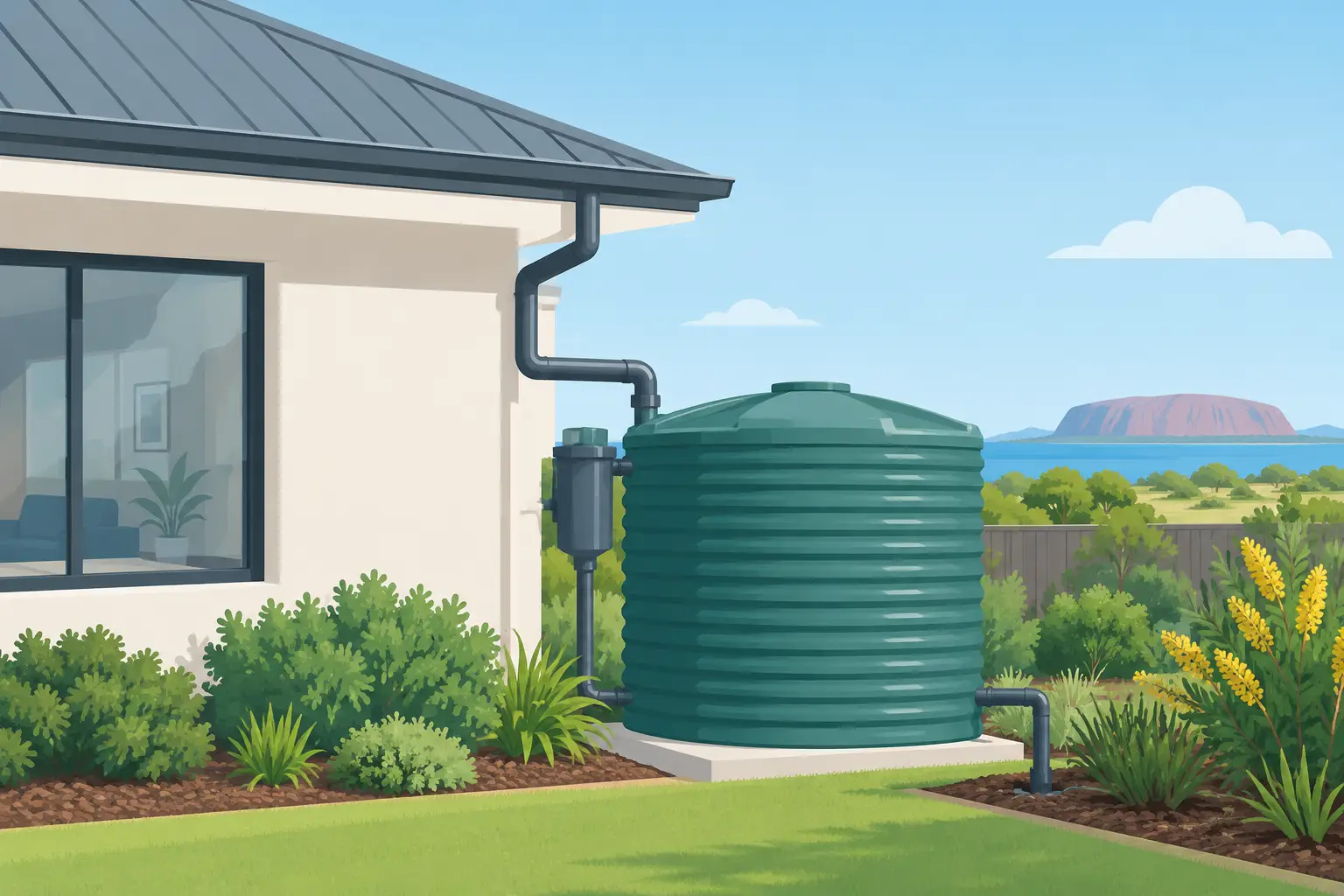
A rainwater tank can look like a simple addition beside the house, but a dependable household supply relies on more than storage alone. Rainwater harvesting systems need the right tank capacity, roof catchment, pump, plumbing and filtration to deliver clear, reliable water at every tap. When the water is used for drinking, cooking, bathing and washing, treatment should be planned from the start rather than added as an afterthought.
For many Australian households, collected rainwater is an everyday water source, not just a backup for the garden. A well-designed system can reduce reliance on mains water, provide useful resilience during restrictions or outages, and make good use of rainfall that would otherwise run to the stormwater drain. The right design depends on your household, location, roof and intended water use.
What makes up a rainwater harvesting system?
A complete system collects water from the roof, removes larger debris before it reaches the tank, stores it safely, and moves it through the home at suitable pressure. If the supply is intended for household use, filtration and disinfection then improve water quality at the point where water enters the home.
The roof is your catchment area, so its size and material affect how much water can be collected and the type of debris likely to enter the gutters. Gutters, downpipes, leaf guards and first-flush diversion help keep leaves, dust, bird droppings and other roof debris out of the tank. They do not replace filtration, but they reduce the load on filters and make ongoing maintenance easier.
The tank provides the stored reserve. Its ideal capacity is not simply the biggest model that fits on the block. A tank must balance available space, roof area, local rainfall patterns, household demand and budget. An oversized tank with limited roof catchment may take a long time to refill, while a small tank can overflow during good rain and run short during a dry spell.
A pressure pump then supplies water to taps, toilets, washing machines and other connected outlets. Pump selection needs to account for the number of bathrooms, likely simultaneous use, pipework, elevation and required flow rate. A pump that is too small may struggle when someone showers while the washing machine is running. One that is poorly matched can cycle unnecessarily, use more power and wear sooner.
Rainwater harvesting systems for whole-house use
The difference between garden watering and whole-house supply is water treatment. Water used only for irrigation may require basic screening and sensible tank care. Water entering the home needs a more considered approach, particularly when people will drink it, prepare food with it or use it in showers.
A common whole-house arrangement begins with a sediment filter. This captures fine dirt, roof grit, rust particles and other suspended material that can make water look cloudy or affect appliances and fixtures. Filter cartridges are available in different micron ratings. Finer filtration catches smaller particles, but it can also restrict flow more quickly when the incoming water is heavily loaded with sediment.
Activated carbon filtration is often added after sediment filtration. Carbon can improve taste and odour and reduce organic compounds that contribute to unpleasant water quality. It performs best when sediment has already been removed, because dirt can coat the carbon media and reduce its effective life.
For households using rainwater for drinking, UV disinfection is an important final barrier. A correctly sized UV unit uses ultraviolet light to inactivate bacteria and other microorganisms as water passes through the chamber. UV does not remove dirt, colour, sediment or dissolved contaminants. The water must therefore be adequately filtered first, as cloudy water can reduce the effectiveness of the UV treatment.
This staged approach matters. Installing a UV unit alone on untreated tank water is not the same as installing a complete drinking-water treatment system. The filter housing size, cartridge type, flow rate and UV capacity must work together. If the system is too small for the household’s peak demand, water may pass through faster than intended or pressure may be disappointing.
Choosing filtration based on your water use
Every household has different priorities. A family relying on tank water for all drinking, cooking and bathing generally needs whole-house sediment filtration, carbon filtration and UV disinfection. A property that uses tank water only for laundry, toilets and the garden may choose a simpler arrangement, provided the plumbing layout and local requirements are appropriate.
Some homes have both mains water and rainwater available. In these cases, it is worth being clear about which supply feeds each part of the house. Mains water may need treatment for chlorine, chloramines, taste and odour, while rainwater often needs treatment focused on sediment, organic matter and microbiological safety. One filter setup is not automatically suitable for both sources.
Reverse osmosis can also be useful as a dedicated under-sink drinking water option where households want an additional level of treatment at the kitchen tap. It is generally not required as the first step in a whole-house rainwater system, and it produces water more slowly than whole-house filtration. The practical choice depends on your water source, household needs and the treatment outcomes you want.
Tank, pump and filter sizing: where good planning pays off
Before choosing equipment, work out the likely demand. Consider how many people live in the home, how many bathrooms are used at once, whether water is used for toilets and laundry, and whether outdoor taps or stock troughs are connected. Seasonal use matters too. A holiday home occupied by two people most of the year can have very different peak demand when extended family arrives.
Roof area and rainfall help estimate potential collection, but annual averages can be misleading. What matters is whether the tank can bridge dry periods between useful rainfall events. In drier regions, storage capacity is often more valuable than a large roof catchment alone. In high-rainfall areas with frequent downpours, overflow management and reliable debris control deserve extra attention.
Allow for physical installation requirements as well. A tank needs a properly prepared, level base that supports its full operating weight. One litre of water weighs roughly one kilogram, so even a modest tank becomes a substantial load when full. Access for delivery, room around the tank for fittings and filters, safe drainage for overflows, and access for future servicing should all be considered before ordering.
Filter systems should be installed where cartridges can be changed without fuss. A cramped location behind stored items or close to the ground makes routine maintenance less likely to happen. For outdoor installations, use suitable weather-protected equipment and plumbing rated for the conditions. UV components and electrical connections need proper protection and installation by suitably qualified tradespeople where required.
Maintenance keeps water quality consistent
A rainwater system is not fit-and-forget. Most maintenance is straightforward, but it needs to be regular. Gutters and leaf guards should be checked, particularly after windy weather and before the wetter months. First-flush devices need periodic cleaning so they continue to divert the first, dirtier roof runoff.
Tank inspections can identify damaged screens, insects, light entry, sediment build-up or issues with inlet and overflow points. Keeping the tank sealed and screened helps prevent mosquitoes, vermin and debris from entering. If water has an unusual smell, colour or taste, investigate the cause rather than simply replacing a cartridge and hoping for the best.
Filter cartridges need replacing at the recommended interval, or earlier if flow drops noticeably or the incoming water is particularly dirty. Delaying cartridge changes can reduce water pressure and compromise filtration performance. UV lamps also have a service life. A lamp may still appear to glow after its rated operating period, but that does not mean it is delivering the required disinfection dose.
A practical service plan should include:
- clearing gutters, leaf guards and inlet screens regularly;
- checking tank lids, mosquito screens, overflows and first-flush devices;
- replacing sediment and carbon cartridges on schedule;
- replacing UV lamps and servicing UV equipment at the recommended interval; and
- checking pump pressure, cycling behaviour and any leaks around fittings.
Keep a simple record of filter and lamp replacement dates. It removes guesswork and makes it easier to order the correct replacement cartridges, UV lamps or service kit before performance is affected.
Common mistakes to avoid
The most common problem is treating the tank as the entire solution. Good storage is valuable, but poor roof-water management and undersized filtration can leave households with cloudy water, poor pressure or a system that is difficult to maintain. Another mistake is selecting equipment on price alone without checking flow ratings, connection sizes, replacement costs and compatibility with the existing pump and plumbing.
It is also wise not to overcomplicate a system. More stages do not always mean better water. Each component should solve a genuine water-quality or performance issue. A correctly specified sediment, carbon and UV system is often a practical whole-house solution for rainwater, whereas adding unsuitable equipment can increase cost and servicing without improving the result.
When choosing rainwater equipment, start with how your household actually uses water and build from there. A tank, pump and filtration setup that is easy to service and correctly matched to your family will do more for long-term water confidence than a collection of components chosen in isolation.