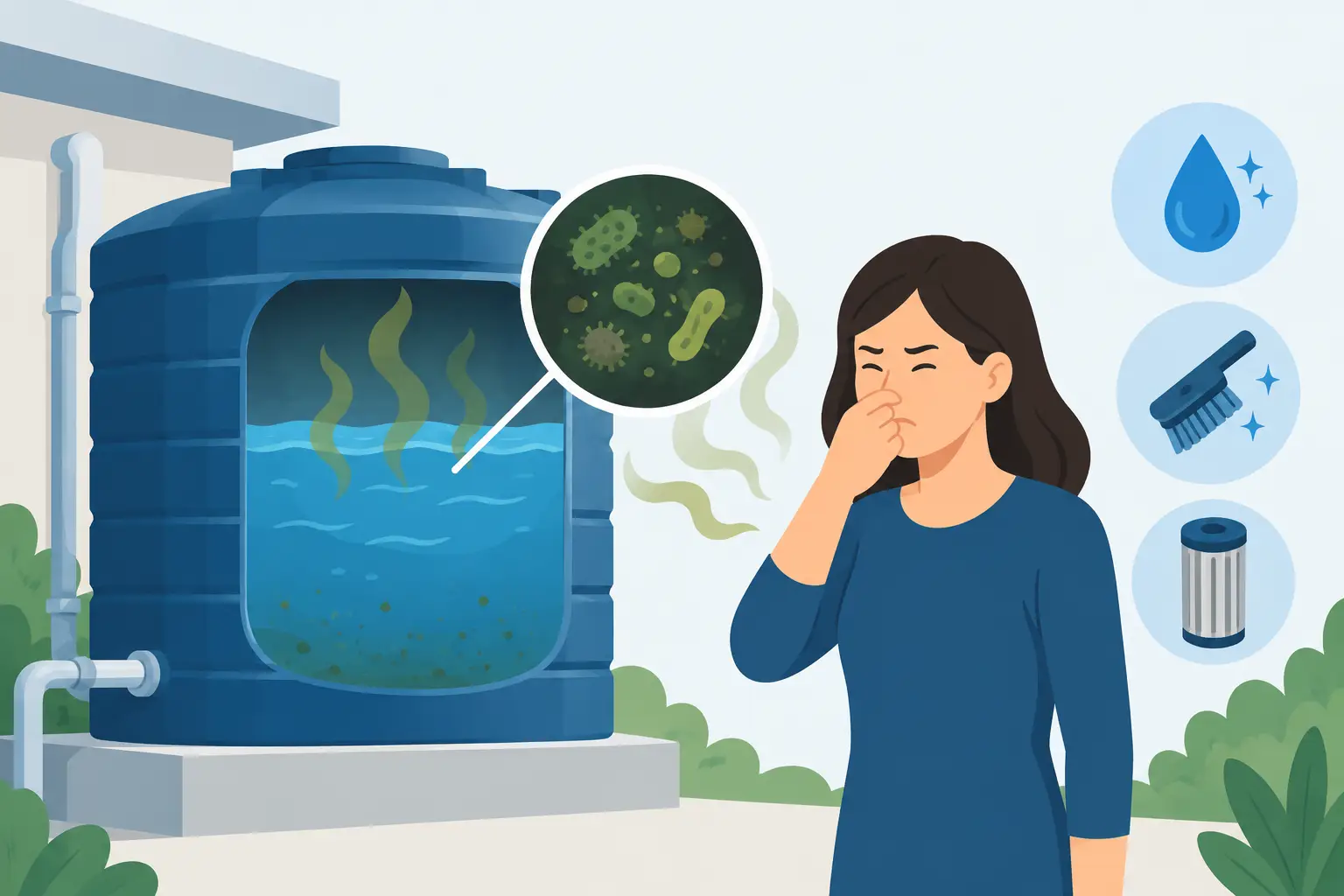
A glass of rainwater should smell clean and neutral. If yours has a musty, earthy, rotten-egg or stale odour, it is reasonable to ask, why does tank water smell? The smell may begin in the roof catchment, develop inside the tank or come from filters and plumbing after the tank. Finding where it starts is the quickest way to choose the right fix.
A noticeable odour does not automatically mean the water is unsafe, but it should not be ignored, particularly when tank water is used for drinking, cooking and bathing. Some causes are straightforward maintenance issues. Others need a more careful inspection and suitable filtration or disinfection.
Why does tank water smell after rain?
The first decent rain after a long dry spell often carries more than water off the roof. Dust, leaves, bird droppings, pollen, insect debris and other organic material can wash through gutters and into the tank. As this material breaks down, it can create an earthy or musty smell.
A first-flush diverter helps by sending the dirtiest initial roof runoff away from the tank. It needs to be sized for the roof area and kept clear so it can do its job. Gutter guards, clean gutters and a well-fitted tank inlet screen also make a meaningful difference. They reduce the organic load before it reaches stored water, rather than relying on a filter to deal with everything later.
If the smell appears only after rain and gradually settles, roof debris and inadequate first-flush protection are likely contributors. If it stays constant, look more closely at the tank, filters and household plumbing.
Common causes of smelly tank water
Stagnant water and organic matter
Rainwater tanks work best when they are clean, sealed and regularly replenished. Where water sits for long periods, particularly in warmer weather, fine sediment and organic matter at the bottom can support bacterial growth. This can produce a stale, swampy or earthy odour.
Tanks that are oversized for the household’s water use can experience long storage periods. That does not mean a larger tank is a poor investment, but it does make good catchment hygiene and periodic maintenance more important. A tank with heavy sludge may need professional cleaning before new filtration equipment is installed.
Leaves, insects or animals in the tank
A strong foul smell can indicate decomposing material in the tank. Leaves and insects are common where inlet screens are damaged or missing. Small animals can occasionally enter through unprotected openings, especially on older installations.
Check the lid, overflow, inlet, inspection opening and mesh screens. All openings should be properly screened and secured. If an animal is suspected in the tank, stop using the water for drinking until the tank has been inspected, cleaned and the water supply has been appropriately treated.
Algae growth
Algae can create a greenish appearance, an earthy smell or a slippery build-up around tank fittings. Light is the main trigger. A sound tank lid, opaque pipework where practical and correctly sealed access points help prevent sunlight reaching stored water.
Not every green mark means there is widespread algae in the tank, but visible growth is a reason to inspect the system. Clearing gutters without fixing light entry or poor screening simply allows the problem to return.
Sulphur or a rotten-egg smell
A rotten-egg odour is often associated with hydrogen sulphide gas. It can develop when bacteria break down organic material in low-oxygen areas, such as sediment at the base of a neglected tank. It may also be related to mineral conditions in the water source, although this is less common with typical rooftop rainwater collection.
The smell can be more obvious when the water first comes from the tap or after water has sat in pipes overnight. Tank cleaning, removal of sediment and appropriate treatment are usually more effective than masking the odour with fragrances or household additives.
Dirty or overdue filter cartridges
Filters catch what you do not want in your household supply, but cartridges do not last forever. A sediment cartridge loaded with fine dirt can restrict flow and harbour trapped organic material. An activated carbon cartridge can eventually lose its ability to reduce tastes and odours.
If the smell is strongest at one filtered tap, or develops after a filter has been in service for longer than recommended, replace the cartridges and sanitise the housings during the changeover. Always fit cartridges in the correct order and use the specified size and micron rating for the system.
The smell is in the hot water system, not the tank
If cold water smells normal but hot water has a sulphur-like odour, the issue may be within the hot water unit. In some systems, the sacrificial anode can react with water chemistry and create an unpleasant smell. This needs assessment by a qualified plumber or hot water technician.
Testing water directly from a cold tank outlet, then from a cold household tap, can help narrow down where the odour begins. Do not assume the tank is at fault when the pattern points to internal plumbing.
How to track down the source safely
Start with your senses, but avoid climbing onto a roof or opening a tank lid without safe access. Note when the smell occurs: after rain, only at a particular tap, only with hot water, or throughout the home. Also check whether the water looks cloudy, has changed colour or leaves sediment in a glass.
From ground level where possible, inspect gutters, downpipes, leaf guards, the first-flush diverter, tank lid and screens. Look for blocked mesh, gaps, accumulated leaf matter and signs of light entering the tank. Check the filter service date and whether pump pressure or water flow has changed.
Where odour is persistent, severe or accompanied by illness concerns, water testing can provide useful answers. Testing is especially sensible for households relying on rainwater as their primary drinking supply, after floodwater contamination, or when a dead animal or other significant contamination is suspected. A test can help distinguish between a nuisance taste and odour issue and a problem requiring disinfection or further investigation.
Fixing tank water odour for the long term
The best solution depends on the cause. Cleaning a filter will not solve a tank full of leaf sludge, while tank cleaning alone may not stop odours if dirty roof runoff continues entering the water.
For many households, the practical approach starts at the roof: maintain gutters, keep screens intact and ensure the first-flush device is working. The tank should be sealed against light and pests, with overflows and vents protected by fine mesh. Arrange tank cleaning when there is visible sludge, persistent odour or confirmed contamination.
For water used inside the home, a properly selected whole-house rainwater filtration system provides another line of protection. A sediment filter removes dirt, rust and fine particles before they reach taps and appliances. Activated carbon filtration is particularly useful for improving unpleasant tastes and odours by adsorbing many organic compounds that cause them.
UV disinfection is often a valuable addition for drinking-quality rainwater supplies because it inactivates microorganisms as water passes through the chamber. However, UV is not an odour filter and works best with clear, pre-filtered water. Sediment filtration should be ahead of the UV unit, and UV lamps need replacement at the recommended interval even if they still appear to be glowing.
There is a trade-off to consider. Finer filtration and carbon treatment can improve water quality, but cartridges need regular replacement to maintain flow and performance. Selecting a system with appropriately sized housings makes servicing easier and helps meet the water demands of a family home.
When not to rely on smell alone
Clear, odour-free water is reassuring, but it is not proof that water is free of microorganisms. Equally, earthy rainwater odour does not by itself confirm harmful contamination. That is why good tank hygiene, suitable filtration and UV disinfection should be considered together where rainwater is used for drinking.
If anyone in the household becomes unwell and you suspect the water supply, use an alternative drinking source and seek professional health advice. Prompt action is also warranted after bushfire ash, floodwater entry, major roof contamination or a suspected animal in the tank.
Fresh tank water begins well before the tap. Keep the roof catchment clean, service filters on schedule and address changes in smell early – a small maintenance job now can protect the quality of the water your household relies on every day.