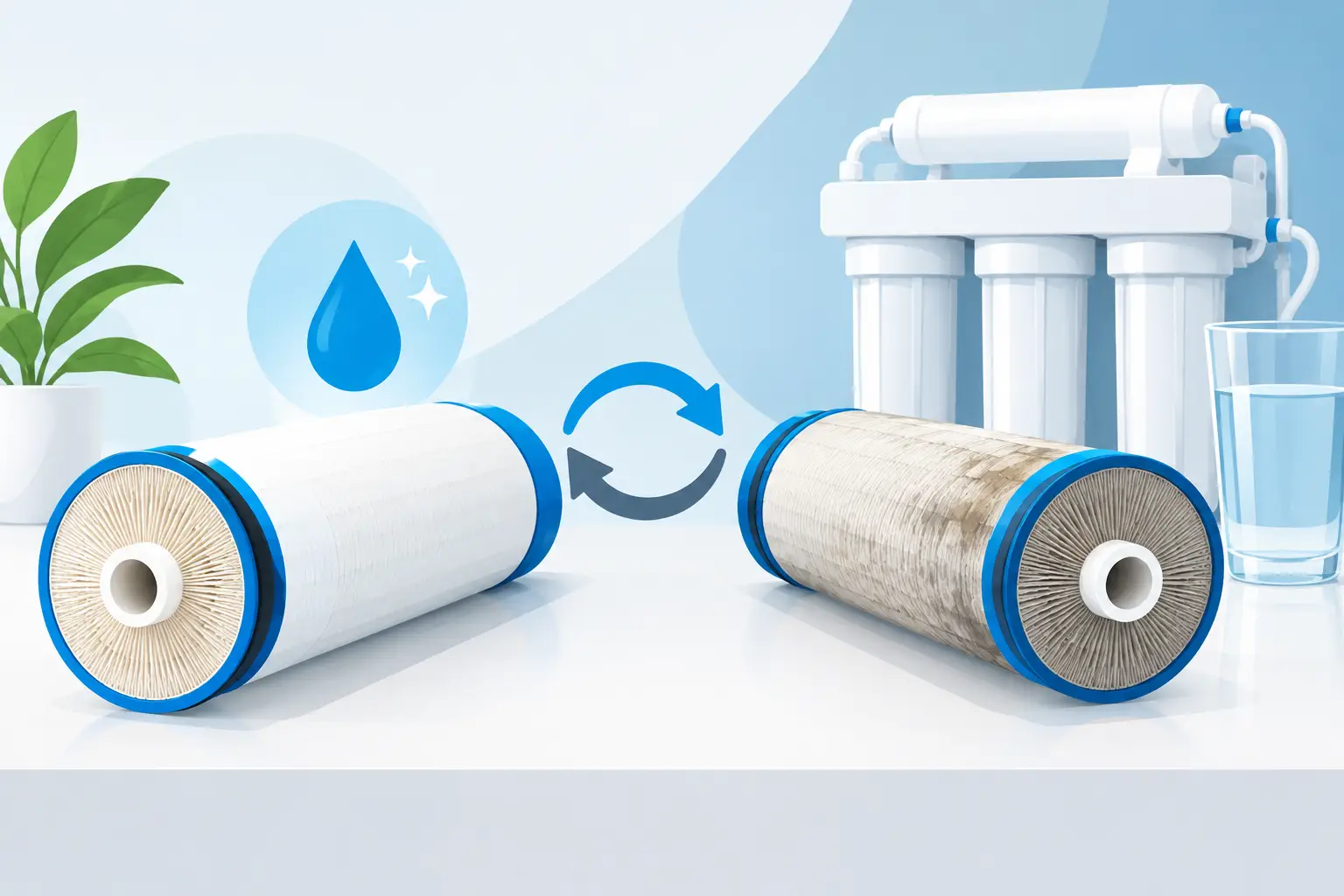
A reverse osmosis system can still deliver water from the tap even when its membrane is no longer doing its main job properly. If the water tastes different, the storage tank takes much longer to refill, or your water readings have crept up, it may be time to consider when to replace a reverse osmosis membrane rather than simply changing the prefilters again.
For most Australian households, an RO membrane lasts around two to five years. That is a useful guide, but it is not a replacement schedule set in stone. The right time depends on your incoming water quality, household water use, how reliably the prefilters are changed, and whether the system has been left unused for long periods.
What the RO membrane actually does
In a typical under-sink reverse osmosis system, sediment and carbon filters do the first stage of work. They catch particles and help reduce chlorine, taste and odour compounds before water reaches the membrane. The membrane is the fine filtration stage. Under pressure, it separates a high proportion of dissolved salts, minerals and other dissolved contaminants from the drinking water supply.
Water that passes through the membrane is collected in the pressurised storage tank. The remaining concentrated water is sent to drain. Because the membrane has very small filtration pathways, it is effective but also sensitive to poor prefiltration and unsuitable feed water conditions.
A membrane is not the same as a standard cartridge. A sediment cartridge may be changed every six to 12 months, while a carbon cartridge often has a similar service interval. The membrane should generally last longer, provided those earlier filters are replaced on time.
When to replace a reverse osmosis membrane
Age is a starting point, not the deciding factor. If your membrane is approaching three years old, assess its performance rather than automatically replacing it. A well-maintained system supplied by relatively clean town water may run effectively for longer. A system dealing with high sediment, harder water, heavy household demand or inconsistent filter changes may need a new membrane sooner.
The clearest way to assess membrane condition is by comparing the total dissolved solids, or TDS, in the feed water and treated water. A handheld TDS meter gives a practical indication of how much dissolved material remains after filtration. It does not identify every individual contaminant or confirm microbiological safety, but it is useful for checking membrane performance over time.
Membrane performance is often expressed as a rejection rate. For example, if incoming water reads 250 ppm TDS and the RO water reads 15 ppm, the system is rejecting about 94 per cent of dissolved solids. Many new membranes perform at a high rejection rate, often in the mid to high 90s depending on water temperature, pressure and membrane specification. When that rejection rate falls noticeably from its normal result, even after new prefilters have been fitted, membrane replacement is usually worth considering.
Four signs the membrane may be nearing the end
- Your RO water tastes less clean or fresh. A change in taste is not proof on its own, as an exhausted post-carbon filter can also affect flavour. Still, it is a reason to check the system rather than ignore it.
- The storage tank fills slowly. Reduced production can occur when a membrane becomes fouled or scaled. Cold winter water can also slow RO production, so compare performance over time rather than judging one cool day.
- TDS readings are rising. A gradual increase in treated-water TDS, particularly when feed-water TDS is similar, is one of the more reliable warning signs.
- The membrane is past its expected life and has had poor protection. Missed cartridge changes, a damaged carbon prefilter or a long period without use can shorten membrane life significantly.
Check the simple causes before ordering a membrane
A slow system is not always a failed membrane. Start with the service basics. Sediment and carbon prefilters that are blocked or overdue can restrict water flow to the membrane. In particular, carbon filtration matters because chlorine can damage many common thin-film composite RO membranes. Once chlorine damage occurs, replacing prefilters alone will not restore membrane rejection.
Also check whether the tank has adequate air pressure when empty, whether the feed-water valve is fully open, and whether there are kinks or restrictions in the tubing. A worn automatic shut-off valve, blocked flow restrictor or low incoming pressure can reduce production and make the system appear faulty.
If your system has been sitting unused, flush it thoroughly according to the manufacturer’s instructions. Stagnant water can affect taste and can allow biofilm to develop in housings, tubing or the tank. Where appropriate, sanitising the RO system when changing filters helps keep the whole drinking water unit in good condition.
Why water source and prefilters change membrane life
Town water and rainwater can create different maintenance demands. Treated mains water is usually low in visible sediment, but chlorine or chloramines need to be addressed with suitable carbon filtration before the water reaches an RO membrane. The correct carbon cartridge and change interval should match the disinfection chemicals present in the local supply.
Rainwater quality can vary more widely. Roof debris, dust, fine sediment and organic matter can load filters quickly, especially after dry weather or a heavy rainfall event. If rainwater is used to supply an RO drinking water system, effective sediment filtration ahead of the unit is essential. A whole-house rainwater filtration system can reduce the load on point-of-use equipment, while suitable UV disinfection may be required where microbiological treatment is needed.
Hard water is another factor. Calcium and magnesium can form scale on the membrane surface, particularly where water recovery is high or feed-water conditions are challenging. In these situations, a membrane may produce less water even though it is not old. Pre-treatment choices, system configuration and manufacturer recommendations matter more than a one-size-fits-all replacement interval.
How to test membrane performance at home
Testing is straightforward when done consistently. Take a feed-water TDS reading from water before it enters the RO membrane, then take a second reading from the RO drinking-water tap after the tank has had time to refill. Record the results and the date. If possible, test at roughly the same time of year and after replacing the prefilters, as water temperature and incoming water quality influence results.
Use this calculation to estimate rejection:
Rejection percentage = (feed-water TDS – RO-water TDS) ÷ feed-water TDS × 100
A single reading should not trigger an immediate replacement. Look for a clear decline compared with previous readings, particularly if it comes with slow tank filling or poorer taste. If you are unsure whether the result is acceptable for your system, note the membrane model, feed-water reading and RO-water reading before seeking advice.
Replacing the membrane without creating new problems
Choose a replacement membrane that suits the membrane housing, flow rating and configuration of your existing RO unit. Similar-looking membranes can have different output ratings and may not perform as intended with the flow restrictor or pressure available in your system. A compatible replacement is more useful than simply choosing the highest-rated membrane on the label.
Before fitting the new membrane, replace any overdue sediment and carbon cartridges. Clean and sanitise housings if required, use food-grade lubricant only where recommended for seals, and check that O-rings are seated correctly. After installation, flush the system for the manufacturer’s recommended period. The first tank or more of water may need to be discarded to remove preservative and carbon fines.
Avoid judging a new membrane in its first few minutes of operation. RO systems need time to stabilise, and the storage tank must refill before you can assess normal production and water quality.
A simple maintenance habit that protects your investment
Keep a small record of filter-change dates, membrane installation date and occasional TDS readings. It takes very little time and removes the guesswork when performance changes. It also helps you order the right replacement cartridges before flow drops or water quality is affected.
For households relying on filtered rainwater or wanting better-tasting town water, a reverse osmosis system is a valuable final treatment stage, but it works best as part of a maintained filtration setup. If your readings, water taste or production rate suggest the membrane is losing performance, checking the whole system first will help you replace the right component with confidence.