A sediment cartridge can look clean from the outside while it is quietly restricting water to your kitchen, shower, pump or stock trough. For homes and properties relying on tank water, replacement sediment filter cartridges are routine maintenance items, not an optional extra. Choosing the right one helps protect the rest of the filtration system, maintain useful water pressure and keep grit out of household plumbing.
The correct cartridge is not always the finest cartridge. It needs to suit the water source, filter housing, flow demand and the equipment installed after it. A cartridge that is too fine can block quickly and reduce flow. One that is too coarse may allow enough sediment through to shorten the life of carbon filters, UV systems, valves and appliances.
What sediment filter cartridges do
Sediment filtration is the first physical barrier in many rainwater and whole-house water treatment systems. The cartridge captures suspended material such as roof grit, dust, sand, rust flakes, organic particles and fine debris that has made its way through tank screens or pipework.
It does not disinfect water or remove dissolved contaminants. If your system includes a carbon cartridge, UV unit or another treatment stage, the sediment cartridge supports that equipment by taking the physical load first. Clearer water allows a UV system to work more effectively, while protecting carbon media from becoming clogged with particles it was not designed to handle.
This matters particularly after heavy rain, long dry periods, roof maintenance or work around a tank and pump line. Water quality can change quickly when a roof catchment receives its first substantial rainfall after dust, leaves and airborne debris have built up.
Start with cartridge size and housing fit
Before considering micron rating, confirm the cartridge will fit your housing. Most whole-house systems use a standard slimline or big blue style cartridge, but the dimensions and end-cap style must match the filter housing already installed.
Common household options include 10-inch and 20-inch cartridges. A 10-inch cartridge is compact and suits lower-demand applications, but it has less surface area and generally needs changing sooner. A 20-inch cartridge offers more filtration area and often provides better service life where several people live in the home or where tank water carries a higher sediment load.
Big blue cartridges have a wider diameter than slimline cartridges. That larger surface area can be valuable for acreage homes, farm houses and properties with higher water use, as it can reduce pressure drop and extend the period between changes. The trade-off is that the housing takes up more space and cartridges can cost more upfront.
Do not force a near-match into the housing. Measure the old cartridge, check its diameter and length, and confirm the product specifications for your existing filter. If in doubt, take note of the housing brand and model, plus whether it uses a standard open-ended cartridge or a specific proprietary design.
Choosing the right micron rating
A micron rating describes the approximate size of particles a cartridge is intended to capture. The lower the number, the finer the filtration. But finer is not automatically better for every rainwater system.
For many domestic rainwater supplies, a 5-micron sediment cartridge is a practical starting point. It removes fine visible sediment and gives downstream carbon or UV filtration a cleaner supply without being excessively restrictive in a properly sized system.
A 20-micron cartridge may be better as a first-stage filter where incoming water has noticeable grit, sand or heavy debris. It can capture larger particles and protect a finer cartridge installed after it. This staged approach can be worthwhile on rural properties, older plumbing systems or tank supplies that regularly receive sediment after storms.
A 1-micron cartridge provides finer sediment removal, but it will usually clog sooner than a 5-micron option. It is best chosen where the water quality and flow requirements justify it, rather than simply because it sounds more thorough. If household pressure has been an issue, moving to a finer cartridge without checking system capacity can make the problem worse.
Nominal versus absolute ratings
Product descriptions may refer to nominal or absolute micron ratings. A nominal rating means the filter will capture a stated proportion of particles at that size. An absolute rating indicates a much tighter level of particle retention. Both have a place, but they should not be compared as though they are identical.
For most home tank-water applications, selecting the correct size, a sensible micron rating and a quality compatible cartridge matters more than pursuing the lowest possible number. Where water is used for drinking, ensure the full filtration setup is appropriate for the source and intended use.
Match the cartridge material to the job
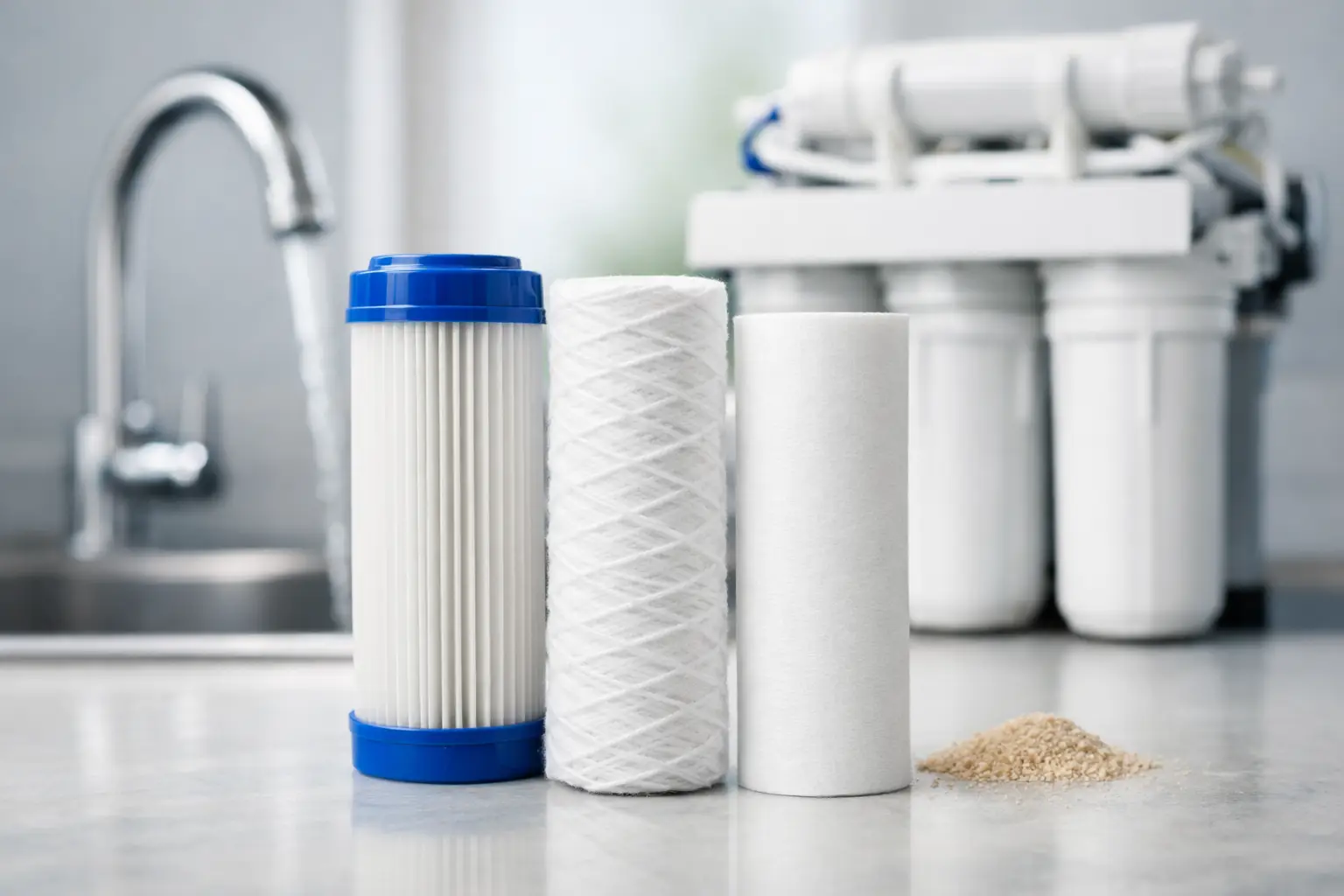
Pleated sediment cartridges and polypropylene depth cartridges are common options, and each performs differently.
Pleated cartridges use a folded surface to catch sediment. Many can be rinsed and reused where the manufacturer permits it, making them a useful choice when dealing with larger debris and visible particles. They often maintain good flow because of their greater surface area. However, washing does not always restore full performance, especially when fine silt or biofilm has worked into the material.
Polypropylene depth cartridges trap particles through the depth of the filter media. They are generally disposable and are well suited to finer sediment. Their graded density can hold a substantial amount of dirt, but once blocked, they should be replaced rather than cleaned.
String-wound cartridges are another option for some systems. They can be effective where there is heavier sediment, although the best choice still depends on the housing, desired filtration level and water conditions. The cartridge should always be rated for potable water use when it is installed on a drinking-water supply.
How often should you replace a sediment cartridge?
There is no single calendar rule that suits every property. A cartridge in a suburban home with clean roof catchment water may last several months. The same cartridge on a rural property during a dusty summer, or after a storm sends fine debris into the tank, may require replacement much sooner.
Check the cartridge regularly and replace it when water flow noticeably drops, pressure at taps falls, the housing shows heavy discolouration or downstream filters are becoming dirty faster than expected. A visible brown or grey cartridge is a useful clue, but flow and pressure are often better indicators because some fine sediment loads are not obvious from the outer surface.
A practical service interval for many systems is every three to six months, with checks after significant weather events. Keep a spare on hand if your water supply is critical. Waiting until a cartridge is fully blocked can place unnecessary strain on a pump and leave the household with poor pressure when a replacement is least convenient.
Change cartridges without creating a new problem
Changing a sediment cartridge is straightforward, but cleanliness matters. Turn off the water supply to the filter, release pressure according to the housing instructions and place a bucket underneath before loosening the sump. Remove the old cartridge carefully and clean the housing with suitable potable-water-safe methods.
Inspect the O-ring every time. A dry, twisted or worn O-ring is a common cause of leaks after servicing. Clean its groove, apply food-grade lubricant if recommended by the housing manufacturer, and seat the O-ring evenly before reassembling the unit. Tighten the housing firmly, but avoid over-tightening, which can damage threads or make the next service difficult.
After turning the supply back on, check slowly for leaks. Flush the system as required by the cartridge instructions, particularly if it is followed by a carbon filter or UV treatment unit. If pressure does not return after a cartridge change, look beyond the filter. A partially closed valve, blocked pump strainer, low tank level or pump issue may be the real cause.
Protect the whole system, not just one filter
A sediment cartridge works best as part of a well-maintained rainwater setup. Keep roof gutters clear, inspect leaf strainers and tank inlet screens, and make sure the first-flush arrangement is operating correctly where fitted. These simple checks reduce the debris reaching the tank in the first place and help cartridges last longer.
For a multi-stage system, use the sediment stage to do the heavy lifting before finer treatment. That approach can reduce replacement costs over time and helps maintain the performance of more specialised cartridges and UV equipment. It is a practical investment in both water quality and the equipment that delivers it.
If you are unsure which replacement matches your housing or water conditions, record the filter dimensions, current micron rating and any pressure concerns before ordering. Aus Water Tanks can help you select a compatible option, so your system keeps delivering dependable water where it matters most.