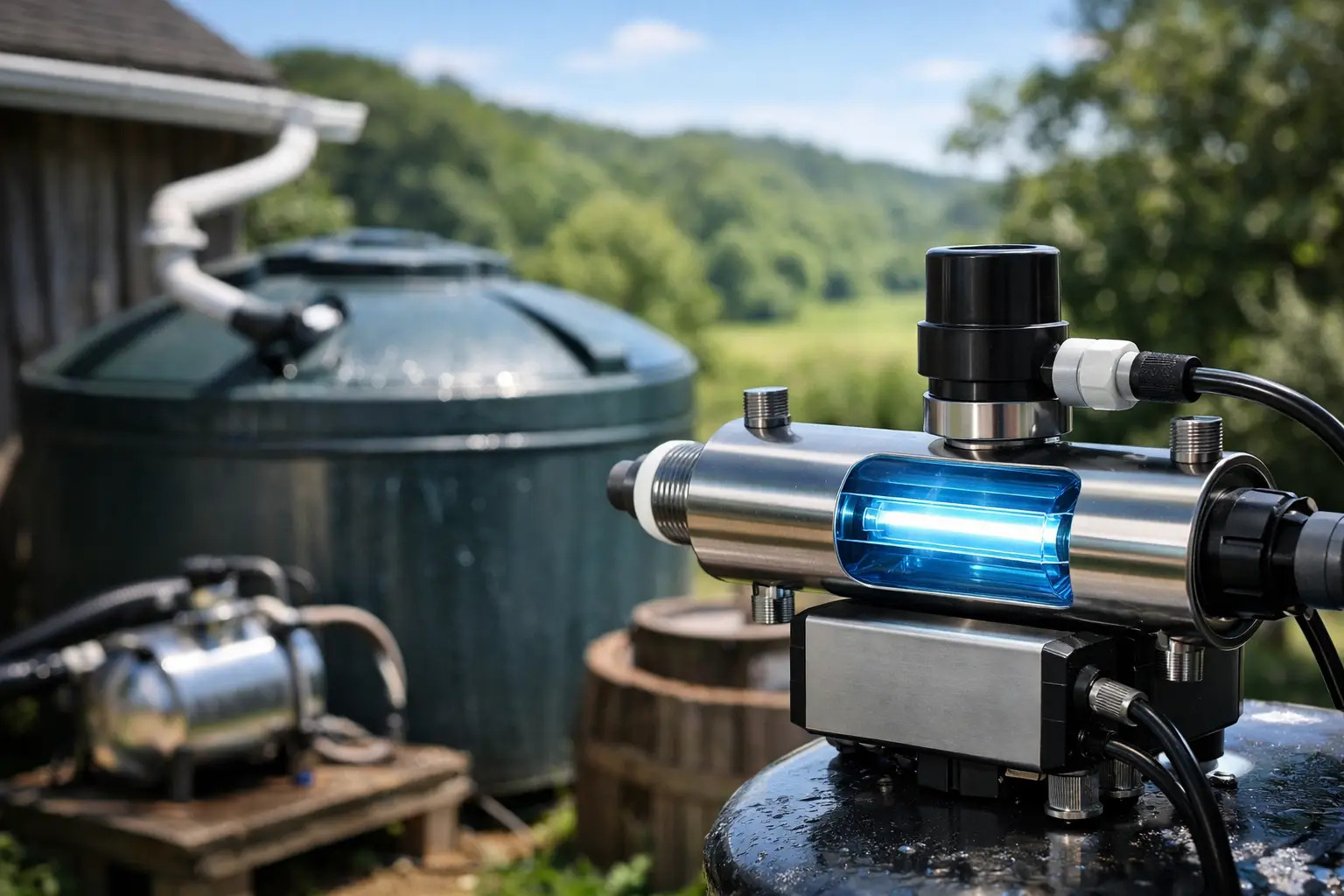
A rainwater tank can provide excellent household water, particularly when the tank, pump and plumbing are chosen to suit the property. But stored water is exposed to changing conditions. Bird droppings on the roof, dust, insects, small animals and runoff after a dry spell can introduce microorganisms before the water reaches the tap. UV water purification systems add a final treatment barrier, using ultraviolet light to reduce microbiological risks without changing the taste or adding chemicals to the water.
For homes, acreages and rural properties that use rainwater for drinking, cooking, showering and everyday household use, UV treatment is often a sensible part of a properly planned filtration system. The key is understanding what it can do, what it cannot do, and where it belongs in the overall setup.
What UV water purification systems do
A UV system exposes flowing water to a controlled dose of ultraviolet light inside a treatment chamber. The light disrupts the DNA of microorganisms such as bacteria, viruses and protozoa, preventing them from reproducing. It is a physical disinfection process, not a filter in the usual sense.
Unlike chemical treatment, UV does not leave a residual taste, smell or disinfectant in the water. It also does not change pH, hardness or mineral content. This makes it well suited to households that want the natural taste of rainwater while adding protection at the point where water enters the home.
UV treatment works as water passes through the chamber. It does not keep disinfecting water sitting in the tank or pipes afterwards. Good tank hygiene and sound plumbing are still essential.
Why pre-filtration matters before UV treatment
UV light needs clear water to work effectively. If water is cloudy or contains fine sediment, particles can shield microorganisms from the light. A UV unit may be operating perfectly, yet treatment performance can be compromised if the water has not been filtered first.
That is why a whole-house rainwater setup commonly includes staged filtration ahead of the UV chamber. A sediment cartridge removes grit, rust, dust and other suspended material. A finer filter may then be used to improve water clarity further. Carbon filtration can reduce unwanted taste and odour where needed, although it is not a substitute for disinfection.
The exact cartridge combination depends on the water source and household needs. Rainwater from a well-maintained roof and clean tank may need a straightforward sediment and carbon arrangement. Water with regular visible sediment, staining or unusual taste may need a more considered approach. Cartridge micron ratings, water flow and maintenance intervals all need to work together.
A good rule is simple: filter first, disinfect last. Installing the UV unit after the pre-filters helps ensure the water entering the chamber is clear enough for reliable treatment.
UV is one part of a safe rainwater system
A UV system is highly useful, but it cannot correct every water-quality issue. It does not remove sediment, dissolved salts, chemicals, heavy metals or tannins. Nor will it fix water that has been affected by a contaminated tank, unsuitable pipework or poor roof catchment practices.
The stronger approach starts before water reaches the tank. Fit suitable gutter protection and leaf screens, use a first-flush device where appropriate, and keep roof catchments clear of excessive leaf matter and animal activity. Tank inlets should be screened, overflow points protected and access covers kept secure. Periodic tank inspection and cleaning remain worthwhile, especially after storms, bushfire ash, prolonged dry weather or signs of contamination.
Pump selection also matters. A household pressure pump should provide sufficient, consistent flow for the property without exceeding the rated flow of the filtration and UV equipment. If a pump pushes water through the system too quickly, the UV chamber may not deliver the required treatment dose. On the other hand, an oversized filtration arrangement that creates unnecessary pressure loss can affect taps, showers and appliances.
For this reason, it pays to consider the tank, pump, filters and UV unit as one water system rather than buying each item in isolation.
Choosing the right UV system size
The best UV unit is sized around peak demand, not just the number of people in the household. A small cottage with one bathroom has very different requirements from a family home with multiple bathrooms, a laundry and outdoor taps running at the same time.
Start by considering the highest likely simultaneous flow. This may include a shower, kitchen tap, toilet refill and washing machine. Then check the flow rating of the pump and make sure the UV system is rated to treat water at that flow rate. Do not assume a larger pump automatically needs a larger unit, but do make sure the pump cannot regularly drive water beyond the UV unit’s approved capacity.
A system used only for a drinking-water tap can be smaller than a whole-house installation. However, many rainwater households prefer whole-house treatment because it protects water used for brushing teeth, showering and food preparation as well as drinking. It is a practical choice for properties where rainwater is the main domestic supply.
Installation location is another consideration. UV equipment is generally installed after the pump and pre-filtration, in a protected area that allows access for cartridge changes, lamp replacement and servicing. It should not be left exposed to weather, accidental knocks or direct sunlight. Allow enough clearance to remove the lamp and quartz sleeve without dismantling surrounding plumbing.
The parts that need regular attention
UV systems are low-chemical and relatively straightforward, but they are not fit-and-forget equipment. Maintenance is what keeps the system dependable.
The UV lamp has a limited effective life. Even when a lamp is still glowing, its germicidal output can decline over time. Most systems require lamp replacement at the manufacturer’s recommended interval, commonly around 12 months. The quartz sleeve surrounding the lamp also needs inspection and cleaning because mineral deposits, fine film or staining can reduce the amount of UV light reaching the water.
Pre-filter cartridges need changing when they become loaded with sediment or at the recommended service interval. Waiting until household pressure drops is not always ideal, because filtration performance may have already declined. Keep a record of changes, particularly on properties with variable seasonal water quality.
Many UV units include an alarm or indicator that alerts the owner when the lamp needs replacement or when the unit is not operating correctly. Treat these warnings seriously. If the UV unit is off, the water may still pass through the plumbing, but it is no longer receiving UV treatment.
It is also wise to use a qualified plumber for installation and any work involving mains changeover, backflow prevention or electrical connections. Australian plumbing requirements and local council rules can vary, particularly where rainwater is connected to internal household fixtures.
When UV treatment may not be the whole answer
Some water sources need additional treatment beyond standard sediment filtration and UV. Bore water, creek water, dam water or rainwater affected by smoke, algae or chemical contamination may need laboratory testing before equipment is selected. UV treats microorganisms, but it is not designed to remove every contaminant that testing may identify.
For rainwater, a sudden change in appearance, odour or taste should be investigated rather than masked with additional treatment. Check the roof, gutters, tank screen, pump intake and filters first. After a known contamination event, the tank and plumbing may require cleaning or disinfection before normal service resumes.
For properties switching between tank water and mains water, a correctly designed rain-to-mains arrangement can maintain supply during dry periods. The filtration layout needs to match the water source being treated and comply with the installation requirements for the property.
Building confidence in every glass
For many Australian households, rainwater is more than a backup supply. It supports a self-reliant lifestyle, reduces reliance on mains water and makes good use of rainfall on the property. A properly sized UV system, supported by clean catchment practices and suitable filtration, helps turn stored rainwater into a dependable household supply.
Aus Water Tanks can help customers compare compatible tanks, pumps, filters and UV equipment for a complete setup that suits the way their property uses water. The right system is not necessarily the biggest or most expensive one. It is the one that delivers clear, treated water at the flow your household needs, with maintenance you can comfortably keep on top of year after year.