A rainwater tank is not a short-term purchase. Once it is delivered, installed and connected to your roof catchment, it becomes part of how your home, farm or business manages water for years to come. Aquaplate tanks are a popular choice for Australian properties needing high-capacity, durable steel water storage, particularly where a large round tank suits the available site.
The right tank is not simply the biggest one that fits. Capacity, access, footing, roof area, water use and pump selection all affect how well the system performs. Getting these decisions right before delivery can save time, prevent installation delays and give you more reliable water when dry weather arrives.
What are Aquaplate tanks?
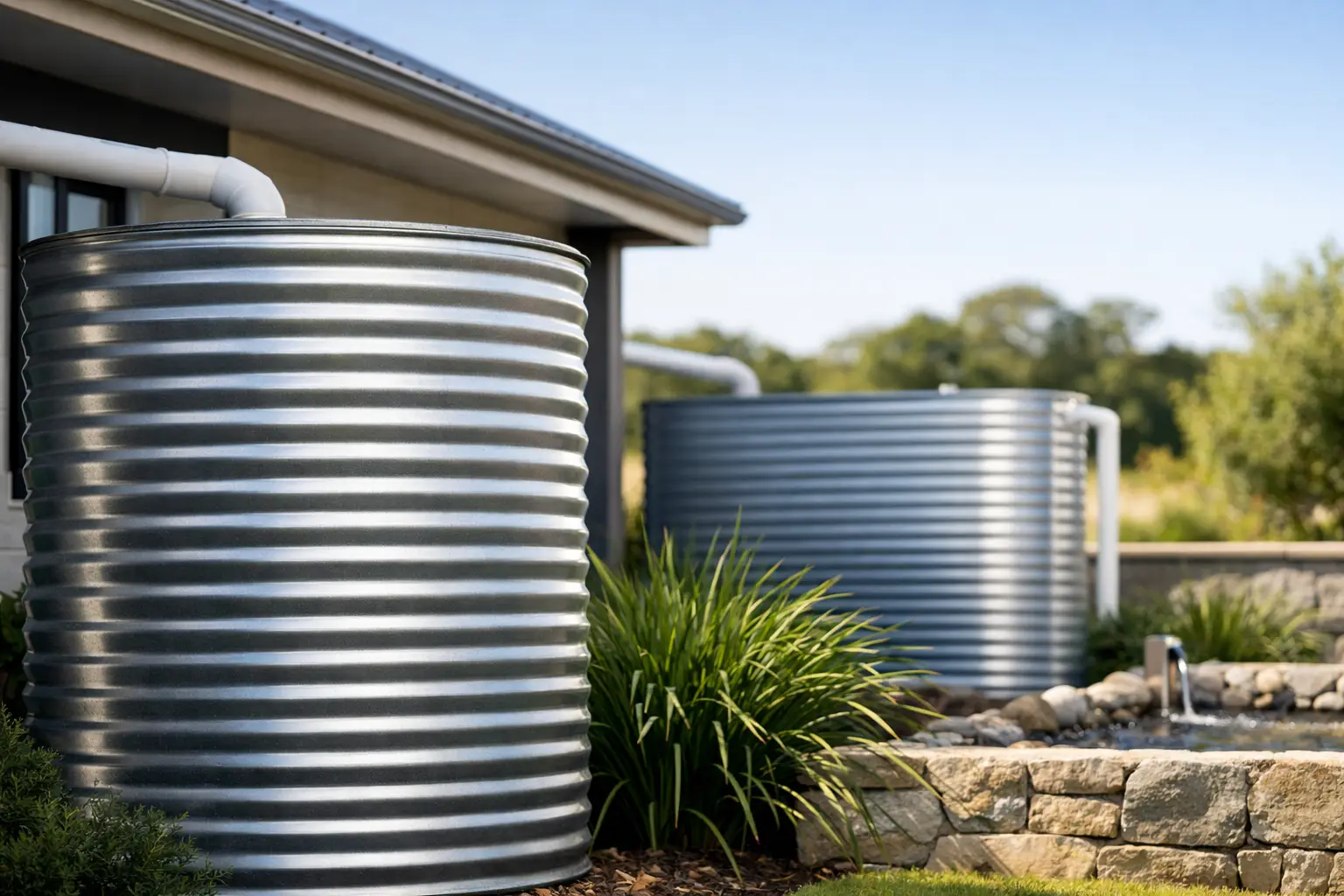
Aquaplate tanks are round steel rainwater tanks made from BlueScope steel with an Aquaplate polymer film applied to both sides of the steel. This protective layer is designed to provide long-term corrosion resistance in rainwater storage applications. The result is a strong, practical tank option for domestic, rural, agricultural and commercial water storage.
Unlike a polyethylene tank, a steel tank is assembled on site. That makes it a sensible option where access is limited by gates, driveways, slopes or established buildings. Individual sheets and components can generally be moved to the prepared tank site more easily than a large, fully moulded tank. For acreage blocks and rural properties, that can make a real difference.
BlueScope Aquaplate steel tanks are backed by a 10-year construction warranty and up to 20 years of anti-corrosion coverage, subject to the manufacturer’s warranty terms and correct installation. That warranty support matters, but it should sit alongside good site preparation and regular maintenance. A quality tank still needs a level base, clean roof catchment and functioning overflow.
Why choose an Aquaplate steel tank?
The main appeal of an Aquaplate tank is dependable large-volume storage. Round tanks make efficient use of steel and are available in capacities suited to a broad range of properties, from household rainwater systems through to larger farm and commercial applications.
Steel construction also gives the tank a solid, traditional profile that many owners prefer on rural blocks. With a range of colour options available, the tank can be selected to sit comfortably beside a shed, home, machinery area or boundary line. Colour choice is more than a cosmetic decision if the tank is visible from the house or street, so it is worth considering early.
For homes using rainwater indoors, greater capacity can improve water security between rainfall events. A properly sized tank can supply toilets, washing machines, garden taps and, where filtration is suitable, household drinking water. On a farm, stored water may support livestock, wash-down, irrigation or general property use. The best application depends on your demand and the reliability of your local rainfall, not capacity alone.
There are trade-offs. Round steel tanks need a larger footprint than slimline tanks, so they are not always ideal for narrow side access. They also require a properly prepared base and a clear delivery and build area. If space along a fence line is your biggest constraint, a slimline poly or slimline steel tank may be the better fit.
Selecting the right Aquaplate tank capacity
Capacity should start with two practical questions: how much water can your roof collect, and how much water do you expect to use? A large tank connected to a small roof will take longer to fill. A small tank connected to a large roof may overflow often during heavy rain, leaving useful water uncaptured.
Roof catchment is influenced by roof area and rainfall. As a simple guide, 1 mm of rain falling on 1 square metre of roof produces approximately 1 litre of water before allowing for losses. First-flush diversion, gutter overflow, roof pitch and wind can all reduce the amount that reaches the tank, so treat the calculation as a planning tool rather than a guarantee.
A household relying on tank water for gardens and laundry has very different needs from a family using rainwater as its primary supply. Likewise, a weekend acreage property may need modest storage for basic use, while a full-time rural home with livestock may need a much larger reserve. Fire protection requirements can also influence capacity and outlet configuration. Where a tank contributes to a fire-fighting water supply, check local planning requirements, insurer expectations and the access needed for emergency services.
It is often more cost-effective to allow for future demand at the beginning. Adding capacity later can mean organising another base, plumbing alterations and another delivery. However, bigger is not automatically better if the site, roof catchment or budget does not support it. The best result is a tank sized around realistic water use and your property’s rainfall pattern.
Site preparation matters as much as the tank
A steel rainwater tank needs a stable, level base that supports the full weight of stored water. Water is heavy: every 1,000 litres weighs approximately one tonne. Even a minor unevenness can place unnecessary stress on a full tank, its wall sheets and fittings.
A compacted crusher dust or sand pad within a suitable retaining edge is commonly used, although the preferred base depends on the tank design and site conditions. The finished pad needs to be level, smooth and slightly larger than the tank footprint. Remove sharp stones, roots and building debris that could affect the liner or create low spots over time.
Consider access before the tank arrives. There needs to be room for delivery, safe movement of components, and space for installers to work around the tank. Check overhead powerlines, low tree branches, soft ground and narrow gates. If the property is remote or the tank site is well away from the road, discuss delivery arrangements and site access when requesting a quote.
Positioning should also make plumbing straightforward. Locate the tank close enough to downpipes to keep pipe runs practical, while leaving access for cleaning gutters, inspecting the inlet screen and maintaining pumps or filters. A tank placed downhill from the house may need a pump with enough pressure and flow to overcome the elevation change.
Build a complete water system, not just storage
A tank stores water, but the fittings and equipment determine whether that water is clean, accessible and useful at the tap. At minimum, a rainwater system should include appropriate gutter connections, an inlet screen, overflow management and outlets matched to the intended use.
For garden use, a basic pressure pump may be enough. For whole-house supply, choose a household pressure pump that can meet the number of outlets likely to run at once. A small pump may be economical initially but frustrating when pressure drops during showers, washing or irrigation. Conversely, an oversized pump can add unnecessary cost and cycling. Pump selection should be based on flow demand, pipe length, vertical lift and the appliances being supplied.
If your tank water will be used inside the home, filtration deserves careful attention. Sediment filtration can reduce particles collected from the roof, while carbon filters can improve taste and odour. UV disinfection is commonly used where treated rainwater is intended for drinking, provided the water has first been filtered to the required clarity. Filters and UV lamps require scheduled replacement, so factor ongoing servicing into the system budget.
A rain-to-mains changeover system can provide added peace of mind where mains water is available. It helps maintain water supply if the tank runs low, while allowing the household to use collected rainwater whenever it is available. Installation must comply with local plumbing requirements, particularly where rainwater and mains water are connected within the same property.
Looking after Aquaplate tanks over the long term
Most tank maintenance is straightforward and prevents avoidable water-quality problems. Keep gutters clear, check leaf strainers after storms and make sure the mosquito-proof mesh remains intact. Inspect the overflow path so water is directed safely away from the base and nearby buildings.
Periodically look over fittings, valves and pipework for leaks. A slow leak may not seem significant, but it can waste valuable stored water and soften the ground around the tank. If you use a pump, clean or replace strainers as required and follow the manufacturer’s servicing schedule.
For drinking water systems, replace filter cartridges and UV components on time. A filter that has exceeded its service life may restrict flow or reduce treatment performance. Keep a simple maintenance note near the pump or in your mobile so replacement dates are not forgotten.
Get the details right before you order
Before purchasing, confirm the tank diameter and height, base size, preferred colour, inlet and outlet positions, and the access route to site. It is also worth deciding whether you need a pump, filtration, rain-to-mains equipment or fire-fighting fittings at the same time. Buying compatible equipment together can make installation simpler and avoid last-minute changes.
Aus Water Tanks can help match storage, pumping and filtration equipment to the way your property uses water. A clear plan before delivery gives you a system that is easier to install, easier to maintain and ready to support your household or property when rain is scarce.
A well-chosen tank does more than collect water from the roof. It gives you a practical reserve for everyday use, dry periods and the unexpected, provided the storage, site and supporting equipment are planned as one system.