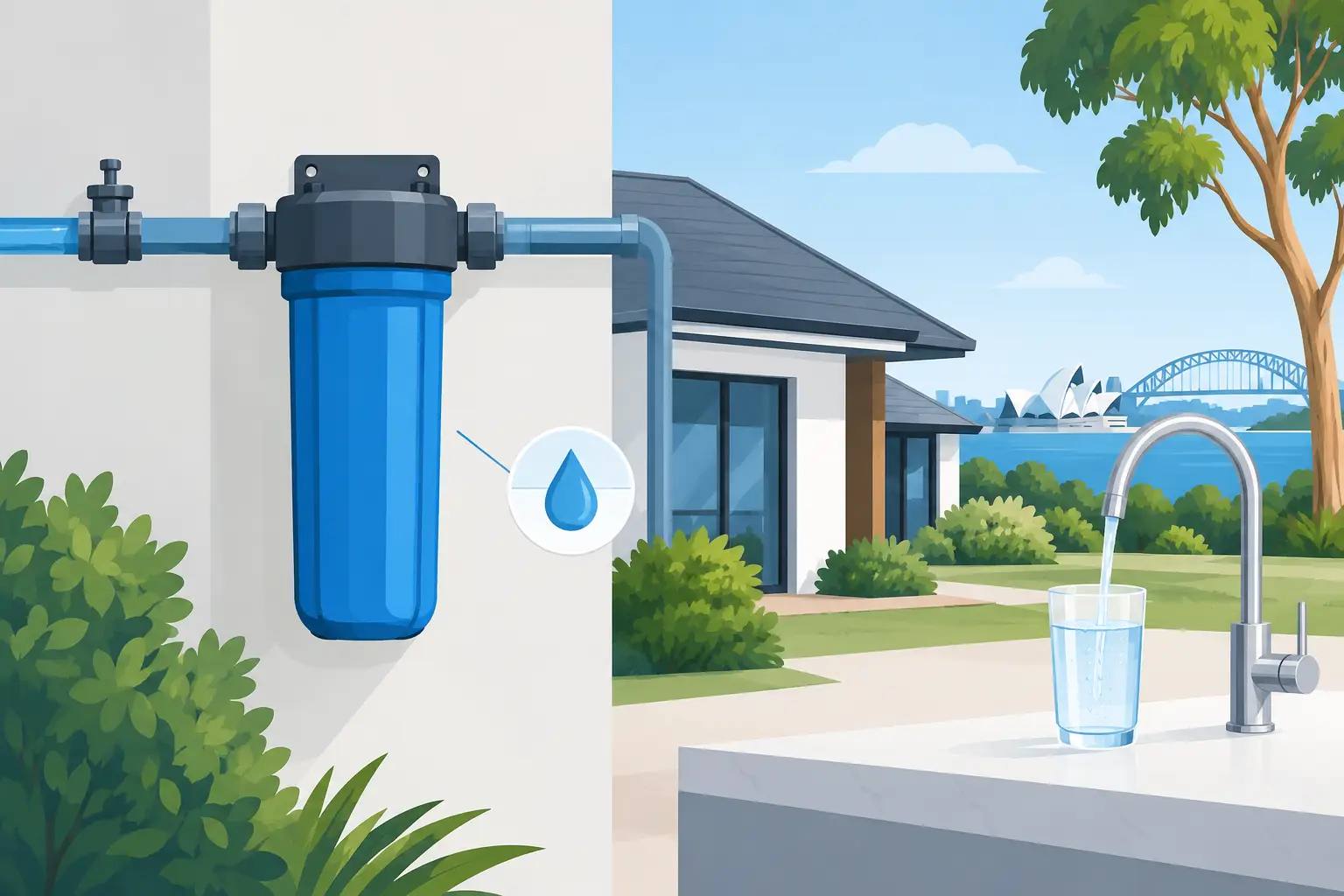
A glass of water can look perfectly clear while still carrying chlorine taste, fine sediment or microorganisms that need proper treatment. This point of entry filter guide explains how whole-house filtration works, what to consider before choosing a system, and why the right setup differs between rainwater and mains water supplies.
A point of entry filter is installed where water enters the home, before it reaches kitchen taps, showers, toilets, laundry appliances and hot water services. It is often called a whole-house water filter. Rather than treating water at one drinking tap, it improves water quality throughout the household.
What a point of entry filter does
A well-matched point of entry system removes or reduces the issues relevant to your supply. This may include sediment, rust, dirt, organic matter, chlorine, unpleasant tastes and odours. Where rainwater is used for drinking and household use, a UV disinfection unit can also provide a critical final barrier against bacteria and other microorganisms.
The benefit is not limited to drinking water. Sediment filtration can help protect tapware, washing machines, hot water systems and pressure pumps from abrasive particles. Carbon filtration can make shower and bath water more pleasant where chlorine is a concern. For families relying on tank water, filtering the full household supply helps create a more consistent standard of water from every outlet.
No single cartridge removes everything. The best system is one that targets the actual water source and risks at your property, without restricting flow or creating unnecessary servicing costs.
Start with the water source
The first choice is whether the home is supplied by rainwater, town water, or a combination of both. The treatment needs are different.
Rainwater tank supplies
Rainwater quality is influenced by the roof catchment, gutters, leaf protection, tank condition, local weather and how long water sits in storage. Fine sediment may enter from dust, roof particles and organic debris. Even a well-maintained tank can be exposed to microorganisms from bird and animal droppings on the roof.
For a home using tank water for drinking, cooking, bathing and washing, a common approach is staged filtration. A sediment cartridge captures particles first, followed by activated carbon to improve taste and odour and reduce organic compounds. UV disinfection is generally installed after filtration so the water reaching the UV chamber is clear enough for the lamp to treat effectively.
UV does not remove sediment, chemicals or bad tastes, and a filter cartridge does not reliably disinfect water. These components do different jobs, which is why a properly planned rainwater system often uses both.
Town water supplies
Mains water is treated before it reaches the property, but many households still want to reduce chlorine or chloramine taste and smell. A sediment pre-filter may be useful where there is visible grit, pipe scale or discoloured water after maintenance works. Activated carbon is commonly selected for chlorine reduction and improved taste and odour.
Chloramine needs a suitable carbon media and adequate contact time. A basic cartridge may not deliver the same reduction as a system designed specifically for chloraminated water. If this is your concern, check the filter media and stated performance rather than choosing on cartridge size alone.
UV is not always required for town water, as the supply is already disinfected. It can be considered where there are specific concerns, but it should not be added by default when filtration for taste, odour and sediment is the main goal.
Choosing the right filter stages
A point of entry filter guide should begin with the principle that water treatment works best in sequence. Put the practical work of removing particles first, then use treatment media that needs cleaner water to perform well.
Sediment cartridges are rated in microns. A larger micron rating catches bigger particles and usually has less effect on flow. A finer rating captures smaller particles but can block sooner, particularly with tank water after heavy rain or a dusty period. Many whole-house systems use a staged approach, such as a coarser pre-filter followed by a finer cartridge, to balance water clarity, flow and cartridge life.
Activated carbon is used when taste, odour, chlorine or organic matter is the issue. Carbon block cartridges can provide fine filtration and good contact with water, while granular carbon options can suit higher-flow applications depending on the system design. The right choice depends on the water quality, expected usage and housing size.
For rainwater intended for drinking, UV is usually the final stage. It should be sized for the home’s required flow rate, installed according to the manufacturer’s instructions and supplied with a functioning lamp. A UV unit only works as intended when water is pre-filtered and the lamp, quartz sleeve and electronics are maintained.
Size the system for real household demand
A filtration system that is too small may cause a noticeable drop in pressure when two showers, a washing machine and a kitchen tap are running at once. It can also mean cartridges clog faster and need more frequent replacement.
Allow for the number of bathrooms, household size, pressure pump capacity and peak water use. Larger filter housings generally hold bigger cartridges, offer more media surface area and handle higher flow rates. They can cost more upfront, but may offer better value over time for a busy family home because replacement intervals are often longer.
The installation location matters as well. The system should be fitted after the pump for a rainwater supply, or after the water meter for mains water, at a point that protects the home’s internal plumbing. Leave enough clearance below filter housings for cartridge changes, and ensure the area is sheltered, accessible and protected from direct sun where required. Exposure can degrade some housings and fittings over time.
If a property has separate rainwater and mains lines, decide which water source will be filtered and where the changeover occurs. A licensed plumber can help ensure the layout, backflow protection and connection method meet local requirements.
Maintenance is part of water quality
The most capable system still needs regular servicing. Cartridges collect what you do not want in your household water, so they eventually need replacing. Waiting until water flow has dropped sharply is not a good maintenance plan, particularly for a rainwater system with UV treatment downstream.
Replacement timing depends on cartridge type, water quality and household consumption. Sediment filters may need earlier changes after storms, tank cleaning or nearby building works. Carbon cartridges should be changed in line with their stated service life, even if the water still looks clear. Once carbon is exhausted, it may no longer reduce the tastes, odours or chemicals it was selected for.
UV lamps are generally replaced annually because UV output reduces with operating time, even when the lamp still appears to be lit. The quartz sleeve should also be inspected and cleaned or replaced when needed. Keep a simple record of cartridge and lamp changes so servicing does not become guesswork.
During a cartridge change, inspect O-rings, housings and fittings for wear, lubricate seals with a suitable food-grade lubricant where recommended, and check carefully for leaks when the water is turned back on. Keeping a spare service kit on hand can make planned maintenance much easier.
Common selection mistakes to avoid
The most common mistake is buying a system based only on price or the number of stages. More stages are not automatically better. A household on clean mains water may only need sediment and carbon filtration, while a rainwater household using tank water for drinking may need sediment, carbon and UV disinfection.
Another mistake is choosing very fine filtration without allowing for water flow and cartridge life. A fine cartridge can be useful, but it needs appropriate pre-filtration when the water carries a lot of debris. Otherwise, pressure can fall quickly and replacement costs can rise.
It is also worth avoiding an undersized UV unit. Match the unit to the actual flow demand, not just the average daily water use. Fast-moving water needs sufficient UV exposure time to be treated properly.
If you are unsure what is affecting your water, start with what you can observe and what your water source tells you. Is there sediment in toilet cisterns? Does the water smell of chlorine? Is the home supplied solely by rainwater? Has a water test identified a particular concern? These details make choosing a suitable system far more straightforward.
A practical way to buy with confidence
Before ordering, confirm your water source, the number of people in the home, plumbing size, pump flow or mains pressure, available installation space and your main water-quality concern. If rainwater is used for drinking, include UV disinfection in the discussion. If you want better-tasting town water, focus on sediment protection where needed and carbon suited to chlorine or chloramine reduction.
Aus Water Tanks can help households compare whole-house filtration components, replacement cartridges, UV lamps and service kits so the system remains practical to own after installation. The aim is not to add equipment you do not need. It is to build a reliable treatment train that suits your water, your family and the way your home uses it.
Clean, dependable household water starts with a system that is correctly matched and regularly serviced. Choose the treatment stages for the source you have, allow for real flow demand, and keep replacement parts ready before the next service is due.