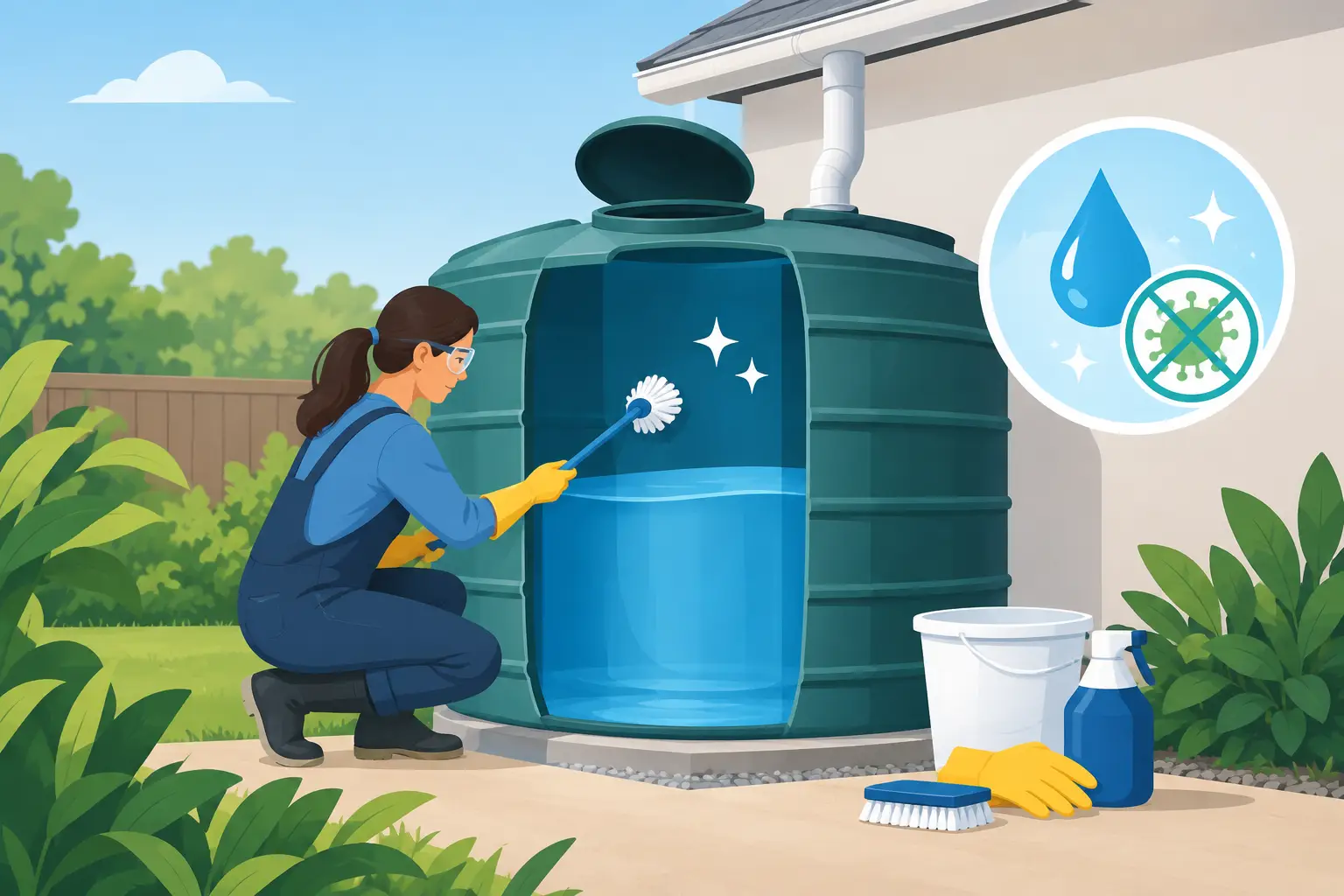
A rainwater tank can look clean from the outside while carrying fine sediment, leaf matter or microbiological contamination inside. If your household water has developed an unusual smell, taste or colour, or there has been a contamination event, it may be time to disinfect rainwater tanks and inspect the rest of the system as well.
Disinfection is not a substitute for good rainwater collection and filtration. It is a targeted reset after a problem, followed by the practical measures that stop the same issue returning. For homes using tank water for drinking, cooking and bathing, that usually means protecting the roof catchment, maintaining filters and using correctly sized UV disinfection where required.
When to disinfect rainwater tanks
A tank does not need to be chlorinated on a set calendar date simply because it holds rainwater. Over-treating water can create strong chlorine odours, affect the taste of household water and make more work for your filters. The right timing depends on the condition of the tank, your water use and what has happened upstream.
Consider tank cleaning and disinfection when there is evidence of animal contamination, a dead animal has entered the tank, floodwater has reached the tank or inlet, or extensive bushfire smoke, ash or debris has entered the catchment. It is also sensible after a long period of neglect, before recommissioning an unused system, or after internal repairs where the tank has been opened and contaminated.
Changes at the tap are another prompt to investigate. These may include persistent earthy or musty odours, visible particles after a filter change, slimy growth around fittings, or water that remains cloudy after sediment has had time to settle. A sudden change does not always mean the tank itself is the source. It could be a blocked filter, ageing cartridge, damaged pump fitting or contamination in pipework.
If anyone in the home becomes unwell and you suspect drinking water may be involved, stop using the rainwater for drinking and food preparation until the supply has been assessed. Seek medical advice where needed and arrange water testing or professional guidance, particularly for households with young children, older people or people with reduced immunity.
Clean first, then disinfect
Chlorine works poorly when it has to fight through a heavy load of dirt and organic material. That is why the first job is inspection and cleaning, not simply adding a chemical treatment to a dirty tank.
Check the roof, gutters, leaf guards, downpipes and first-flush device. Remove leaf litter, nesting material and built-up sediment from these areas. Confirm that tank inlets and overflows are screened to keep insects, frogs, rodents and other animals out. A secure, light-proof lid also helps limit algae growth.
Inside the tank, look for sludge at the base, floating debris, mould around the access opening, damaged screens or signs that sunlight is getting in. If sediment is substantial, the tank may need to be pumped down and professionally cleaned. Trying to disinfect a tank with a thick layer of sludge is rarely an effective or economical fix.
Take care before entering any tank. Rainwater tanks are confined spaces and can contain unsafe air, restricted access and drowning hazards. Internal cleaning should be left to trained, properly equipped contractors. Never enter a tank alone or without confined-space procedures.
How to disinfect a rainwater tank
The exact treatment method depends on tank size, whether the water is being used for drinking, the level of contamination and local advice. Product labels and state health guidance should always take priority. For a household tank, the process generally follows the same careful order.
Isolate the household supply
Before treatment, prevent heavily chlorinated water from reaching taps, appliances and sensitive filtration components. Switch the pump off where appropriate and use bypass valves if your plumbing has them. Remove or isolate carbon cartridges because activated carbon can strip chlorine from the water before it has completed the disinfection process.
UV systems should also be considered separately. UV does not add chemicals, but the lamp and controller should be protected from dry running and serviced according to the manufacturer instructions. If you are unsure how your system is plumbed, take photos and seek advice before changing valves or removing housings.
Use a suitable disinfectant and dose accurately
For potable rainwater systems, use a chlorine product suitable for drinking-water disinfection and follow its instructions precisely. Do not use scented household bleach, products with added detergents, or unknown pool chemicals. Some pool products are stabilised or contain additives that are not suitable for household drinking water.
The amount required is determined by the volume of water in the tank and the strength of the chlorine product. Guessing can result in too little chlorine to work or far too much chemical in the system. A tank that is only partly full still needs to be measured as accurately as possible.
Wear gloves and eye protection, work in a well-ventilated area, and never mix chlorine with other chemicals. Add the prepared treatment carefully according to the product directions. Avoid splashing concentrated chlorine onto clothing, painted surfaces, lawns or garden beds.
Circulate treated water through the pipework
Disinfecting the tank alone may leave untreated water in pipes, pressure vessels and fittings. Once the treatment has been added, circulate the water as directed so it reaches the plumbing. This may involve running each cold-water tap, outdoor tap and relevant appliance connection until the chlorine-treated water is present.
Do not run treated water through carbon filters during this stage. Chlorine can also affect some rubber components and older plumbing materials, so check the equipment manufacturer guidance if you have a complex installation.
Allow the required contact time
Chlorine needs time to do its job. The contact period specified on the product label or by your water treatment adviser matters just as much as the dose. Keep the tank secure during this time so that children, pets and wildlife cannot access treated water.
After the contact period, flush the tank and plumbing as directed until chlorine levels and odours are suitable for normal household use. Dispose of highly chlorinated water responsibly. Do not release a large volume into a creek, dam, septic system or directly onto garden plants without checking local requirements.
Refit filters and check the water at the tap
Once disinfection is complete, install clean or replacement cartridges where required. A sediment filter may be needed first to catch fine particles disturbed during cleaning. Activated carbon after sediment filtration can reduce chlorine taste and odour, while a UV system can provide ongoing disinfection for clear water entering the home.
Run water until it is clear, then inspect filter housings, seals and fittings for leaks. If the water still smells unpleasant or appears cloudy, do not assume more chlorine is the answer. The cause may be sediment, algae, a failing cartridge or a plumbing issue that needs further attention.
Why filtration and UV still matter after treatment
Tank chlorination is an occasional corrective measure. Whole-house treatment is what supports day-to-day water quality. A well-planned rainwater system commonly uses sediment filtration to remove particles, activated carbon to improve taste and odour, and UV disinfection as the final barrier against microorganisms.
UV is highly effective when the water reaching the chamber is clear. Muddy or particle-laden water can shield microorganisms from the UV light, which is why pre-filtration is not optional. Filter cartridges need replacement on schedule, and UV lamps need changing at their rated service interval even if the lamp still appears to be glowing.
The best configuration depends on your pump flow rate, household demand, water quality and the size of your plumbing. A small cartridge system may suit a weekend shed, while a family home using tank water throughout the house needs adequate flow, correctly sized housings and a UV unit matched to peak demand. Aus Water Tanks can help homeowners work through those practical choices before investing in a complete system.
Prevent the next contamination event
Good maintenance makes tank disinfection less likely. Keep gutters clean, maintain inlet and overflow screens, and ensure the first-flush device is working after dry spells and heavy weather. Check the tank lid, access hatch and mosquito mesh several times a year, especially after storms or nearby tree work.
Pay attention to consumables too. A blocked sediment cartridge can reduce pressure and allow dirty water to bypass where fittings are poorly maintained. An exhausted carbon cartridge may stop improving taste and odour. An overdue UV lamp can leave a system looking normal while delivering less disinfection than intended.
Safe rainwater is built from small, regular checks rather than one dramatic treatment. If you are uncertain about a tank issue, pause drinking use, identify the source and restore the system methodically. That approach protects both your household water and the equipment that keeps it flowing.