A pressure pump that starts every time a tap opens, shuts off properly when demand stops and protects itself when the tank runs low makes rainwater far easier to live with. Pressure pump controllers are the small but critical part of that arrangement. They tell the pump when to run, when to stop and, in many cases, when not to run at all.
For a home supplied from a rainwater tank, the controller has a direct effect on shower pressure, pump life and power use. On an acreage or farm, it can also help prevent avoidable downtime at troughs, sheds and irrigation points. Choosing one is not just about finding a controller with the right plug or thread. It needs to suit the pump, water source and the way water is used on the property.
What pressure pump controllers do
A controller monitors pressure or water flow in the pipework. When you open a tap, flush a toilet or start a washing machine, system pressure drops or flow begins. The controller starts the pump to restore supply. Once the outlet is closed and demand has finished, it stops the pump.
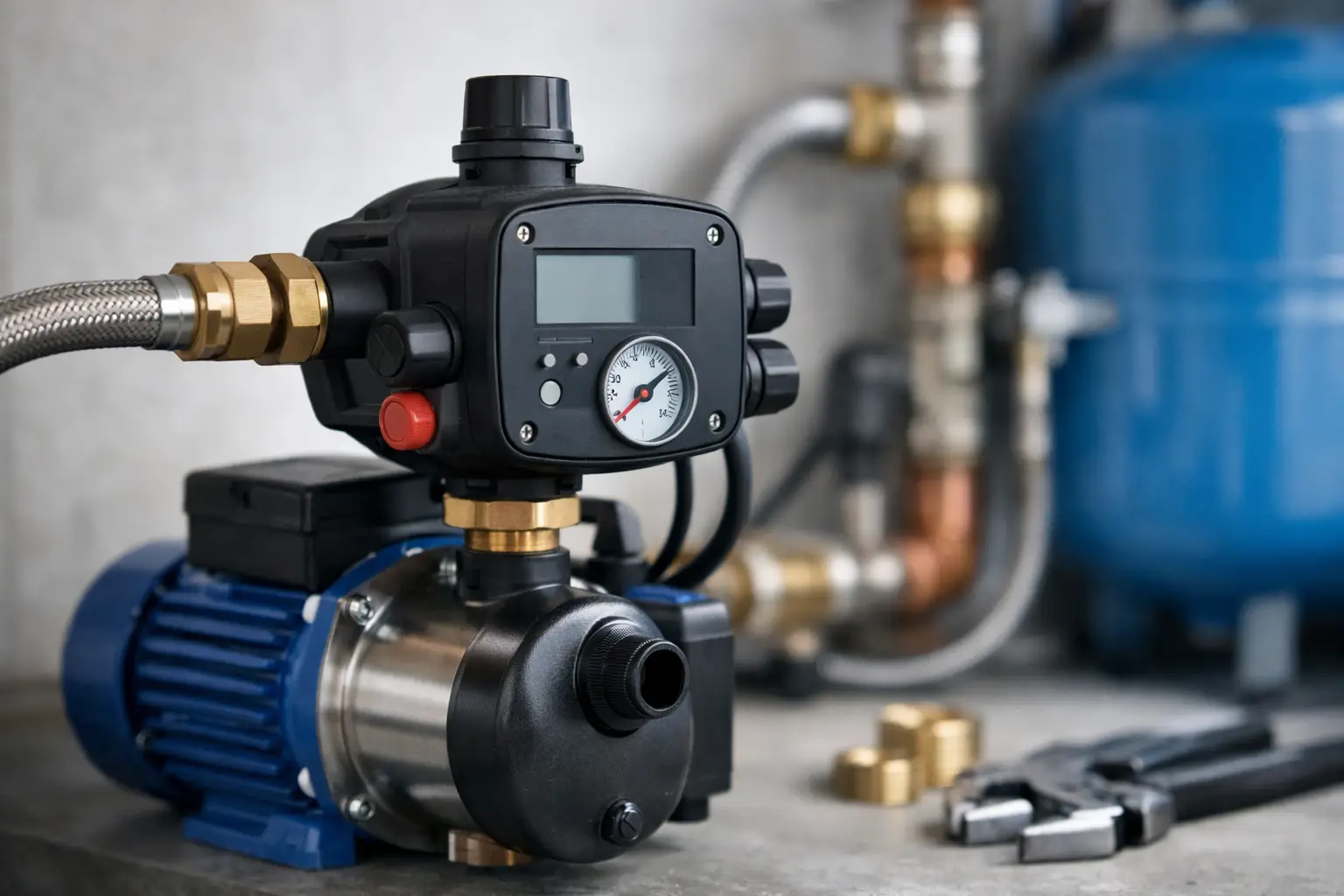
The most suitable control method depends on the system. A conventional pressure switch works alongside a pressure tank or pressure vessel. An electronic controller, often fitted directly to the pump outlet, generally senses flow and pressure without requiring a large pressure vessel. More advanced variable-speed systems adjust the pump motor to hold a selected pressure as demand changes.
Each approach can work well. The right answer depends on whether you are supplying a compact household system, a larger home with several bathrooms, a rural property or a pump with frequent and varying demand.
Types of pressure pump controllers
Electronic pump controllers
Electronic controllers are a common choice for domestic pressure pumps. They start the pump when pressure falls as an outlet opens, then stop it when flow ceases. Many include dry-run protection, which shuts the pump down if it cannot draw water from the tank or source.
Their appeal is straightforward installation and compact size. They are often a practical option for a rainwater tank supplying toilets, laundry and outdoor taps, particularly where space around the pump is limited. Some models have an automatic restart function after a dry-run event, while others need to be reset manually. Automatic restart can be useful after a tank refills, but a manual reset gives you a clear prompt to investigate why the water supply stopped.
Electronic units do have limits. Very small leaks, dripping taps or a leaking toilet cistern can make the pump cycle unnecessarily. They can also be less forgiving where demand is below the controller’s minimum flow requirement. Checking the product specifications against your pump and expected water use matters.
Pressure switches and pressure vessels
A pressure switch is the traditional setup for a pressure pump system. It starts the pump at a lower cut-in pressure and stops it at a higher cut-out pressure. A pressure vessel stores a small volume of pressurised water, reducing how often the pump has to start for short draws of water.
This arrangement is well suited to systems where avoiding frequent pump starts is a priority. It can provide a more forgiving operating pattern for pumps that serve small, intermittent demands, such as a toilet refill or a quick rinse at a utility sink. The vessel must be correctly sized and have the correct air charge. If the bladder loses pressure or fails, the pump may short-cycle, turning on and off rapidly.
There is more setup involved than with a plug-and-play electronic controller. However, for certain household, farm and irrigation applications, the serviceability and adjustability of a pressure switch and vessel remain valuable advantages.
Variable-speed pump control
Variable-speed controllers alter motor speed to maintain a steadier delivery pressure. Rather than running flat out whenever a tap is opened, the pump can slow down when only one outlet is in use and increase output when several fixtures are running.
For larger homes, multiple dwellings, accommodation buildings or properties with inconsistent demand, this can improve comfort and reduce the hard starting cycles associated with conventional pump operation. It is usually a higher-cost option and needs careful matching with the pump, motor and electrical supply. The gain is most noticeable where water use varies widely through the day. It may not represent the best value for a simple tank-to-laundry setup.
Match the controller to the pump and water system
Start with the pump’s flow rate, maximum head, pressure capability and motor rating. A controller must be rated for the pump’s electrical load and operating pressure. Using an undersized controller can cause nuisance tripping or premature failure. Selecting a controller with a pressure rating beyond what the pump can safely deliver is equally unhelpful if the rest of the plumbing is not rated for it.
Next, consider the source water. A rainwater tank pump should have protection against dry running, especially where the tank can be drawn down during dry periods. Dry running can damage seals and internal pump components quickly. A suitable low-water cutoff, float switch or controller with dry-run protection is cheap insurance compared with replacing a pump.
Then look at demand. A small cottage with one bathroom has different needs from a family home with two bathrooms, a garden, a dishwasher and water-fed appliances. A farm house may also have stock water, wash-down points or a shed connected to the same supply. If multiple outlets can operate at once, the pump must have enough flow and pressure first. A controller cannot make an undersized pump deliver more water than it is designed to provide.
If the property uses a rain-to-mains changeover system, make sure the controller is compatible with the overall arrangement. The changeover device, pump controller and plumbing layout must work together so mains water and tank water remain properly separated in line with applicable plumbing requirements.
Settings that affect everyday performance
Pressure settings shape how the system feels at the tap. Higher pressure can improve showers and help water reach upper-storey fixtures, but it also increases strain on pipework, fittings and pump components. Lower pressure reduces stress and power demand, though it may feel inadequate where several outlets run together.
With a pressure switch system, the cut-in and cut-out settings should be selected within the pump manufacturer’s recommended operating range. The pressure vessel pre-charge also needs to be set correctly, usually just below the cut-in pressure when the system is depressurised. This is a job worth checking carefully, as an incorrect setting can lead to poor pressure control and excessive starts.
Electronic pressure pump controllers often have fixed or limited adjustment settings. Before buying, check the start pressure. A controller that starts at too low a pressure can leave a noticeable drop before the pump begins. One set too high may cause unwanted cycling or fail to work well with the pump’s available pressure.
Installation details that prevent trouble
Controllers need clean, protected installation conditions. Fit the pump and controller on a firm base, shielded from direct weather where practical and with enough access for inspection. Outdoor-rated equipment still benefits from protection against relentless sun, wind-driven rain and water pooling around electrical connections.
Good suction plumbing is just as important as the controller. Air leaks on the suction side, blocked strainers, a sticking foot valve or undersized pipe can cause loss of prime and dry-run faults that appear to be controller problems. Use suitable tank outlets, strainers and pipe sizing for the pump’s required flow.
Electrical work and any plumbing connection subject to regulatory requirements should be completed by appropriately licensed trades. This is particularly important for systems connected to mains water, fixed electrical wiring or buildings with compliance obligations. Keep the controller instructions with the pump documentation, including the reset process and any fault codes.
Common signs the controller needs attention
A pump that runs when no one is using water usually points to a leak, faulty non-return valve, pressure loss or a controller that is not shutting off correctly. A pump that starts and stops every few seconds may have a flat pressure vessel, a small leak or an electronic controller struggling with low flow.
If the controller reports dry run while the tank has water, inspect the inlet strainer, suction line, tank outlet and pump priming before replacing parts. If water pressure has fallen across the house, check filters as well. A clogged cartridge can restrict flow enough to make a healthy pump and controller seem underpowered.
Regular checks are simple: look for leaks, clean strainers, make sure the pump cover is clear of debris and act on unusual cycling early. Aus Water Tanks can help customers select compatible pumping, tank and filtration equipment so the system is designed as a working whole rather than a collection of separate parts.
The best controller is the one that suits the actual job, protects the pump and stays uncomplicated to maintain. A few minutes spent matching pressure, flow, dry-run protection and installation conditions can save years of frustrating pump behaviour and help keep stored rainwater available when your property needs it most.