A quality steel water tank is built to provide years of reliable water storage, but like any important part of your property, it benefits from regular maintenance. A few simple checks can help prevent leaks, corrosion, water-quality problems and unnecessary repairs while extending the working life of the entire system.
Whether your steel water tank supplies a home, farm, acreage property, garden, livestock or emergency water reserve, maintenance should cover more than the tank itself. The base, roof, gutters, fittings, liner, pump and filtration equipment all play a part in keeping your stored water secure and your system operating properly.
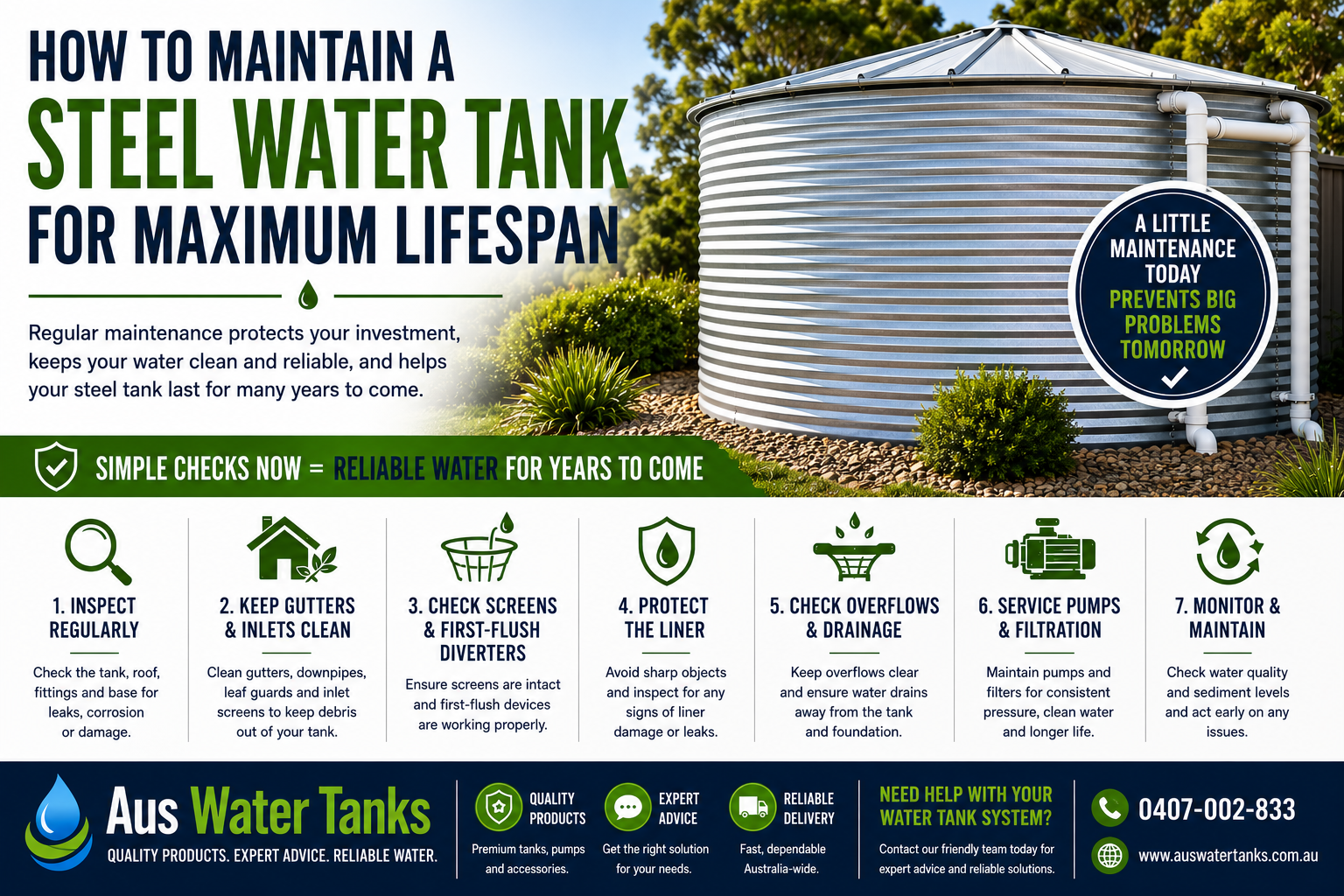
Here are the key areas to check if you want to get the longest practical lifespan from your steel water tank.
1. Inspect Your Tank Regularly
You do not need to wait until something goes wrong to inspect a steel water tank.
Walk around the tank periodically and look for visible changes, including damaged or loose sheets, corrosion, leaking fittings, movement around the base or signs that water is collecting against the tank.
Pay particular attention after severe storms, strong winds or unusually heavy rainfall.
Small problems are generally easier to deal with when identified early. A minor leak around a fitting, for example, can become a much bigger issue if it is allowed to continue unnoticed.
For corrugated steel tanks, also inspect accessible bolts, joins, roof components and external fittings for signs of deterioration.
2. Keep the Tank Base Stable and Well Drained
A steel water tank becomes extremely heavy when full. A 10,000-litre tank holds approximately 10 tonnes of water, before accounting for the weight of the tank itself.
That makes the condition of the base critical.
The tank should remain supported on a level, stable base designed for its size and construction. Look for erosion, subsidence, cracking or areas where the base appears to have moved.
Drainage around the tank is equally important. Rainwater and overflow should move away from the tank rather than pooling around its base.
If you notice significant movement or deterioration, get the site assessed before the problem places additional stress on the tank structure or fittings.
3. Check for Corrosion Before It Spreads
Modern steel water tanks are manufactured to withstand demanding Australian conditions, but their protective surfaces still need to be looked after.
Inspect the outside of the tank for scratches, damaged coatings or areas showing signs of corrosion.
Pay particular attention to locations where moisture, leaves, soil or other debris remain in contact with the tank. Keeping vegetation and accumulated material away from the tank walls allows the surface to dry and makes inspections easier.
Coastal environments can also expose metal components to salt and moisture, making routine inspections particularly worthwhile.
If you find corrosion, determine its cause rather than simply covering the affected area. Addressing the moisture, drainage or damaged component behind the problem can help prevent it from returning.
4. Look After the Tank Liner
Many steel rainwater tanks use a liner to contain the stored water and protect it from direct contact with the tank structure.
Because the liner performs such an important job, avoid anything that could puncture, stretch or damage it.
Do not place sharp objects inside the tank, and take care when performing maintenance around tank openings and fittings.
If you notice unexplained water loss, moisture around the tank or another potential liner problem, arrange an inspection. Finding the source of a leak early may prevent further damage.
Liner repair or replacement should be carried out using materials suitable for the particular tank and the intended water use.
5. Keep Gutters and Downpipes Clean
A clean tank starts with clean water entering it.
Leaves, dirt, insects, animal droppings and other material can accumulate on roofs and in gutters before being washed towards the tank during rainfall.
Regularly clean:
- Roof gutters
- Downpipes
- Leaf guards
- Rain heads
- Tank inlet screens
- First-flush devices
Properties surrounded by trees may require more frequent cleaning, particularly after storms or periods of heavy leaf fall.
Reducing debris before it reaches the tank can help limit sediment accumulation and improve the quality of stored rainwater.
6. Maintain Your First-Flush Diverter
A first-flush diverter helps prevent the initial, often dirtier portion of roof runoff from entering your rainwater tank.
It is a simple component, but it needs maintenance to work correctly.
Check that the diverter is draining as designed and that its outlets are not blocked by dirt or organic material. A blocked or neglected first-flush system may stop functioning effectively and can potentially restrict water flow.
The correct setup will depend on the roof catchment and rainwater system, so make sure the device is appropriately sized and installed.
7. Inspect Screens, Inlets and Overflows
Tank openings should be properly screened to help prevent mosquitoes, insects, frogs, rodents and debris from entering the stored water.
Check inlet screens and overflow mesh for holes, damage and blockages.
Blocked overflow screens can restrict water during heavy rain, while damaged mesh can provide an entry point for pests.
The overflow itself should also direct excess water safely away from the tank and its foundation.
This is particularly important during major rain events, when a large roof catchment can deliver a significant amount of water in a short period.
8. Monitor Sediment Inside the Tank
Even a well-designed rainwater collection system can gradually accumulate sediment.
How quickly this happens depends on the roof, surrounding environment, pre-tank filtration and maintenance of gutters and first-flush equipment.
There is no need to clean every tank according to an arbitrary timetable. Instead, monitor water quality and sediment accumulation.
Possible signs that the tank needs professional attention include unusual taste or odour, discoloured water, excessive sediment or suspected contamination.
Avoid entering a water tank yourself. Tanks are confined spaces and can present serious safety risks. Where internal inspection or cleaning is required, use appropriately equipped professionals.
9. Service Pumps and Filtration Equipment
Tank maintenance should not stop at the tank wall.
If you rely on rainwater for household supply, irrigation, livestock or other regular use, the pump and filtration system are essential components.
Watch for:
- Pumps switching on when no water is being used
- Unusual pump noise
- Reduced pressure
- Frequent pump cycling
- Leaking pipework or fittings
- Dirty or blocked filters
Unexpected pump cycling can indicate a leak or pressure problem and may shorten pump life if ignored.
Replace filter cartridges according to their condition, water usage and the manufacturer’s recommendations rather than waiting until flow becomes severely restricted.
If your system includes UV disinfection, follow the required servicing schedule for the lamp, sleeve and associated filtration.
10. Protect the Tank From Vegetation and External Damage
Trees and shrubs growing directly against a steel tank can trap moisture, hide corrosion and make inspections difficult.
Keep the immediate area around the tank reasonably clear.
Check that branches cannot scrape against the tank or roof during windy weather and that roots are not affecting the tank base or surrounding drainage.
If vehicles, tractors or machinery operate nearby, consider whether the tank and exposed pipework need protection against accidental impact.
A little planning around the tank can prevent surprisingly expensive damage.
11. Don’t Ignore Small Leaks
A small drip deserves attention.
Leaks around outlets, valves, pumps or pipe connections can waste significant amounts of water over time. They may also create persistent wet areas around the tank foundation.
Check fittings regularly and investigate unexplained reductions in stored water.
If tightening or replacing a fitting could affect the tank liner or structure, seek advice before attempting the repair yourself. The wrong repair can turn a straightforward problem into a much larger one.
12. Prepare the System for Dry Weather
Maintenance is also about making sure your water system is ready when you need it most.
Before an expected dry period, check your stored water level, pump operation, filters and any backup water arrangements.
If the tank repeatedly runs low, maintenance may not be the problem. Your storage capacity may simply be too small for your property’s demand.
Additional tanks can sometimes be connected to increase capacity, while changes to water use, roof catchment or system configuration may also improve reliability.
How Often Should You Check a Steel Water Tank?
There is no single maintenance schedule that suits every property.
A tank surrounded by trees and exposed to heavy leaf fall will usually need more frequent attention than one collecting water from a clean, open roof. Likewise, a tank supplying drinking water deserves closer water-quality management than one used only for garden irrigation.
As a practical guide, visually inspect the system throughout the year and perform a more thorough check at least annually. It is also worth checking the system after major storms or whenever you notice a change in water quality, pressure, pump operation or water consumption.
Regular inspections are usually quicker and cheaper than dealing with a major failure later.
When Should a Steel Water Tank Be Repaired or Replaced?
Age alone does not determine whether a steel tank needs replacing.
The condition of the tank structure, liner, roof, fittings and base matters more. A well-maintained tank may continue providing reliable service for many years, while a poorly installed or damaged system can develop problems much sooner.
Professional advice is worthwhile if you notice significant corrosion, structural movement, persistent leaking, liner failure, a deteriorating roof or problems with the tank foundation.
In some situations, repairing or replacing individual components may extend the useful life of the system. In others, replacing the tank can be the safer and more economical long-term option.
Get More Life From Your Steel Water Tank
The best way to maximise the lifespan of a steel water tank is simple: keep water flowing into it cleanly, keep the tank properly supported and drained, and deal with small problems before they become major ones.
Regularly checking the tank, liner, gutters, screens, overflow, pump and filtration system can protect both your equipment and your stored water.
If your steel water tank needs an inspection, replacement liner, new pump, filtration equipment, additional storage or an upgrade to the complete rainwater system, Aus water tanks can help.
With the right advice and correctly matched components, you can build and maintain a water storage system designed to provide dependable service for years to come.
Need help with your water tank system? Contact Aus water tanks to discuss your tank, pump, filtration, liner or water-storage requirements.