Choosing the right size water tank is essential for effective water management. A tank that’s too small can run out of water when you need it most, while one that’s too large can waste money and space. Here’s a straightforward guide to help you determine the ideal tank size for your needs.
Understand Your Water Needs
The first step is to identify what the tank will be used for. Here are some common uses:
- Household Needs: If the tank will supply drinking and household water, ensure it can meet daily demands. For toilets and laundry, a smaller tank might suffice since mains water can supplement during low periods.
- Irrigation and Livestock: For farms or rural properties, livestock needs and irrigation can significantly increase water demand. Make sure to account for these when sizing your tank.
Estimate Daily Water Demand
To size your water tank accurately, start by estimating your daily water consumption:
- Household Use: A typical household uses between 120 to 200 liters per person per day. Efficient appliances will lower this number, while larger families may use more.
- Livestock and Gardens: Don’t forget to include the water needs for livestock and gardens, especially during dry seasons.
Assess Roof Catchment and Rainfall
Next, evaluate how much rainwater you can realistically collect:
- Roof Area: The larger the roof, the more water you can harvest. As a rule of thumb, 1 millimeter of rain on 1 square meter of roof can yield about 1 liter of water.
- Local Rainfall Patterns: Understand your area’s rainfall trends. Some regions may have good annual averages but experience long dry spells.
Balance Collection and Storage
It’s essential to strike a balance between how much rain falls and how quickly your tank empties:
- Seasonal Storage: If you collect a lot of rainwater in wet months but little during dry periods, extra storage can be beneficial.
- Roof Limitations: If your roof area is small, a larger tank may not be practical, as it won’t have enough runoff to keep it full.
Common Tank Sizes
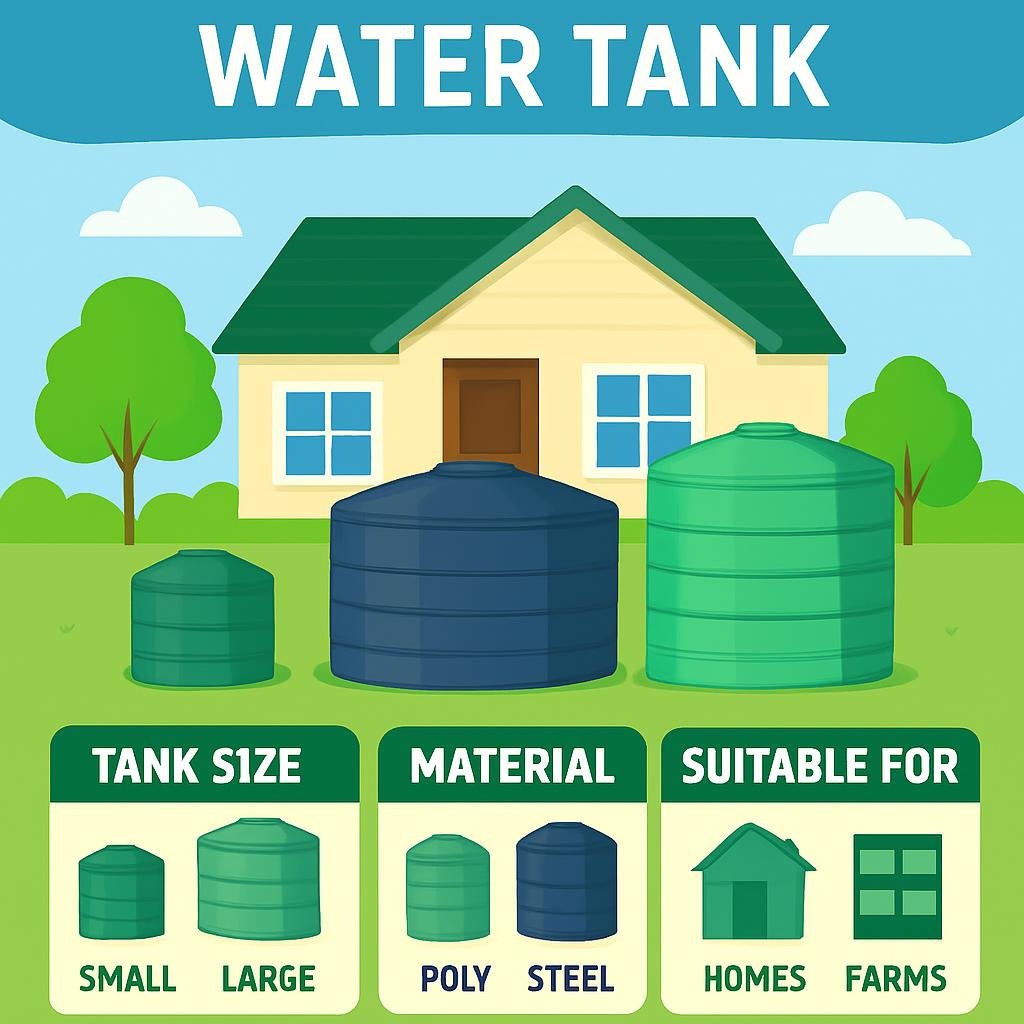
Most residential properties should consider tanks starting at 5,000 liters. For serious household use, capacities between 10,000 to 22,500 liters are more suitable. Larger homes or rural properties may require tanks of 27,000 liters or more, especially if livestock or irrigation is involved.
Practical Considerations
When selecting a tank, also consider:
- Access for Delivery: Ensure there is enough space for tank delivery and installation.
- Site Conditions: Height restrictions and pump placement can influence what size tank you can install.
Off-Mains Water Considerations
If your property relies solely on rainwater, you should aim for a larger tank to cover peak use and dry spells. Smaller tanks can lead to stress and higher costs if you run out of water.
Other Reserve Capacities
Some properties may need additional storage for specific purposes, such as:
- Fire Protection: Having extra water on hand for firefighting can be crucial in bushfire-prone areas.
- Agricultural Needs: Farms often require more water for livestock and irrigation.
Design an Efficient System
Your tank will function best when part of a well-designed system:
- Gutters and Downpipes: Ensure they can efficiently channel water into the tank.
- Pumps and Filtration: Select pumps that meet the pressure and flow needs of your property. Filtration is essential for water quality.
Quick Steps to Estimate Tank Size
- Estimate Daily Use: Calculate your daily water consumption.
- Multiply for Low Periods: Multiply your daily use by the number of days you want to cover during dry spells.
- Compare with Roof Harvesting: Assess how much water your roof can realistically collect throughout the year.
- Add Extra Capacity: Consider future needs, like livestock or irrigation.
If your calculations are tight, it’s wise to choose a slightly larger tank if your budget allows. Adequate storage is crucial for managing water supply effectively.
Conclusion
Choosing the right size water tank is about aligning it with your property’s needs and local conditions. By taking the time to calculate your requirements accurately, you can ensure that your water tank serves you well through all seasons. A well-sized tank will provide peace of mind and reliable water supply when you need it most.
CHOOSE THE RIGHT SIZE TANK FOR YOUR PROPERTY