The first rain after a dry spell can leave your roof looking clean, but it carries dust, leaf litter, bird droppings, pollen and airborne grime straight towards your tank. A water tank first flush diverter is a simple component that gives that dirty first runoff somewhere else to go before cleaner rainwater enters storage. For households relying on tank water, it is one of the most practical ways to protect water quality at the collection point.
It is not a replacement for sensible roof maintenance, tank screens or drinking-water filtration. It does, however, reduce the load placed on every part of the system that follows. That can mean clearer stored water, less sediment at the bottom of the tank and less frequent attention for filters and pumps.
What does a water tank first flush diverter do?
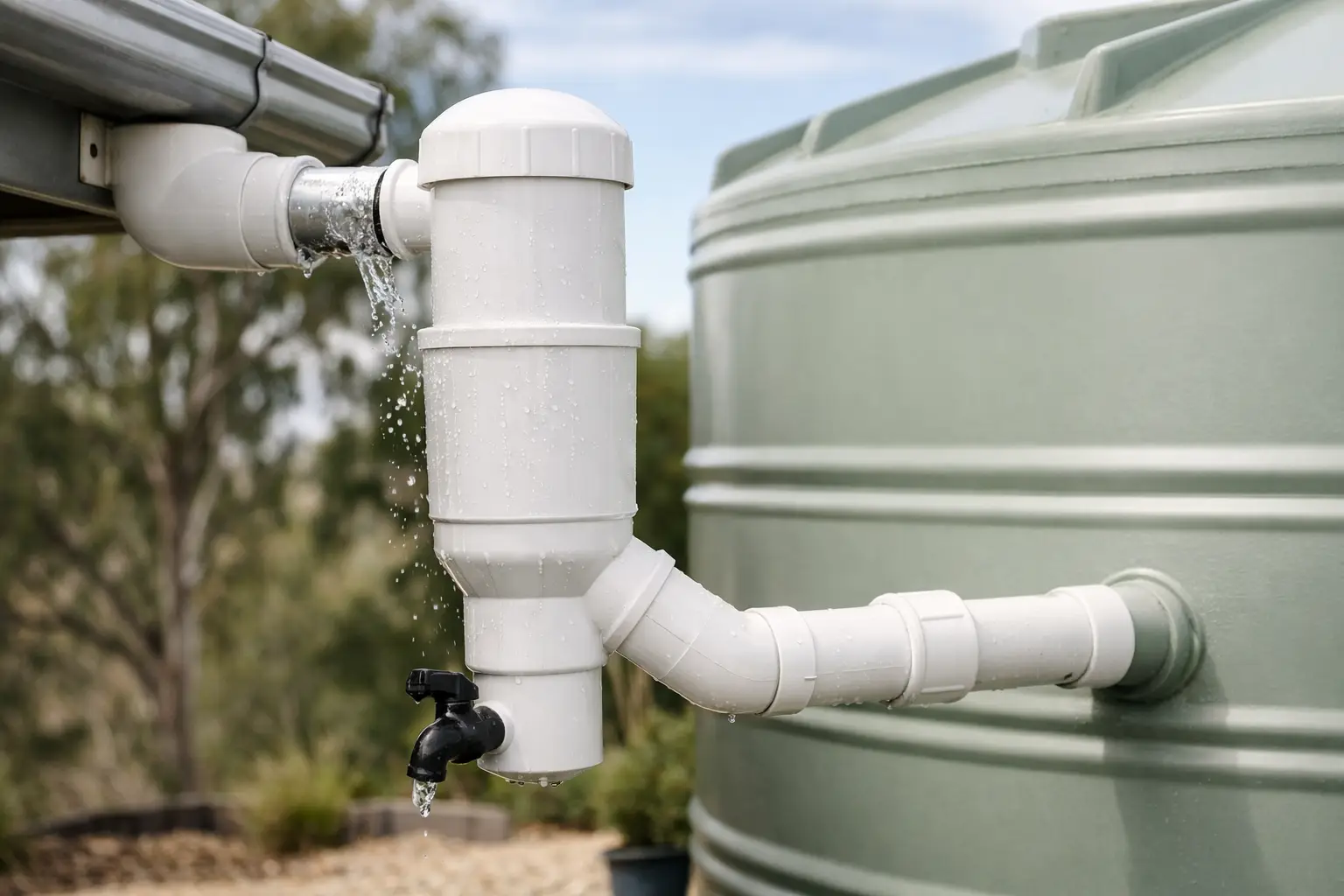
A first flush diverter is fitted into the downpipe between the gutter and the tank inlet. When rain begins, the initial runoff is directed into a vertical pipe or chamber. This volume captures much of the material that has settled on the roof and in the gutters since the last rainfall.
Once the chamber is full, a float ball rises and seals the diversion section. Rainwater is then directed onwards to the tank. After the event, a small drain point at the bottom of the diverter slowly empties the captured water, ready for the next shower.
The idea is straightforward, but the benefit is significant. A roof is your catchment surface, and its condition directly affects what reaches your tank. This matters particularly in rural areas, coastal locations, properties near busy roads, and homes surrounded by trees or wildlife.
Why first flush protection makes sense
Rainwater tanks work best as a complete system. Good gutters, leaf guards, inlet strainers, mosquito-proof screens, an overflow arrangement, a correctly selected pump and suitable filtration all have a role. A diverter sits early in that chain, preventing a portion of contaminants from entering in the first place.
For water used in gardens, toilets, washing machines or stock supply, a first flush device helps reduce visible debris and sediment. For households using rainwater for drinking, cooking and bathing, it is an extra layer of source protection before water reaches filters or UV treatment.
There is also a maintenance advantage. Fine sediment can accumulate over time and affect water appearance, tank cleaning intervals and the workload placed on cartridge filters. A diverter will not capture everything, especially very fine dust, but it can reduce the volume that makes it into the tank after dry weather.
The trade-off is that some water is deliberately discarded. In most rainfall events this is a worthwhile exchange for better-quality stored water. On a very small roof, in low-rainfall areas or where every litre is critical, correct sizing becomes especially important so you do not waste more water than necessary.
Choosing the right diverter size
First flush diverters are commonly sized by roof catchment area, often expressed as litres per square metre of roof. There is no single setting that suits every property. A clean, exposed metal roof in an open area may need less diversion than a large roof beneath gum trees, close to agricultural activity or subject to dust storms.
A practical starting point is to consider the roof section feeding each downpipe, rather than the total roof area alone. If several downpipes deliver water to the tank, each inlet needs its own first flush arrangement or an appropriately designed shared system. Water entering through an unprotected downpipe can still carry contaminants into storage.
As a general guide, many installations use around 0.5 to 2 litres of diversion capacity per square metre of roof catchment. Conditions should drive the final choice. A property at the edge of a dusty paddock, for example, may justify a larger allowance than a suburban home with regularly cleaned gutters.
A simple sizing example
If one downpipe drains a 60-square-metre roof section, a diverter capacity of 30 to 120 litres may be considered depending on local conditions and water-quality expectations. That range is deliberately broad because roof cleanliness, nearby trees, rainfall patterns and intended water use all matter.
Where tank water is the main household supply, it is sensible to discuss the design with a water-system specialist or licensed installer. They can help match the diverter to the roof layout, tank inlet arrangement and filtration equipment rather than selecting a size in isolation.
Installation details that affect performance
A first flush diverter is only useful if water can move through it freely and it drains after each event. Position it vertically where possible, with the chamber installed in the downpipe run before the tank. The drain outlet needs to be accessible for inspection and directed away from building footings.
The small drain valve or drip outlet is easy to overlook. If it blocks, the chamber may not reset before the next rain. If it drains too quickly, it may empty during a long shower and allow more contaminated runoff to pass into the tank. The right drainage rate depends on the diverter capacity and typical rainfall pattern, so follow the product instructions and check operation after installation.
The tank inlet should still have a suitable screen or strainer. First flush equipment is not designed to replace leaf protection, and large leaves can obstruct gutters or downpipes before the diverter has a chance to work. For properties with heavy leaf fall, gutter guards and regular cleaning are often just as valuable as the diverter itself.
If your tank supplies household plumbing, installation requirements can vary by state, council area and whether the system is connected to mains water. Use a qualified plumber where required and ensure any rain-to-mains equipment, backflow protection and potable-water treatment are installed to applicable standards.
First flush diverters and drinking water
A diverter improves the quality of water entering the tank, but it does not make rainwater automatically safe to drink. Water intended for household consumption may still need sediment filtration, carbon filtration and UV disinfection, depending on the property, water source and local health guidance.
The strongest approach is layered protection. Keep the roof and gutters clean, exclude leaves and insects at the tank, use a correctly sized first flush diverter, maintain a sealed tank, and select filtration that suits how the water will be used. If water has an unusual taste, odour, colour or cloudiness, investigate the cause rather than assuming a filter change alone will solve it.
This is particularly relevant after bushfire smoke, severe storms, extended dry periods or nearby construction work. These events can increase the amount and type of material deposited on a roof. In some circumstances, it may be prudent to bypass collection temporarily, inspect the catchment surface and clean the system before returning water to household use.
Routine maintenance is quick but necessary
First flush diverters are low-maintenance equipment, not no-maintenance equipment. A quick check after the first few rain events will show whether the drain is resetting properly and whether debris is collecting around the inlet or bottom outlet.
At least seasonally, inspect the chamber, flush out accumulated sediment and make sure the float ball moves freely. Check seals, caps and screens for wear or insect entry. Properties with overhanging trees, frequent dust or heavy bird activity may need inspections more often, particularly before the wetter months.
If the diverter is continually full, slow to empty or overflowing, the drain is likely blocked or incorrectly adjusted. If water is bypassing it from the start of rain, inspect the float, pipe alignment and any obstruction in the downpipe. Small fixes made early can prevent poor-quality water entering thousands of litres of storage.
Is it worth fitting one to an existing tank?
For many existing tank systems, yes. Retrofitting a diverter is often a sensible upgrade where water looks dirty after rain, filters clog quickly or the roof is exposed to leaves and dust. It can be especially worthwhile before adding a new household pump or filtration system, because protecting the water source helps those components perform as intended.
The best result comes from looking at the whole collection path rather than buying one accessory to solve every issue. Check the gutter condition, roof material, downpipe layout, inlet screen and tank lid at the same time. Aus Water Tanks can help customers consider compatible tank accessories, pumping and filtration options for a practical, long-term setup.
A well-maintained first flush diverter quietly does its job at the start of every rainfall event. That small diversion of dirty runoff can be a valuable investment in cleaner storage, fewer maintenance headaches and greater confidence in the water your property depends on.