Rainwater can be a great water source. However, it may contain bacteria, sediment, unpleasant tastes or odours. Therefore, the right treatment system is important.
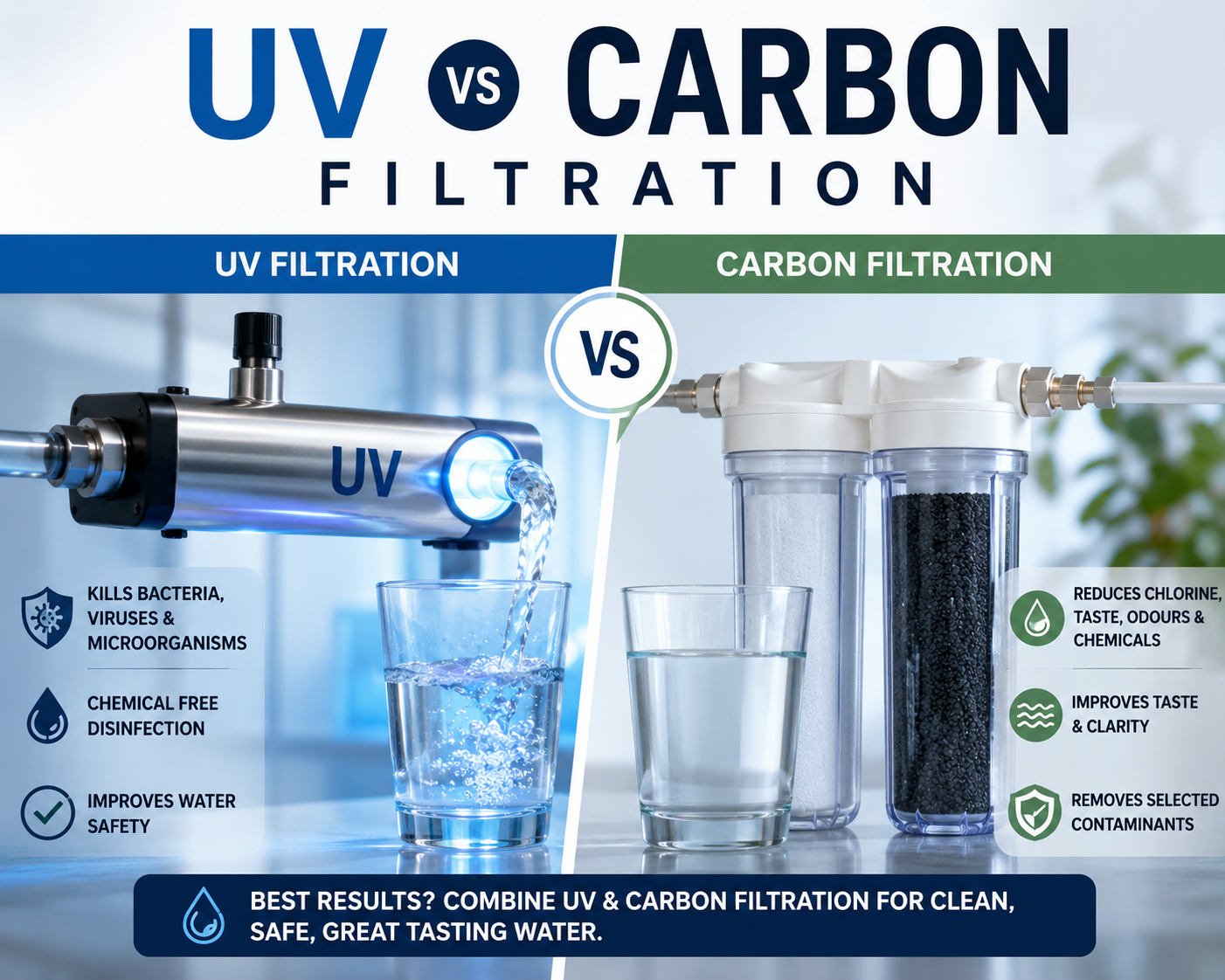
When comparing UV vs carbon filtration, the main difference is simple. UV treats microorganisms, while carbon improves the taste and smell of water. In many homes, the best solution is to use both.
What Does UV Water Treatment Do?
UV sterilisation uses ultraviolet light to treat microorganisms in water. These may include bacteria, viruses and protozoa.
Contamination can enter a rainwater tank from:
- Bird and animal droppings
- Leaves and roof debris
- Insects
- Dust
- Dirty gutters
- Tank sediment
UV treatment does not remove these organisms from the water. Instead, it stops them from reproducing and causing illness.
For UV to work properly, the water must be clear. Sediment can block the UV light and reduce its effectiveness. For this reason, sediment filtration should always come before the UV unit.
What Does Carbon Filtration Do?
Activated carbon improves the taste, smell and overall quality of water. It can reduce:
- Chlorine
- Unpleasant tastes
- Unwanted odours
- Some organic chemicals
- Discolouration caused by certain contaminants
Carbon filtration is useful for both town water and rainwater. However, carbon does not reliably treat bacteria or viruses.
A carbon filter can make water more pleasant to drink, but it should not replace UV where microorganisms are a concern.
UV vs Carbon Filtration: Which One Do You Need?
The right choice depends on the problem you want to solve.
Choose UV treatment when your main concern is bacteria, viruses or other microorganisms.
Choose carbon filtration when you want to improve taste, odour or reduce chlorine and selected chemicals.
For rainwater used throughout the home, a combined system often provides better protection. Each treatment stage performs a different job.
How Should the Filters Be Installed?
A typical whole house water filtration system may follow this order:
Rainwater tank → pump or pre-filter → sediment filter → carbon filter → UV steriliser → household
The sediment filter removes dirt and particles first. The carbon filter then improves taste and smell. Finally, the UV unit treats microorganisms before the water enters the home.
Correct filter order helps the system work effectively and protects the UV chamber.
Choosing the Right Filtration System
Before selecting a system, consider:
- How the rainwater will be used
- The number of people in the home
- The required water flow rate
- The condition of the tank and roof
- The level of sediment in the water
- Whether the water has an unusual taste or smell
The UV unit must match the household flow rate. If water moves through it too quickly, it may not receive enough UV exposure.
Filters must also be replaced as recommended. In addition, the UV lamp usually needs regular replacement to maintain performance.
Maintain Your Rainwater Tank
Even the best filtration system cannot replace good tank maintenance.
Keep gutters clean, check insect screens and remove built-up sediment when required. A first-flush diverter can also reduce the amount of dirt entering the tank.
If the water changes colour, taste or smell, stop using it for drinking until the cause is found. Water testing can help identify bacteria or other contamination.
Which System Is Best?
When comparing UV vs carbon filtration, neither system does everything.
UV treats microorganisms. Carbon improves taste, smell and chemical quality. When used together with sediment filtration, they provide a more complete solution for household rainwater.
North Coast Water Tanks supplies whole house water filtration systems, UV units and replacement filter cartridges. Shop online or contact us for help choosing the right system for your rainwater supply. contact Auswatertanks today for service and advice, let us keep your water safe
UV vs Carbon Filtration: